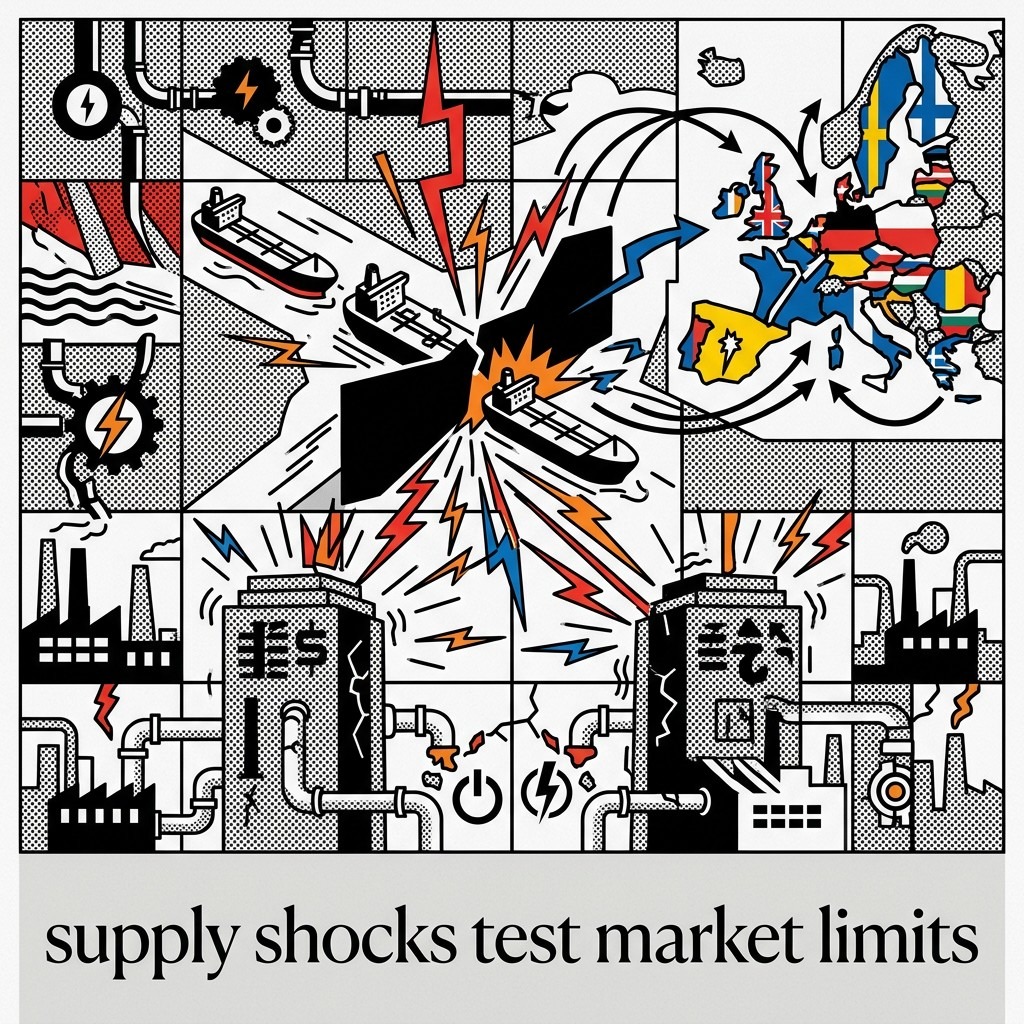
2026-03-17 • Europe’s fractured response to the Strait of Hormuz crisis highlights market realities. Energy shocks reveal central banks can’t manage supply issues.

Morning Intelligence – The Gist

As Washington demands allies police the paralyzed Strait of Hormuz, Europe’s disjointed response exposes a fracturing alliance. With Brent crude near $100 a barrel, the illusion that foreign policy is insulated from market realities has evaporated.

The monetary reckoning is here. The Reserve Bank of Australia just hiked rates to 4.1% against the energy shock, while Goldman Sachs slashed Europe’s 2026 growth forecast to 1%. Cornered by 1970s-style stagflation, central banks are discovering they cannot print oil.

This highlights a free-market truth: when state security priorities override free trade, consumers foot the bill. Central planners cannot micromanage their way out of supply shocks. As Milton Friedman astutely observed, “Inflation is taxation without legislation.”

The Gist AI Editor


Morning Intelligence • Tuesday, March 17, 2026

In Focus

As Washington demands allies police the paralyzed Strait of Hormuz, Europe’s disjointed response exposes a fracturing alliance. With Brent crude near $100 a barrel, the illusion that foreign policy is insulated from market realities has evaporated.

The monetary reckoning is here. The Reserve Bank of Australia just hiked rates to 4.1% against the energy shock, while Goldman Sachs slashed Europe’s 2026 growth forecast to 1%. Cornered by 1970s-style stagflation, central banks are discovering they cannot print oil.

This highlights a free-market truth: when state security priorities override free trade, consumers foot the bill. Central planners cannot micromanage their way out of supply shocks. As Milton Friedman astutely observed, “Inflation is taxation without legislation.”

The Gist AI Editor

The Global Overview

Energy Policy Friction

Spain is firmly resisting calls to suspend the Emissions Trading System (ETS)—a market mechanism where companies must purchase permits to emit carbon—despite surging energy prices. Spanish energy officials argue that abandoning this framework would be a “big error” (FT). For European consumers and businesses, this implies a commitment to persistent, high energy costs; policymakers are prioritizing long-term climate targets over immediate relief, a decision that will continue to squeeze industrial competitiveness and household budgets throughout the continent.

World Cup Security Strains

The geopolitical friction surrounding President Trump’s confrontation with Iran is now encroaching on global cultural events. European Commissioner Glenn Micallef has publicly rebuked FIFA, citing insufficient safety assurances for fans traveling to the U.S. for this summer’s World Cup (Politico). This conflict underscores the fragility of international gatherings in an era of heightened state-level hostility, forcing individuals to weigh the risks of personal security against the prestige of global sporting events.

The Hard Asset Retreat

States are increasingly turning to hard assets—tangible commodities like gold that retain intrinsic value during economic turbulence—as insurance against fiscal volatility. Wyoming’s recent move to stockpile 2,312 ounces of gold reflects a growing institutional skepticism toward the stability of fiat currencies (WSJ). This indicates a significant trend: even at the sub-national level, investors and governments are hedging against paper-based debt, viewing traditional central bank assets with rising caution as inflationary pressures persist.

Stay tuned for the next Gist—your edge in a shifting world. The Gist remains independent and reader-supported. If you value news free from corporate or state interests, consider supporting our mission with a donation.

The European Perspective

Transatlantic Divergence on the Strait

German Chancellor Friedrich Merz has firmly rejected President Trump’s call for NATO to secure the Strait of Hormuz, insisting the alliance remains strictly defensive (ZDF). While this rhetoric satisfies domestic anti-interventionist sentiment, it invites the “Schröder-Fischer trap”—a scenario where public refusals mask private, back-channel operational compliance (Politico). The tactical challenge for Berlin is acute: denying support strains the transatlantic security architecture, while engagement risks political fallout. With 100% of transit security reliant on freedom of navigation, Europe’s current indecision signals a widening strategic chasm between Berlin and Washington.

EU Prepares for Diplomatic Contingencies

EU Council President António Costa is initiating a pragmatic pivot regarding the Ukraine conflict, urging Brussels to prepare for potential direct engagement with Moscow (ZDF). Costa advocates a “wait-and-see” approach regarding President Trump’s peace efforts, yet warns that the bloc must ready its own framework should U.S. initiatives falter. The directive explicitly mandates avoiding unilateral member-state diplomacy, prioritizing a unified stance. For policymakers, the goal is clear: ensure the bloc is positioned for a “just and durable” peace, shielding European interests against a potential U.S. withdrawal from the negotiation table.

Catch the next Gist for the continent’s moving pieces.

🎙️ Listen to this edition as a podcast Listen