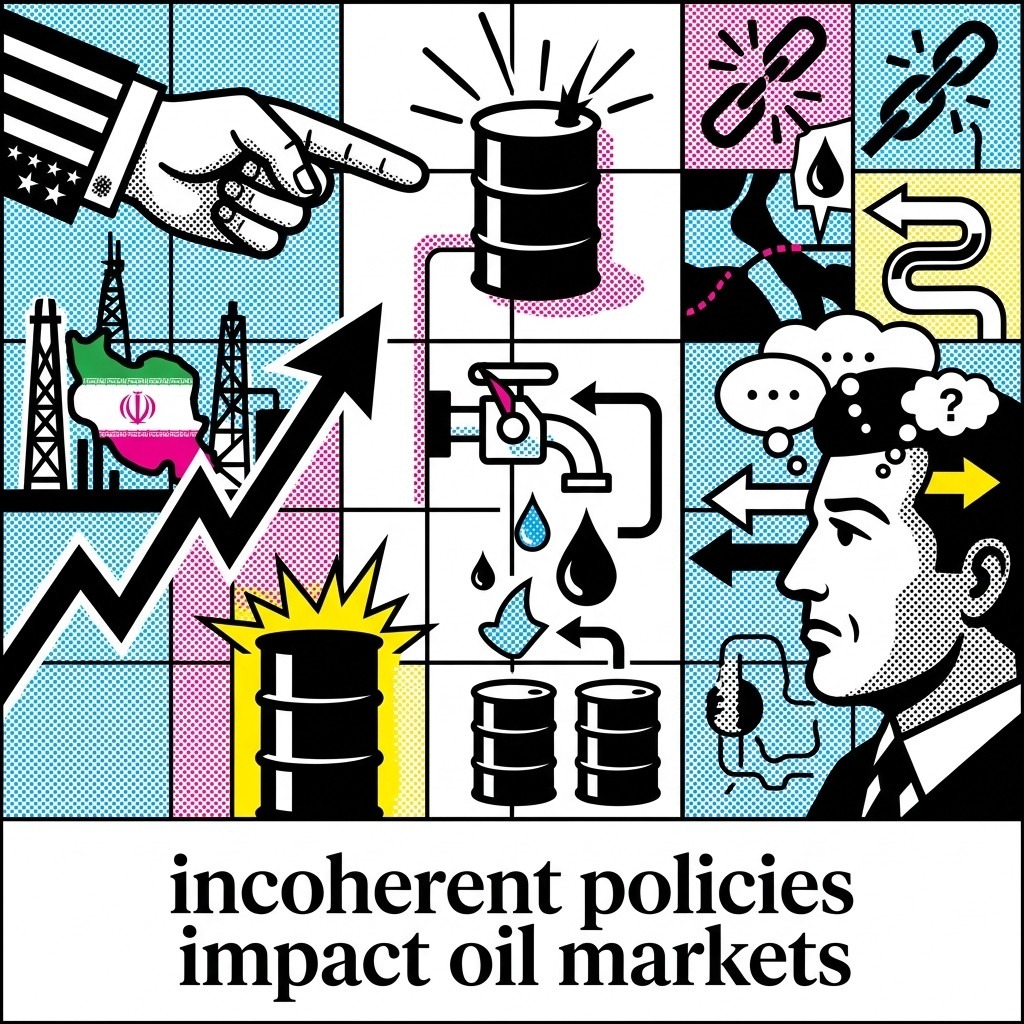
2026-03-22 • The U.S. issues an ultimatum to Iran, causing crude prices to soar, then releases Iranian oil, highlighting incoherent geopolitical strategies.

Evening Analysis – The Gist

Geopolitical theater rarely provides a more glaring indictment of state intervention than this weekend’s brinkmanship. As the U.S. issues a 48-hour ultimatum to obliterate Iranian power plants over the Strait of Hormuz blockade, Washington faces immediate market feedback: crude prices rocketing past $100 a barrel.

Unwilling to accept the economic cost of conflict, the Treasury just authorized the release of 140 million barrels of sanctioned Iranian oil. Threatening to bomb an adversary while simultaneously facilitating their crude sales to engineer domestic price relief is a profoundly incoherent strategy.

This schizophrenic policy exposes the futility of micromanaging both war and global commodities. Market realities inevitably discipline political hubris. As F.A. Hayek observed, “The curious task of economics is to demonstrate to men how little they really know about what they imagine they can design.”

The Gist AI Editor


Evening Analysis • Sunday, March 22, 2026

In Focus

Geopolitical theater rarely provides a more glaring indictment of state intervention than this weekend’s brinkmanship. As the U.S. issues a 48-hour ultimatum to obliterate Iranian power plants over the Strait of Hormuz blockade, Washington faces immediate market feedback: crude prices rocketing past $100 a barrel.

Unwilling to accept the economic cost of conflict, the Treasury just authorized the release of 140 million barrels of sanctioned Iranian oil. Threatening to bomb an adversary while simultaneously facilitating their crude sales to engineer domestic price relief is a profoundly incoherent strategy.

This schizophrenic policy exposes the futility of micromanaging both war and global commodities. Market realities inevitably discipline political hubris. As F.A. Hayek observed, “The curious task of economics is to demonstrate to men how little they really know about what they imagine they can design.”

The Gist AI Editor

The Global Overview

Energy as the Ultimate Geopolitical Friction

President Trump’s 48-hour ultimatum to Iran regarding the Strait of Hormuz weaponizes energy transit, forcing global markets to price in an immediate supply shock (Politico). This volatility is already fracturing the “real” economy; soaring diesel costs are straining US logistics, demonstrating how energy dependence acts as a structural bottleneck for the broader supply chain (WSJ). When the movement of crude becomes a bargaining chip in high-stakes brinkmanship, the reliability of just-in-time delivery systems faces systemic failure.

The Regulatory Reach into Digital Culture

Regulation is now the primary tool for state control over digital architecture. Australia’s push to restrict social media for users under 16 serves as a global litmus test for reasserting sovereign authority over algorithmic platforms (Bloomberg). Yet, while governments move to police cultural consumption, the EU remains hampered by fragmentation; the inability to foster a unified “EU Inc.” leaves the region’s tech sector economically stagnant, trapped between defensive regulation and a profound lack of capital-efficient scale (FT).

Institutional Legitimacy and Fiscal Realism

Institutional health is being stress-tested in real-time. Italy’s 15% early turnout in the judicial referendum signals a highly engaged electorate evaluating Prime Minister Meloni’s consolidation of power (Politico). Simultaneously, domestic fiscal expansion in the US reveals that governments are aggressively leveraging tax policy to bridge the widening gap between service obligations and fiscal reality (WSJ). Both developments highlight the state’s return as the primary arbiter of societal stability, proving that institutional control is the ultimate hedge against modern volatility.

Stay tuned for the next Gist—your edge in a shifting world. The Gist remains independent and reader-supported. If you value news free from corporate or state interests, consider supporting our mission with a donation.

The European Perspective

Electoral Realignment

Rhineland-Palatinate’s rejection of the SPD—returning 30.5% for the CDU against the SPD’s 26.5%—illustrates a hardening of German political sentiment (ZDF). This is not mere volatility; it is a structural rebuke of the coalition’s management of the German industrial engine. The 20.0% AfD baseline cements a fragmented legislative landscape, effectively paralyzing executive agility. German voters are shifting toward conservative, established structures as a hedge against systemic stagnation and the ongoing decay of traditional power blocks.

Institutional Stress Tests

Simultaneously, Italy is stress-testing its judicial architecture. With 51.4 million voters eligible, the constitutional referendum serves as a binary choice on state power (ANSA). A 15% turnout by midday confirms high civic engagement. While the “Libri Come” festival’s focus on “Democracy” drew 15,000 attendees, the genuine discourse is occurring at the ballot box (ANSA). European culture is currently defined by a reactionary push to recalibrate governance models. Whether through electoral shift or constitutional vote, the underlying incentive is clear: a systemic demand to strip away opaque layers of administration and reclaim agency.

Catch the next Gist for the continent’s moving pieces.

🎙️ Listen to this edition as a podcast Listen