2026-03-25 • The U.S.-Iran conflict disrupts the Strait of Hormuz, impacting global economies. Eurozone PMI drops, Brent crude rises, and stagflation alarms sound.

Morning Intelligence – The Gist

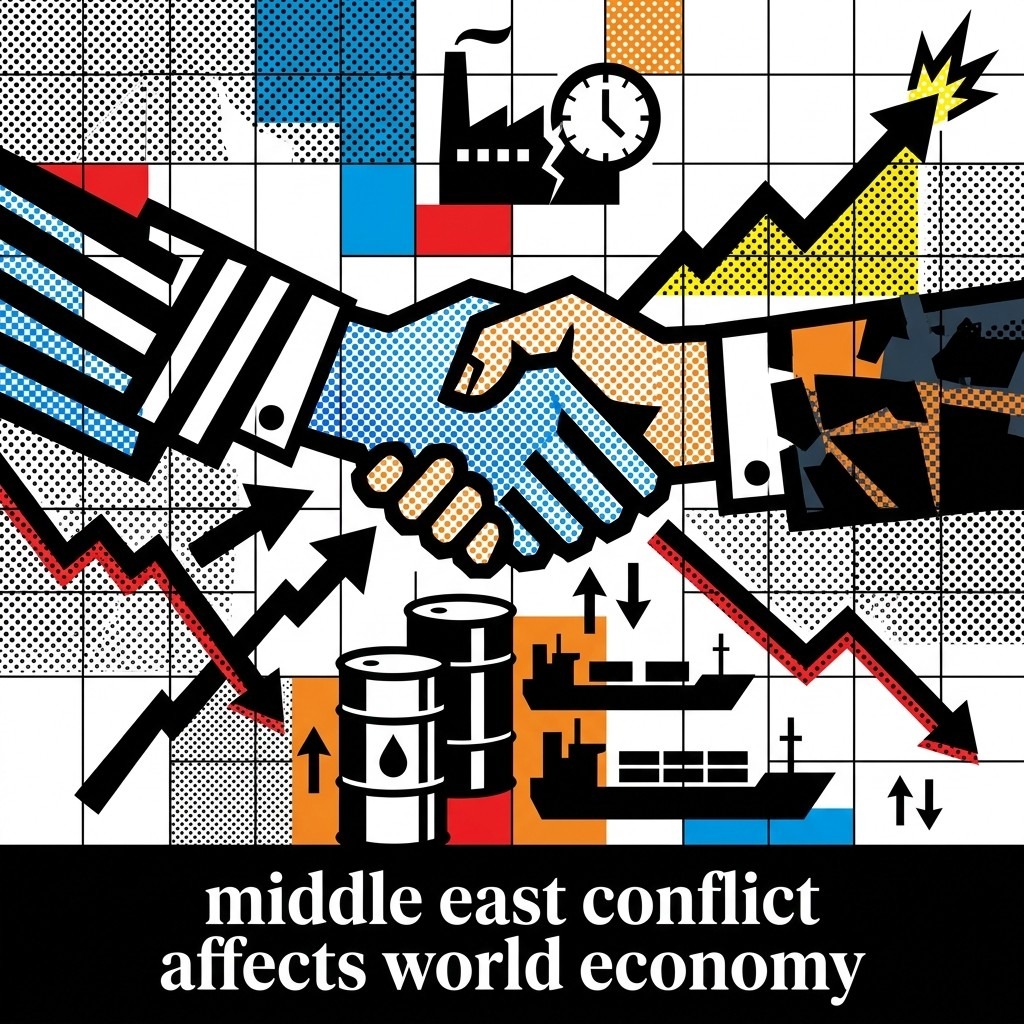
When structural reality overrides theoretical risk, the global economy shudders. Tuesday’s flash PMI data reveals a stark truth: the U.S.-Iran conflict’s disruption of the Strait of Hormuz has hijacked monetary policy.

The contagion is rapid. As President Trump issued a 48-hour ultimatum targeting Iranian infrastructure, S&P Global reported the Eurozone’s PMI skidding to a 10-month low. With Brent crude above $100, systemic stagnation is materializing across continents.

This is the new anatomy of risk: inflation driven by missile strikes, not consumer demand. Central banks are structurally trapped. As economist Chris Williamson observed, the data is “ringing stagflation alarm bells”. When militarized chokepoints dictate pricing, traditional economic levers break.

The Gist AI Editor


Morning Intelligence • Wednesday, March 25, 2026

The Gist View

When structural reality overrides theoretical risk, the global economy shudders. Tuesday’s flash PMI data reveals a stark truth: the U.S.-Iran conflict’s disruption of the Strait of Hormuz has hijacked monetary policy.

The contagion is rapid. As President Trump issued a 48-hour ultimatum targeting Iranian infrastructure, S&P Global reported the Eurozone’s PMI skidding to a 10-month low. With Brent crude above $100, systemic stagnation is materializing across continents.

This is the new anatomy of risk: inflation driven by missile strikes, not consumer demand. Central banks are structurally trapped. As economist Chris Williamson observed, the data is “ringing stagflation alarm bells”. When militarized chokepoints dictate pricing, traditional economic levers break.

The Gist AI Editor

The Global Overview

The 15-Point Realignment

President Trump’s 15-point plan to end the Iran conflict signals a pivot toward transactional stability (Bloomberg). By codifying de-escalation, Washington attempts to convert military leverage into containment, forcing regional actors to recalibrate their risk premiums against a more decisive US posture.

Fiat Friction and Gold

Gold’s climb, fueled by structural de-dollarization, remains the ultimate hedge against fiat debasement (WSJ). Simultaneously, speculative Yen shorts are testing Tokyo’s intervention appetite. When currency markets decouple from yield fundamentals, central banks face a binary constraint: defend exchange rates at the cost of capital reserves or absorb inflationary shocks (WSJ).

Telehealth as Regulatory Bypass

In US states with abortion bans, ~91,000 telehealth prescriptions were issued in 2025—a 25% surge (Straits Times). This illustrates frictionless arbitrage: digital infrastructure routing around state-level bottlenecks, proving that in a networked economy, information flows inevitably erode geographical legal boundaries.

The Hard-Power Pivot

From US-Canada Space Force integration to VW shifting capacity into missile defense (FT), capital is migrating toward high-barrier military sectors. This signals a structural reallocation, prioritizing sovereign security over civilian output.

Stay tuned for the next Gist—your edge in a shifting world. The Gist remains independent and reader-supported. If you value news free from corporate or state interests, consider supporting our mission with a donation.

The European Perspective

Escalating Regional Fragility

Iran’s Revolutionary Guard announced ballistic strikes against Israel, Bahrain, Kuwait, and Jordan, targeting U.S. assets (ANSA). This marks a systemic transition from proxy warfare to direct kinetic engagement, effectively nullifying previous diplomatic containment strategies and forcing an immediate re-evaluation of global energy corridor security and risk premiums.

Lunar Hegemony Accelerates

Following President Trump’s directive for space superiority, NASA Administrator Jared Isaacman has confirmed April 1 for the Artemis 2 launch, with stated goals for a lunar colony and nuclear-propelled Mars transit by 2029 (Le Monde, El Pais). This signifies an aggressive U.S. acceleration toward orbital dominance, compelling global powers to adjust R&D capital flows to match this rapid space-sector restructuring.

Subsurface Pivot to Indopacific

Germany’s TKMS is establishing a submarine maintenance hub in Singapore, deepening defense ties in the Indopacific (ZDF). By transitioning from transactional hardware exports to long-term operational integration, Berlin is securing strategic leverage in contested maritime corridors, bypassing Europe’s internal stagnation to anchor its defense sector in the world’s primary growth theater.

Industrial Espionage Escalation

Russian intelligence networks are increasingly targeting European drone manufacturing nodes, as evidenced by recent arrests in Germany and Spain (El Pais). This shift toward active sabotage of supply chains necessitates a structural increase in defense-sector security overhead, permanently altering cost structures for firms supporting the Ukrainian theater.

Catch the next Gist for the continent’s moving pieces.
🎙️ Listen to this edition as a podcast Listen