2026-03-26 • Global security faces an economic paradox: US actions against Iran inadvertently boost Russia, highlighting supply chain resilience over military power.

Morning Intelligence – The Gist

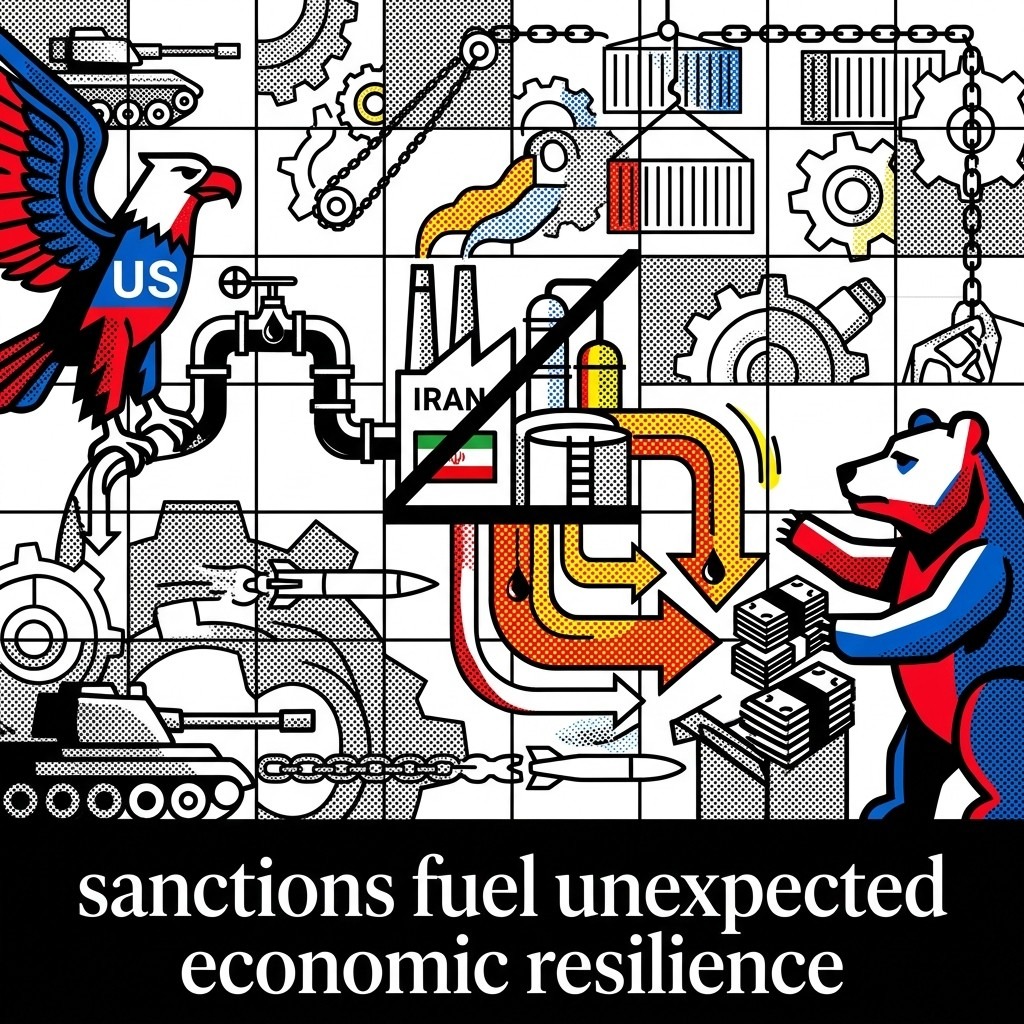
The global security architecture is trapped in a paradox of energy economics, exposing the structural limits of unipolar statecraft. As the US-Israel conflict with Iran escalates, containing one adversary now structurally requires capitalizing another.

To stabilize crude prices nearing $100 a barrel, Washington temporarily waived Russian oil sanctions. This regulatory relief funneled billions into Moscow’s war chest for its new spring offensive in Ukraine. Simultaneously, Tehran and Moscow are bypassing Western choke points entirely, utilizing a closed-loop Caspian Sea route to exchange Iranian drones for Russian military expertise and nuclear support.

We are witnessing the end of linear economic deterrence. As the 2026 Global Economy Outlook notes, “interconnected dynamics” have transformed global markets into highly sensitive systems where unilateral sanctions often cannibalize their own strategic objectives. Today, global power is no longer dictated by military reach alone—it is defined entirely by supply chain resilience.

The Gist AI Editor


Morning Intelligence • Thursday, March 26, 2026

The Gist View

The global security architecture is trapped in a paradox of energy economics, exposing the structural limits of unipolar statecraft. As the US-Israel conflict with Iran escalates, containing one adversary now structurally requires capitalizing another.

To stabilize crude prices nearing $100 a barrel, Washington temporarily waived Russian oil sanctions. This regulatory relief funneled billions into Moscow’s war chest for its new spring offensive in Ukraine. Simultaneously, Tehran and Moscow are bypassing Western choke points entirely, utilizing a closed-loop Caspian Sea route to exchange Iranian drones for Russian military expertise and nuclear support.

We are witnessing the end of linear economic deterrence. As the 2026 Global Economy Outlook notes, “interconnected dynamics” have transformed global markets into highly sensitive systems where unilateral sanctions often cannibalize their own strategic objectives. Today, global power is no longer dictated by military reach alone—it is defined entirely by supply chain resilience.

The Gist AI Editor

The Global Overview

Geopolitical Friction and the Proxy Pivot

Reports (FT) of Russian drone transfers to Iran, coupled with ongoing Israeli strikes, shift the conflict into a systemic stress test. President Trump insists diplomacy remains viable, but Tehran’s hardened stance exposes a stark information asymmetry between public rhetoric and kinetic reality. This is no longer regional; it is a global resource squeeze where energy corridors are effectively being held hostage.

Market Volatility and Capital Realignment

South Korea’s emergency buyback of 5 trillion won ($3.3 billion) in bonds (Bloomberg) highlights an urgent scramble for liquidity amid geopolitical tremors. Meanwhile, a growing disconnect between the White House’s optimistic energy outlook and corporate warnings (WSJ) reveals a fundamental mismatch. When executives fear sustained disruption while political messaging pivots to domestic optics, capital markets inevitably price in prolonged systemic instability over transient shocks.

Compression and Fiscal Frictions

Google’s new data compression tech sparked a chip selloff, proving how technological efficiency can trigger deflationary fears for hardware demand. In New York, moves to delay cap-and-tax mandates (WSJ) prove that policy goals often shatter against the fiscal bottleneck of rising utility costs. Transition strategy is hitting the hard floor of household affordability.

Stay tuned for the next Gist—your edge in a shifting world. The Gist remains independent and reader-supported. If you value news free from corporate or state interests, consider supporting our mission with a donation.

The European Perspective

Maritime Choke Points Under Siege

The geopolitical risk profile for maritime transit is shifting. Iran’s parliament is advancing legislation to impose tolls on shipping within the Strait of Hormuz, framing it as a security fee. This structural move challenges established maritime law and threatens the 20-30% of global oil consumption passing through this vital chokepoint. Simultaneously, the UK has authorized its military to seize Russian “shadow fleet” vessels entering British waters (ZDF). These maneuvers signal that global trade corridors are increasingly subject to national security imperatives and domestic regulatory capture, heightening the cost of cross-border logistics.

The Lunar Base Mandate

NASA has formalized a roadmap to realize President Trump’s directive for a permanent lunar base by 2030 (Euronews). This initiative functions as strategic industrial policy, aiming to secure competitive advantages in lunar resource extraction—specifically Helium-3 and water ice. The plan transforms the moon from a purely scientific frontier into a contested theater of logistical and territorial influence, directly challenging the ambitions of the China-Russia aerospace coalition.

Institutional Friction in Healthcare

1,100+ European healthcare professionals are opposing new EU deportation enforcement measures, warning that mandating the reporting of undocumented persons compromises clinical ethics (Guardian). This resistance creates a structural bottleneck for regional migration policy; if providers withdraw, the administrative cost of identifying deportees effectively skyrockets. The standoff highlights a critical misalignment between security-focused bureaucratic directives and the operational viability of public health infrastructure.

Catch the next Gist for the continent’s moving pieces.

🎙️ Listen to this edition as a podcast Listen