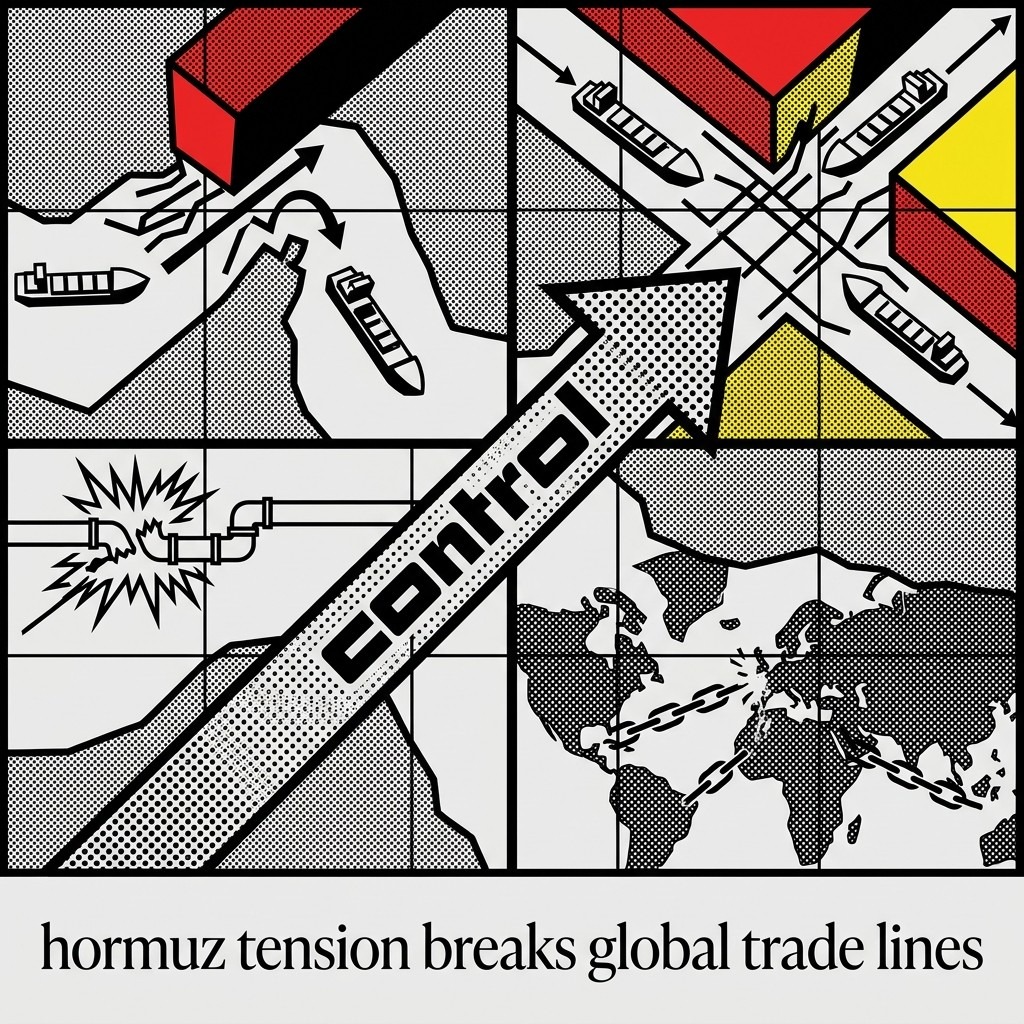
2026-03-28 • Geopolitical leverage in the Strait of Hormuz escalates tension, disrupting energy supply chains and highlighting the fragility of global trade routes.

Evening Analysis – The Gist

If you want to understand modern geopolitical leverage, look at a map. The ongoing Strait of Hormuz blockade has transformed a maritime choke point into a systemic weapon, exposing the structural fragility of energy supply chains.

The mechanics of power are brutally transactional. Following Iranian missile strikes on Saudi Arabia’s Prince Sultan air base injuring 12 U.S. troops, Washington issued a 10-day ultimatum to Tehran, mobilizing 10,000 additional ground forces to coerce compliance.

This engineered scarcity proves vital trade routes are no longer guaranteed. As the conflict hits its one-month mark, escalating beyond mere market jitters—with the Pentagon citing 13 U.S. fatalities and over 300 injured—the data confirms a stark reality: weaponizing geography efficiently degrades global economic predictability.

The Gist AI Editor


Evening Analysis • Saturday, March 28, 2026

The Gist View

If you want to understand modern geopolitical leverage, look at a map. The ongoing Strait of Hormuz blockade has transformed a maritime choke point into a systemic weapon, exposing the structural fragility of energy supply chains.

The mechanics of power are brutally transactional. Following Iranian missile strikes on Saudi Arabia’s Prince Sultan air base injuring 12 U.S. troops, Washington issued a 10-day ultimatum to Tehran, mobilizing 10,000 additional ground forces to coerce compliance.

This engineered scarcity proves vital trade routes are no longer guaranteed. As the conflict hits its one-month mark, escalating beyond mere market jitters—with the Pentagon citing 13 U.S. fatalities and over 300 injured—the data confirms a stark reality: weaponizing geography efficiently degrades global economic predictability.

The Gist AI Editor

The Global Overview

Middle East Escalation

Iran-backed Houthi strikes on a US base and Israel signal a shift from proxy skirmishes to direct regional volatility. When critical maritime routes and US logistics are targeted, global insurance premiums rise and supply chains shudder. It is a systemic warning: geopolitical friction is now being tested against the reality of physical, maritime infrastructure (FT).

Frontier Capital Shifts

SpaceX and Anthropic eyeing IPOs marks a transition where capital-intensive ‘moonshot’ firms move from private venture reliance to public liquidity. Investors are betting these entities—as modern utilities for space and AI—possess ‘too big to fail’ status. Public markets must now absorb their opaque, massive risk profiles (Bloomberg).

Breaking The Middleman

Rivian’s bypass of dealership networks in Washington signals the erosion of local gatekeepers. For decades, dealers used legislative moats to protect margins; as electric vehicles decouple service from sales, this protectionism is collapsing. It is a classic disintermediation play, removing rent-seeking entities that historically throttled innovation (WSJ).

The Fusion Bet

Trump Media’s alignment with fusion startup TAE Technologies highlights a convergence of branding and speculative capital. When media holding companies finance energy research, it underscores that ‘star power’ is being traded as a proxy for scientific breakthroughs. It is a wager that political alignment can substitute for proven market viability (WSJ).

Stay tuned for the next Gist—your edge in a shifting world. The Gist remains independent and reader-supported. If you value news free from corporate or state interests, consider supporting our mission with a donation.

The European Perspective

Trade Multilateralism Bypasses the Deadlock

With the WTO effectively gridlocked, 66 member nations—representing 70% of global trade—are bypassing traditional consensus mechanisms to implement an e-commerce framework domestically (Politico). This signals a structural pivot toward “coalitions of the willing.” By insulating digital trade rules from single-state vetoes, these economies are prioritizing transactional certainty over institutional paralysis, effectively creating a fragmented but functional trade environment that allows for faster deployment of digital service standards.

Latvia’s Structural Militarization

Latvia’s shift to mandatory firearms training for secondary students underscores a decisive transition from a peacetime society to a mobilized one (Politico). Unlike European peers still prioritizing diplomatic deterrents, this integration of defense into the core education curriculum reflects a permanent re-pricing of security risk. Capital flows in the Baltics are increasingly moving toward domestic resilience rather than foreign reliance, anticipating a long-term geopolitical contest that renders traditional soft-power strategies structurally insufficient.

Climate-Driven Agricultural Volatility

The resurgence of the Phylloxera pest in European vineyards, accelerated by shifting climate zones, is threatening the continent’s viticulture output (ZDF). This serves as a leading indicator for wider agri-capital stress; as environmental conditions destabilize, legacy industries face unprecedented biological risk premiums. Expect increased M&A activity in biotech-driven crop protection as traditional agriculture loses its natural defensive barriers to increasingly adaptable biological threats.

Catch the next Gist for the continent’s moving pieces.

🎙️ Listen to this edition as a podcast Listen