2026-04-06 • Artemis II orbits the Moon as Trump demands Iran reopen the Hormuz Strait or face infrastructure destruction, challenging traditional leverage dynamics.

Morning Intelligence – The Gist

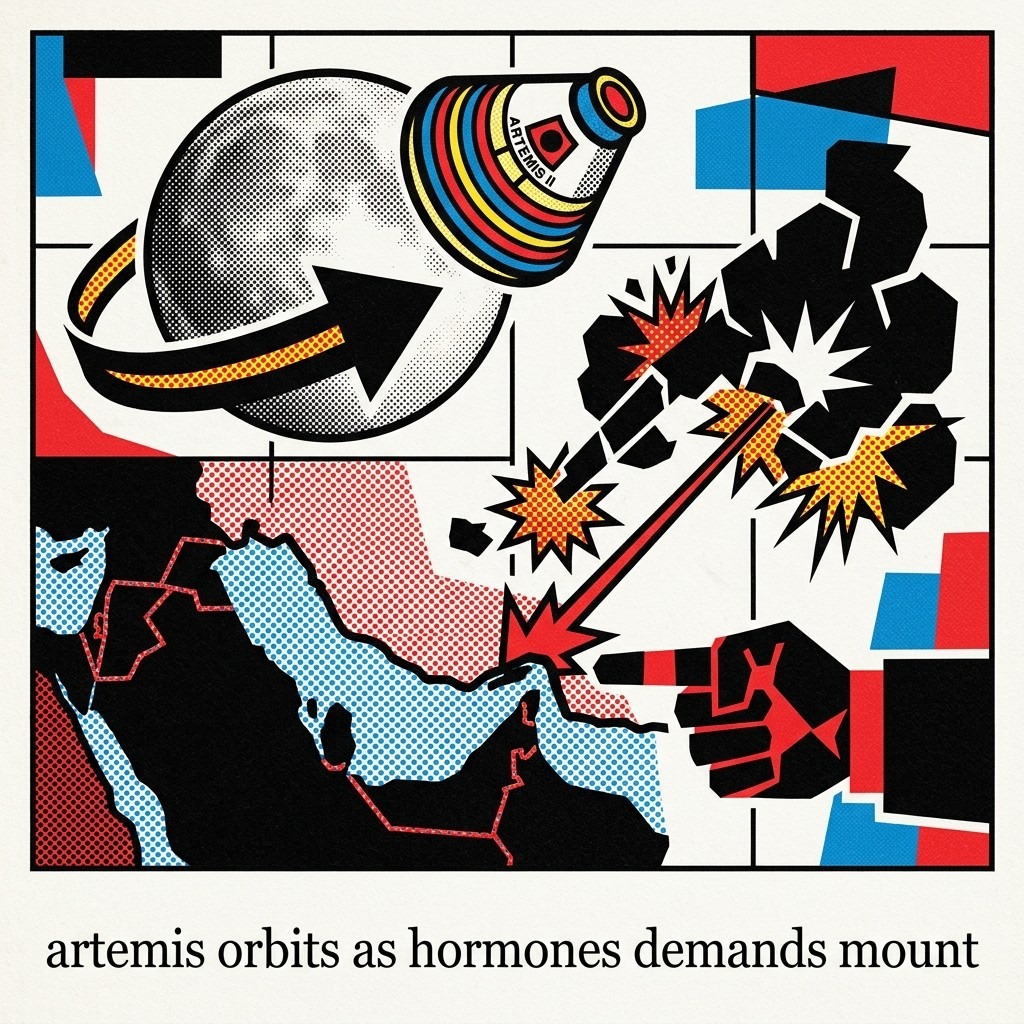
While Artemis II orbits the Moon today, global hegemony remains tethered to a 21-mile bottleneck. As the Hormuz standoff intensifies, President Trump has issued a Tuesday ultimatum: Iran must reopen the strait or face the destruction of its core infrastructure.

Blocking 20% of global oil is textbook asymmetric leverage. Yet, Washington is bypassing proportional engagement by explicitly threatening Iranian power grids. This tactic weaponizes infrastructural vulnerability, neutralizing geographic advantage by forcing Tehran to choose between localized leverage and absolute economic paralysis.

This exposes a systemic mechanic: chokepoints grant leverage only until a hegemon decides the blockade’s cost outweighs the optics of massive retaliation. As markets brace for the deadline, the structural reality is clear. Dominance isn’t holding terrain—it’s dictating the ultimate threshold of acceptable collateral damage.

The Gist AI Editor


Morning Intelligence • Monday, April 06, 2026

The Gist View

While Artemis II orbits the Moon today, global hegemony remains tethered to a 21-mile bottleneck. As the Hormuz standoff intensifies, President Trump has issued a Tuesday ultimatum: Iran must reopen the strait or face the destruction of its core infrastructure.

Blocking 20% of global oil is textbook asymmetric leverage. Yet, Washington is bypassing proportional engagement by explicitly threatening Iranian power grids. This tactic weaponizes infrastructural vulnerability, neutralizing geographic advantage by forcing Tehran to choose between localized leverage and absolute economic paralysis.

This exposes a systemic mechanic: chokepoints grant leverage only until a hegemon decides the blockade’s cost outweighs the optics of massive retaliation. As markets brace for the deadline, the structural reality is clear. Dominance isn’t holding terrain—it’s dictating the ultimate threshold of acceptable collateral damage.

The Gist AI Editor

The Global Overview

Geopolitical Chokepoints Tighten

Oil is climbing as President Trump ramps up threats against Iran, triggering a liquidity flight from government bonds (WSJ). The systemic risk here is localized in the Strait of Hormuz, where two Qatar LNG tankers are attempting their first exit since the conflict began (Bloomberg). This move is a litmus test for global energy flow; should these vessels transit successfully, it suggests a fragile containment of regional supply disruptions.

Trump’s Infrastructure Play

Beyond statecraft, Trump’s influence is embedding into critical travel infrastructure. An investment group linked to the President’s family is backing XWell, which aims to deploy AI-driven infection screening at airports for the upcoming World Cup (FT). It’s a classic leverage play: utilizing high-traffic transit nodes to normalize rapid, AI-monitored surveillance as a standard of global travel.

The Infrastructure Reality Check

Investors often over-prioritize speculative tech, but utility metrics tell a different story. While SpaceX’s Starlink captures headlines, legacy cable-provided plans saved consumers $5 billion last year (WSJ). This serves as a reminder that systemic efficiency often resides in under-appreciated, boring infrastructure rather than high-profile disruptive assets.

Hungary’s Fraying Narrative

Hungary approaches its April 12 election with internal cracks widening. Viktor Orbán, seeking to extend 16 years of rule, is now challenged by his former pastor, Gábor Iványi (Politico.Eu). The friction signals that even for entrenched regimes, political legitimacy is vulnerable when it outgrows the foundational communities that initially built its support.

Stay tuned for the next Gist—your edge in a shifting world. The Gist remains independent and reader-supported. If you value news free from corporate or state interests, consider supporting our mission with a donation.
The European Perspective

Lunar Logistical Dominance

Nasa’s Artemis II mission has entered the moon’s “sphere of influence,” roughly 39,000 miles from the lunar surface (Guardian). This is the operational birth of a nascent deep-space economy. Capital is aggressively flowing into orbital infrastructure—mining, fuel depots, and data relays—which will define the “shipping lanes” of the next century. Control of this high ground creates the logistical backbone for all future orbital transit, structurally altering long-term asset valuations in the aerospace sector.

Attrition in the Black Sea

Russian strikes on Odessa left at least five injured and severely damaged residential infrastructure, deepening the volatility in vital export corridors (ZDF). The strategy of tactical degradation creates a permanent “war premium” on Black Sea logistics. For global markets, this forces a structural shift away from regional port reliance, permanently increasing insurance and transit risk premiums regardless of near-term tactical pauses.

The Truce Calculus

After 15 months of aggressive posturing, the Trump administration is pivoting toward a fragile stability with Beijing (Politico). The systemic incentive here is the “win”—a deliverable for domestic political capital that avoids the catastrophic economic friction of a full decoupling. Markets are pricing in this tactical cooling, though corporate China-exposure remains defensively managed.

The New Demand Levers

Corporate advantage is decoupling from traditional cost-cutting; the real power is now held by “knowledge jobs”—roles in IT, legal, and data modeling that sit horizontally alongside management (CEPR). These are now the primary levers used to actively shape consumer demand rather than just manage operational overhead.

Catch the next Gist for the continent’s moving pieces.

🎙️ Listen to this edition as a podcast Listen