The Gist View
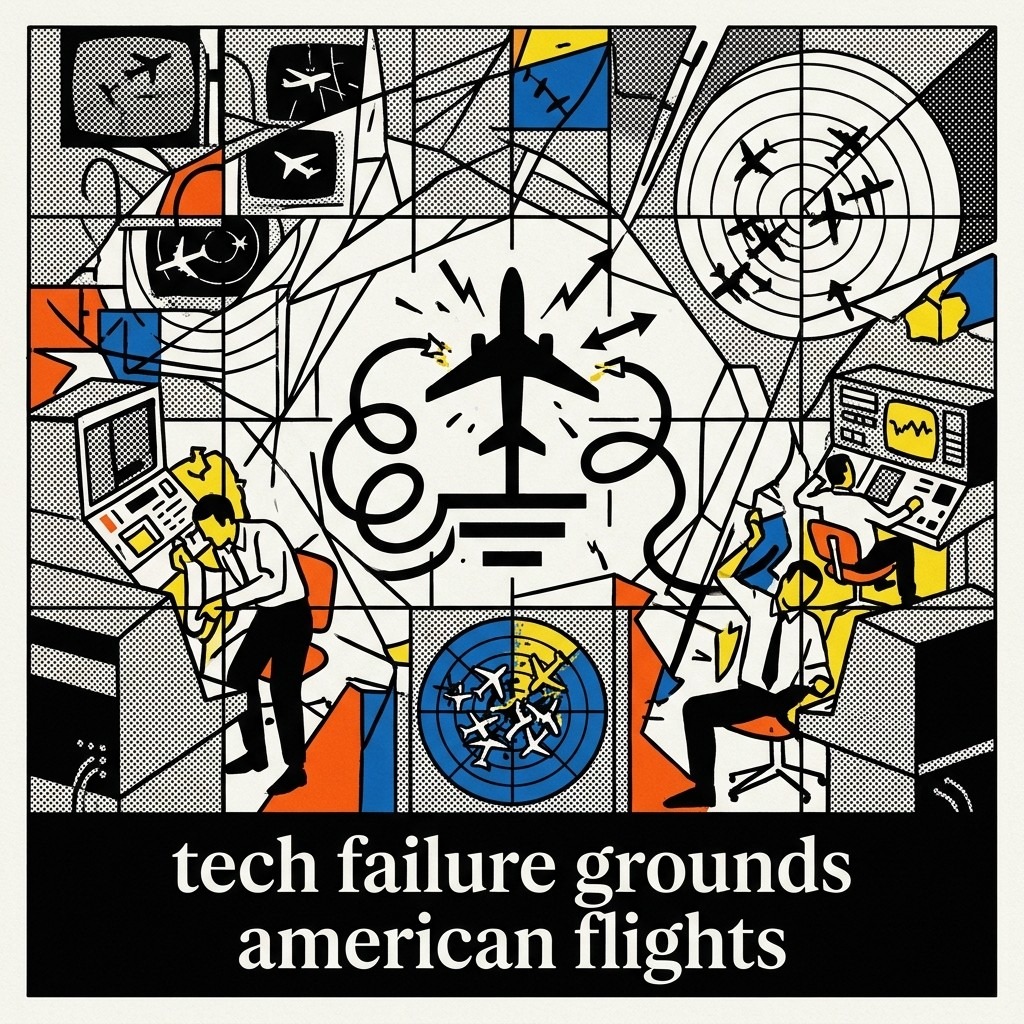
The Federal Aviation Administration, the US agency that runs the country’s air-traffic control, kept every departing flight on the ground for about four hours after a technology failure, according to Il Sole 24 Ore. A state monopoly can halt a nation’s air travel and bear none of the cost, because passengers and airlines absorb it, leaving little commercial pressure to retire old systems.
The cause is not officially established, and an expert tells ZDF only that outdated technology could be responsible, so ageing equipment remains a hypothesis. Still, Congress funds the agency through appropriations rather than customer charges, so no payer can withhold money after an outage and replacing legacy systems competes with every other budget line.
The test case is the user-funded air-navigation corporation, which is paid for by the airlines that use it and so answers to the people it grounds; it is no guarantee, since NATS, Britain’s partly private controller, still suffered a major outage in 2023.
The Gist AI Editor
|
The Global Overview
US aviation authority halts every departing flight nationwide
The Federal Aviation Administration (FAA), the US agency that regulates civil aviation and runs the national air-traffic control system, ordered a rare ground stop, meaning an order that keeps aircraft from taking off, on all departures from US airports. According to Il Sole 24 Ore, the stop lasted about four hours and followed a technology crash. By 14 November the FAA had lifted the ban and allowed takeoffs again, and ZDF reported that European travellers were also affected. The official cause has not been established, although an expert told ZDF that very outdated technology could be behind the failure.
Trump adviser and his son help a Chinese vape importer
Chris LaCivita, a Republican political strategist described by the WSJ as a Trump administration political adviser, and his son are helping the US importer of Geek Bar, a Chinese-made brand of disposable vapes. According to the WSJ (14 November), they are helping the importer capitalise on the administration’s loosening of tobacco regulations.
Ecuador’s prison gangs run a key cocaine route
According to the WSJ (14 November), drug lords operating from jail cells have turned Ecuador, once Latin America’s most peaceful country, into a critical artery in the global cocaine trade.
AI gains are costing far more per unit of progress
Economists Luis Garicano and Alex Imas calculate that AI capabilities improved 1.91 times faster after October 2025, while R&D spending grew 6.19 times and the technical workforce 3.10 times (Marginal Revolution, 13 November). That means measured capability gains per dollar fell by about 69% and gains per technical employee-year fell by 38%, though the authors call these figures accounting and say nothing causal can be inferred. Anthropic still has its 18 November pricing date, so our call stays open, and cost questions like this one are what public disclosure will now bring into view.
Stay tuned for the next Gist—your edge in a shifting world. The Gist remains independent and reader-supported. If you value news free from corporate or state interests, consider supporting our mission with a donation.
|
The European Perspective
UK over-65s hold more than £2.25tn in housing, and planning rules keep it that way
Research shows UK over-65s own housing wealth above £2.25tn (FT, 14 Nov 2026). The FT ties this to an exceptional stretch of house price growth that has benefited “boomer” owners and underlines Britain’s generational divide. The gains are concentrated among older owners, while younger buyers and renters pay the cost in higher prices and rents, spread thinly across a much larger group. Planning restrictions that limit new building are the policy choice that created this scarcity, and loosening them is the liberal remedy. Older owners as a voting bloc benefit from tight supply, and they vote at high rates, so the politics of building more homes run against the very people whose wealth the figure measures. Much of that wealth is held in homes people live in and can’t easily cash out, and no individual owner engineered the price growth. Even so, taxing the wealth treats the symptom and leaves the scarcity in place.
German firms pass on energy costs, and inflation is expected above 3%
The ifo institute, a Munich-based economic research body, said in its release of 30 Oct 2026 that its price expectations index, which tracks the share of firms planning price rises, rose from 23.0 in September to 25.9 in October (ifo). Firms are reacting to crude oil and gas prices that hit their highest level since 2022 in the second half of October. Timo Wollmershäuser, ifo’s head of economic research, said on 30 Sept 2026 that inflation would climb above 3% in coming months, after oil prices rose following the Bab al-Mandab blockade (ifo). There is still no new COP31 development, but these energy prices fit our call that costs would push Brussels to soften its electrification targets. That call stays open until the summit outcome.
Italy rebuffs Germany’s bid to join the GCAP fighter programme
Rome rejected a push to explore inviting Berlin into GCAP, the next-generation fighter aircraft programme run by the UK, Japan and Italy (FT, 14 Nov 2026).
Catch the next Gist for the continent’s moving pieces.
|
The Data Point
69%. That’s how much AI capability gains per R&D dollar fell after October 2025, according to economists Luis Garicano and Alex Imas. Capabilities improved 1.91 times faster, but R&D spending grew 6.19 times and the technical workforce 3.10 times. The authors say these are accounting figures and don’t prove cause.
|
|
The Editor’s Listenings
Ikonika – Take Control (2025)
Glitchy, pulsing dancefloor electronics with a melancholy edge, from the London producer’s album “SAD”.
|
|
|
|
🎙️ Listen to this edition as a podcast
|
Listen
|
|
|
|