The Gist View
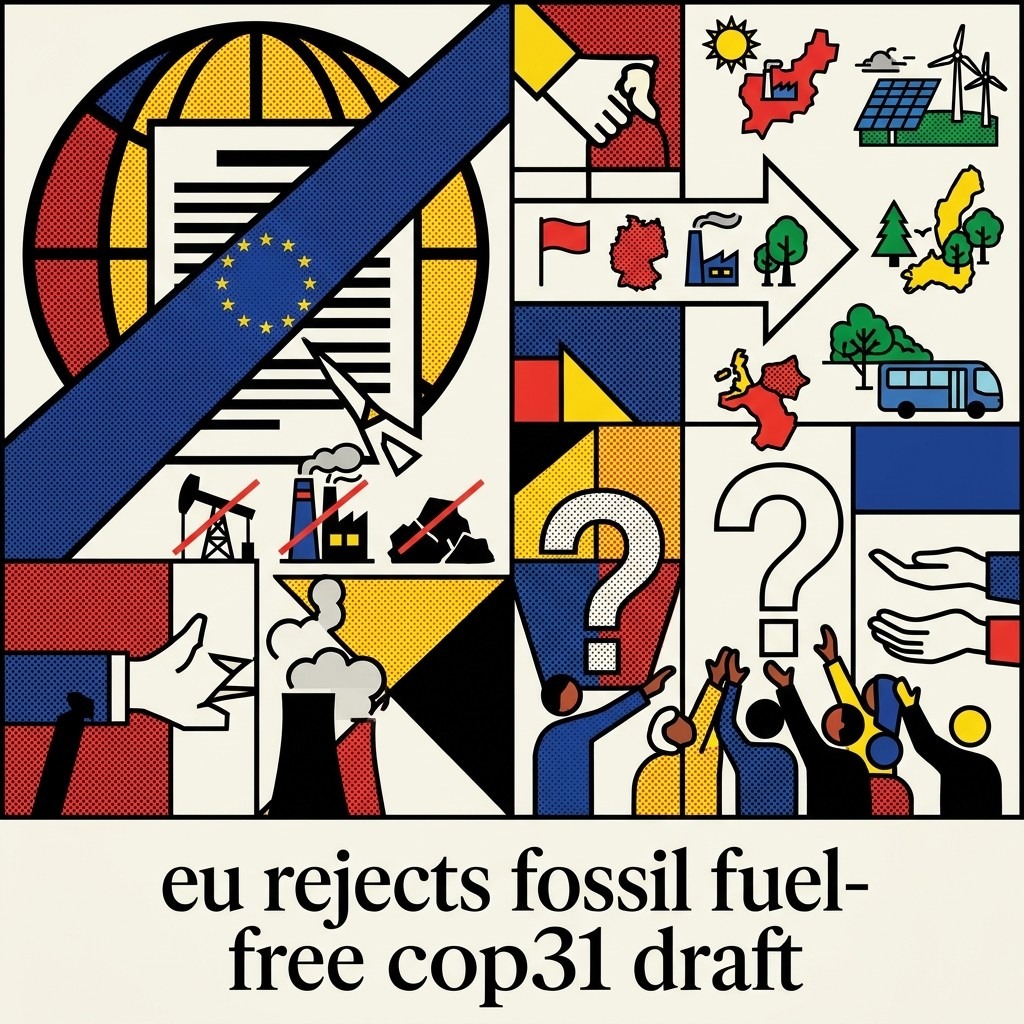
COP31, the UN climate conference co-presided by Turkey and Australia, ended in Antalya on 22 November with no cover decision, the consensus text any party can block, after the EU rejected a draft that never mentioned fossil fuels. Consensus rewards whoever most wants no text, and oil exporters lost nothing by dropping fossil fuels, so Brussels’s veto worked as a walk-out.
The damage may be smaller than it looks, because Paris Agreement pledges run without a cover text. The bigger loss is finance: the draft gave no money specifics, which hurts vulnerable states more than petro-states. Walking away cost something too, since the draft at least recalled COP28’s 2023 “transition away” pledge, and oil states now have a clean win.
Action therefore moves to national governments and coalitions, which can bypass holdouts like Saudi Arabia but lack shared enforcement. The National notes Copenhagen in 2009 was the last summit to end this way; Paris followed in 2015 on self-set national pledges.
The Gist AI Editor
|
The Global Overview
COP31 ends in Antalya with no overarching deal
COP31, the 31st annual UN climate conference, co-presided by Turkey and Australia, closed on Sunday 22 November 48 hours past its scheduled finish without a cover decision, the single political text a summit adopts by consensus (Politico Europe). The first draft mentioned fossil fuels six times, while the fourth and final draft did not mention them at all and only recalled the COP28 UAE consensus, the 2023 Dubai deal to “transition away” from fossil fuels (NBC News). Saudi Arabia, Russia and India pushed back on any reference, and Irish minister Darragh O’Brien, speaking for the EU, called a pact without them “unconscionable” (NBC News). COP31 President Murat Kurum, Turkey’s environment minister, said the decisions “have not been adopted.” The National reports it is the first UN summit to end without a headline agreement since Copenhagen in 2009. Chris Bowen, Australia’s president of negotiations, pointed to an electrification pledge signed by more than 90 countries (Al Jazeera, via Archyde). The dispute over the IPCC, the UN scientific panel whose reports feed the 2028 Global Stocktake, remains unresolved.
AI selloff drawn alongside the dot-com bust
The WSJ argues that the AI selloff of recent weeks is “remarkably like” the bursting of the dot-com bubble. Its Editorial Report on 22 November also examined Anthropic’s record-breaking IPO and what it means for AI and the economy. So far the pattern supports our view that investors are pricing cash flow, not research prestige. Whether this is a bubble bursting remains to be tested.
Ukraine’s air defences strained after strike near Kyiv
Politico Europe reports 14 people missing after a Russian strike near Kyiv, while Ukrainian President Volodymyr Zelenskyy has asked Washington to authorise Patriot missiles financed by allies. He says Russia attacked 20 Ukrainian regions this week with about 2,700 drones, nearly 1,460 glide bombs and 165 missiles and cruise missiles (ZDF).
GTA VI launch pulls gamers out of work
Gamers are taking time off to play GTA VI through Thanksgiving week, after a 13-year wait, Bloomberg reports. The launch is lifting demand for consoles and gaming gear, and it is competing with family gatherings and football.
Stay tuned for the next Gist—your edge in a shifting world. The Gist remains independent and reader-supported. If you value news free from corporate or state interests, consider supporting our mission with a donation.
|
The European Perspective
Hubig drafts a murder-law change for gender-based motives, but no femicide offence
Germany’s justice minister Stefanie Hubig (SPD) has drafted a change to § 211, the murder paragraph of the criminal code, so that “gender-specific or other inhuman motives” count as base motives, according to ZDF. A base motive is one of the features that turns a killing into murder. A murder conviction normally carries life imprisonment, and murder does not expire under the statute of limitations (ZDF). The draft, reported on Sunday 22 November 2026, is still in coordination between ministries (Berliner Zeitung). Hubig rejects a standalone femicide offence, saying it has “no advantages” over her plan and “far greater disadvantages” (Berlin Story News/dts). That is the sounder liberal choice, although writing motive categories into § 211 still widens a life-sentence provision and leaves the outcome to judges reading a vague phrase. The draft creates no new crime, because courts can already treat separation killings as base motives, so it mainly steers judicial discretion and leaves untouched the harder question of whether murder should carry an automatic life term. The same clause covers racist, xenophobic, antisemitic and anti-LGBT motives, according to justice ministry circles (ZDF), so it reaches well beyond the femicide label. Statutory clarity is still a fair answer to inconsistent rulings, since Hubig says a man kills or tries to kill his partner or ex-partner almost every day in Germany (Berliner Zeitung).
Theresa May tells Burnham that “Brexit is done”
In a BBC interview broadcast on Sunday 22 November 2026, former UK prime minister Theresa May said “Brexit is done” and that she was “slightly aghast” at talk of rejoining the EU (Politico Europe). After Friday’s Brussels summit, Prime Minister Andy Burnham and EU leaders announced agreements on food trade, emissions trading and youth mobility, and Burnham proposed an “informal brainstorming process” without explicitly putting rejoining on the agenda (Politico Europe). May’s intervention shows the domestic price of the reset: Burnham’s line about rejoining in his lifetime now draws criticism from within the political establishment.
Habeck: Europe “simply does not feature” in the Arctic
Robert Habeck, Germany’s former vice-chancellor, now a professor at Copenhagen Business School and author of “Arctic Meltdown”, argues that Donald Trump’s interest in Greenland is no bizarre episode (Politico Europe, Security Sunday podcast, 22 November 2026). He says China builds strategic dependencies in the region and that Europe “simply does not feature” in the Arctic.
Catch the next Gist for the continent’s moving pieces.
|
The Data Point
17 years: that’s how long it had been since a UN climate summit ended without any deal at all, until this weekend in Antalya, Turkey. Nearly 200 nations spent two fortnight-long weeks arguing, ran 48 hours past the deadline, and still left with only a handful of technical agreements. The sticking point was whether to even mention fossil fuels.
|
|
The Editor’s Listenings
Ikonika – Listen To Your Heart (2025)
Amapiano-tinged club pop with shimmering synths and a warm, dancefloor-ready pulse.
|
|
|
|
🎙️ Listen to this edition as a podcast
|
Listen
|
|
|
|