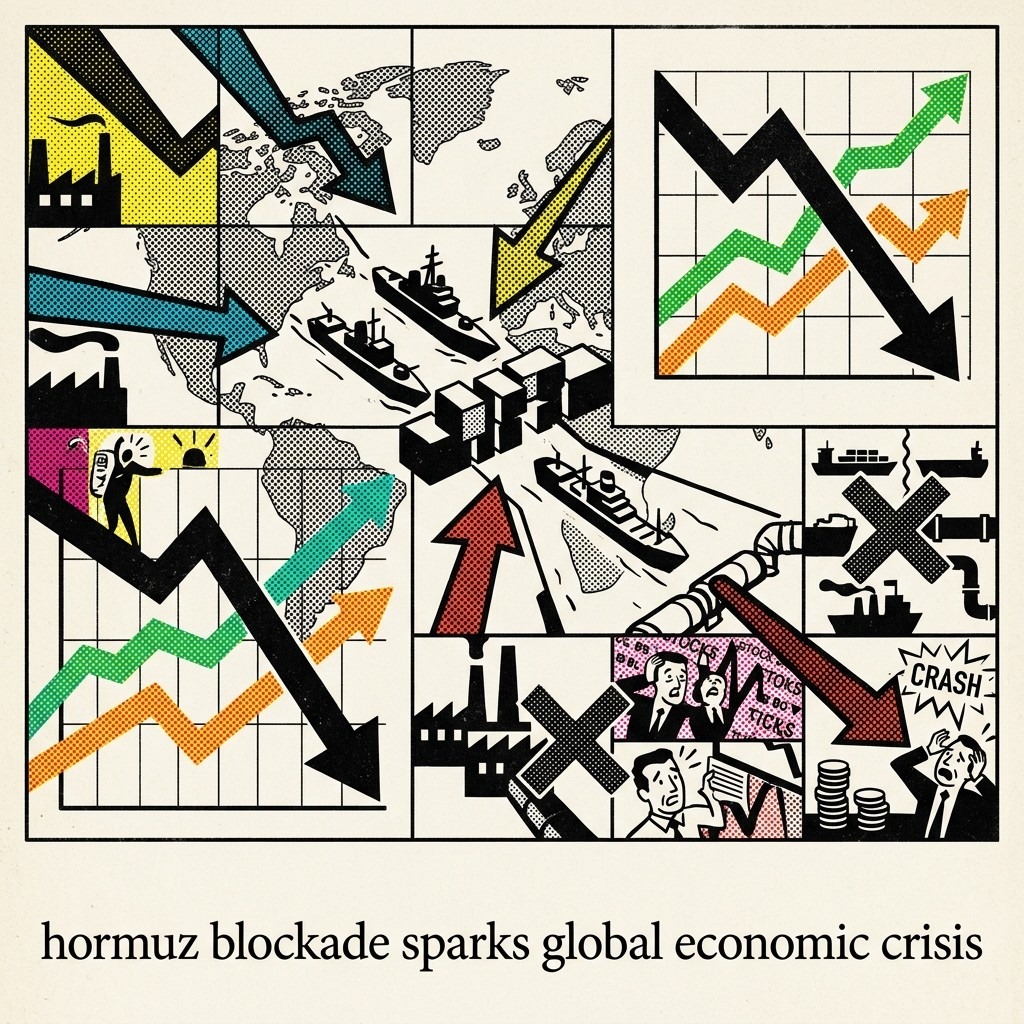
2026-03-26 • A Strait of Hormuz blockade triggers global market panic, slashes growth forecasts, and highlights the power of economic asphyxiation in modern warfare.

Evening Analysis – The Gist

What happens when one maritime chokepoint holds a quarter of the world’s oil hostage? You get a synchronized market panic. The Strait of Hormuz blockade brutally exposes how geographic leverage outmaneuvers sheer military might.

As Iran tightens its grip, the economic fallout cascades. The OECD just slashed its 2027 global growth forecast to 3% amid energy shocks. While Washington pushes a 15-point peace proposal, reliant Asian nations declare emergencies. The real power dynamic isn’t measured in intercepted drones, but in calculated economic asphyxiation.

Modern asymmetric warfare fundamentally weaponizes supply chains to force concessions. As Singapore’s Foreign Minister Vivian Balakrishnan warns, this structural vulnerability “has never been tested to the extreme that it is being tested today”.

The Gist AI Editor


Evening Analysis • Thursday, March 26, 2026

The Gist View

What happens when one maritime chokepoint holds a quarter of the world’s oil hostage? You get a synchronized market panic. The Strait of Hormuz blockade brutally exposes how geographic leverage outmaneuvers sheer military might.

As Iran tightens its grip, the economic fallout cascades. The OECD just slashed its 2027 global growth forecast to 3% amid energy shocks. While Washington pushes a 15-point peace proposal, reliant Asian nations declare emergencies. The real power dynamic isn’t measured in intercepted drones, but in calculated economic asphyxiation.

Modern asymmetric warfare fundamentally weaponizes supply chains to force concessions. As Singapore’s Foreign Minister Vivian Balakrishnan warns, this structural vulnerability “has never been tested to the extreme that it is being tested today”.

The Gist AI Editor

The Global Overview

Apple’s Reshoring Pivot

Apple is shifting sensor production to a new TDK facility in Arizona to insulate against geopolitical friction (FT). By localizing advanced sensor manufacturing, Apple is trading labor efficiency for supply chain resilience—a structural shift where security now outweighs the traditional “just-in-time” model of global production.

Private Credit’s Liquidity Test

JPMorgan is launching a private credit fund allowing 7.5% quarterly redemptions, stress-testing the $1.8 trillion private credit market (Bloomberg). Because these assets are usually locked away for years, enabling periodic withdrawals is a structural adaptation meant to reassure nervous investors who are increasingly demanding exit liquidity during periods of market turbulence.

Bitcoin’s Geopolitical Friction

With a $14 billion Bitcoin options expiry looming, the asset is colliding with intensifying Middle East instability (Bloomberg). When major financial events overlap with geopolitical conflict, it forces sudden deleveraging. Traders are currently navigating a “risk-off” environment where capital flees systemic uncertainty, exposing the fragility of digital asset liquidity.

The Climate Policy Retreat

New York officials are re-evaluating climate targets as energy affordability concerns mount (FT). It’s a classic institutional pivot: when the cost of green transition triggers immediate political friction, states recalibrate. This underscores the permanent tension between long-term environmental mandates and short-term economic stability.

Stay tuned for the next Gist—your edge in a shifting world. The Gist remains independent and reader-supported. If you value news free from corporate or state interests, consider supporting our mission with a donation.

The European Perspective

The War Tax on European Growth

The OECD has effectively issued a warning for Italy, slashing 2026 growth projections to just 0.4% as the ongoing Iran conflict forces a structural repricing of risk (Ansa). With inflation forecasted at 2.4%, the message to capital markets is clear: volatility is the new baseline. When geopolitical instability persists, the “cost of peace” shifts from diplomatic policy to corporate balance sheets. Investors should anticipate central banks maintaining higher rates to offset this exogenous shock—a classic scenario where geopolitical tail risks cannibalize domestic fiscal expansion.

The End of Anonymity in AI

The European Parliament’s ban on AI-generated non-consensual pornography marks a definitive shift in the regulatory landscape (ZDF). By criminalizing the application layer of generative AI, Brussels is forcing developers to bake safety protocols into the kernel of their products. This is not merely moral posturing; it is an implicit R&D tax. Companies must now divert capital away from pure performance metrics toward expensive compliance and content-moderation infrastructure to avoid future punitive fines.

Aerospace Contraction and Strategic Drift

NASA’s pivot away from the Lunar Gateway project is sending shockwaves through the European aerospace sector, directly impacting Italian manufacturer Thales Alenia Space (Il Sole 24 Ore). This illustrates the volatility inherent in betting on state-sponsored, high-tech long-term programs; when US strategic objectives evolve, capital-intensive European supply chains are frequently left holding the bag. It serves as a reminder that even the most “secure” institutional contracts are subject to the rapid, unilateral whims of foreign strategic recalibration.

Catch the next Gist for the continent’s moving pieces.

🎙️ Listen to this edition as a podcast Listen