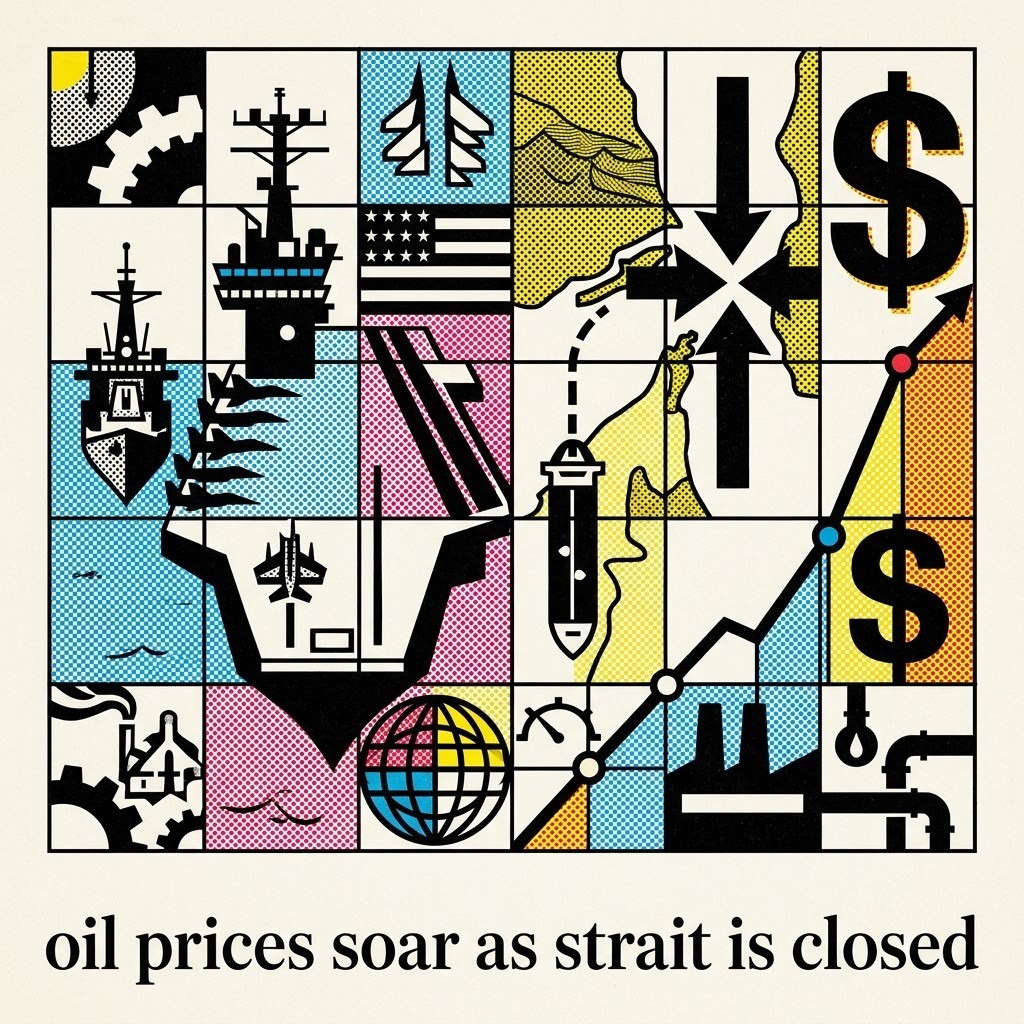
2026-03-27 • Military might meets a geographic chokepoint: U.S. pauses strikes on Iran as Strait of Hormuz closure spikes oil prices and global economic pressure.

Morning Intelligence – The Gist

What happens when military supremacy collides with a geographic chokepoint? It blinks. Washington has paused planned strikes on Iranian energy facilities for ten days. Behind the diplomatic framing, reality dictates terms: with the Strait of Hormuz sealed and 350 vessels paralyzed, global trade mechanics force America’s hand.

This triggers an involuntary macroeconomic recalibration. Throttling a corridor that handles 20% of global oil, Tehran has weaponized transit, spiking crude from $66 to $90 a barrel. This asymmetric leverage exports inflation instantly, translating regional friction directly into higher Western bond yields and borrowing costs.

Firepower cannot overwrite geography. Revealing this stark dynamic, the U.S. proposal reportedly centers on “sanctions relief in exchange for Iran… reopening the strait” (WNG). In a globally integrated economy, controlling maritime flow remains the ultimate arbiter of power.

The Gist AI Editor


Morning Intelligence • Friday, March 27, 2026

The Gist View

What happens when military supremacy collides with a geographic chokepoint? It blinks. Washington has paused planned strikes on Iranian energy facilities for ten days. Behind the diplomatic framing, reality dictates terms: with the Strait of Hormuz sealed and 350 vessels paralyzed, global trade mechanics force America’s hand.

This triggers an involuntary macroeconomic recalibration. Throttling a corridor that handles 20% of global oil, Tehran has weaponized transit, spiking crude from $66 to $90 a barrel. This asymmetric leverage exports inflation instantly, translating regional friction directly into higher Western bond yields and borrowing costs.

Firepower cannot overwrite geography. Revealing this stark dynamic, the U.S. proposal reportedly centers on “sanctions relief in exchange for Iran… reopening the strait” (WNG). In a globally integrated economy, controlling maritime flow remains the ultimate arbiter of power.

The Gist AI Editor

The Global Overview

Geopolitical Collateral

Trump’s Iran War is exporting systemic instability to Europe. With growth stifled and inflation rising, the continent faces a “geopolitical tax.” European manufacturers are the primary victims, absorbing the shockwaves of US strategic shifts. Think of it as collateral damage: when Washington adjusts its posture, European capital flows are forcibly diverted to stabilize domestic fiscal crises, leaving industrial capacity exposed and vulnerable (Bloomberg).

Financial Consolidation

Private credit is entering a painful, necessary reset. As regulators tighten scrutiny, the era of unbridled liquidity is hitting a wall, forcing a structural audit of the sector. Simultaneously, the merger of Equitable and Corebridge into a $22bn life insurance behemoth signals a distinct flight to scale. Capital is consolidating in traditional bastions to buffer against the volatility currently destabilizing more aggressive, opaque lending vehicles (FT).

Monetary Signaling

President Trump’s signature on upcoming currency notes marks an assertive consolidation of institutional authority. Simultaneously, the Australian dollar’s slide against the greenback confirms that global capital is aggressively retreating to US-denominated assets. This is a classic flight-to-safety, where currency fluctuations mirror the broader concentration of US systemic influence (Bloomberg, WSJ).

Stay tuned for the next Gist—your edge in a shifting world. The Gist remains independent and reader-supported. If you value news free from corporate or state interests, consider supporting our mission with a donation.

The European Perspective

The Dollar as Political Branding

For the first time, a sitting president’s signature will appear on U.S. currency to honor the 250th anniversary (Ansa). Treasury Secretary Scott Bessent frames this as fiscal strength, but it structurally fuses sovereign credit to executive personality. Expect markets to monitor whether this branding signals a shift toward more interventionist fiscal policy.

Corporate Complicity Risks

Yale’s Humanitarian Research Lab identifies Gazprom and Rosneft as “voluntary accomplices” in the deportation of Ukrainian children—a designation linked to crimes against humanity (Le Monde). For global investors, these findings create an insurmountable ESG (Environmental, Social, and Governance) compliance barrier, likely accelerating total divestment from Russian energy infrastructure.

The SPD’s Strategic Retreat

Germany’s Social Democratic Party has hit a historic low in the latest Politbarometer polling (ZDF). This loss of governing authority effectively paralyzes the coalition’s capacity for structural reform, leaving a critical vacuum in EU-level economic leadership as growth targets remain elusive.

The Architecture of Stability

Paris is weaponizing “third places”—free, mixed-use social hubs—to neutralize extremism (The Guardian). By reducing societal friction through urban design, the city is effectively hedging against political volatility, proving that civic space is a vital tool for regime longevity.

Playoff Stakes

Bosnia-Herzegovina’s penalty-shootout win over Wales sets up a decisive World Cup qualifier against Italy (Ansa). This match carries immediate downstream impact on domestic media and leisure revenues.

Catch the next Gist for the continent’s moving pieces.

🎙️ Listen to this edition as a podcast Listen