2026-03-27 • Power lies in pause, not strike. The Strait of Hormuz blockade causes global oil crisis; central banks and supply chains strain under energy restructuring.

Evening Analysis – The Gist

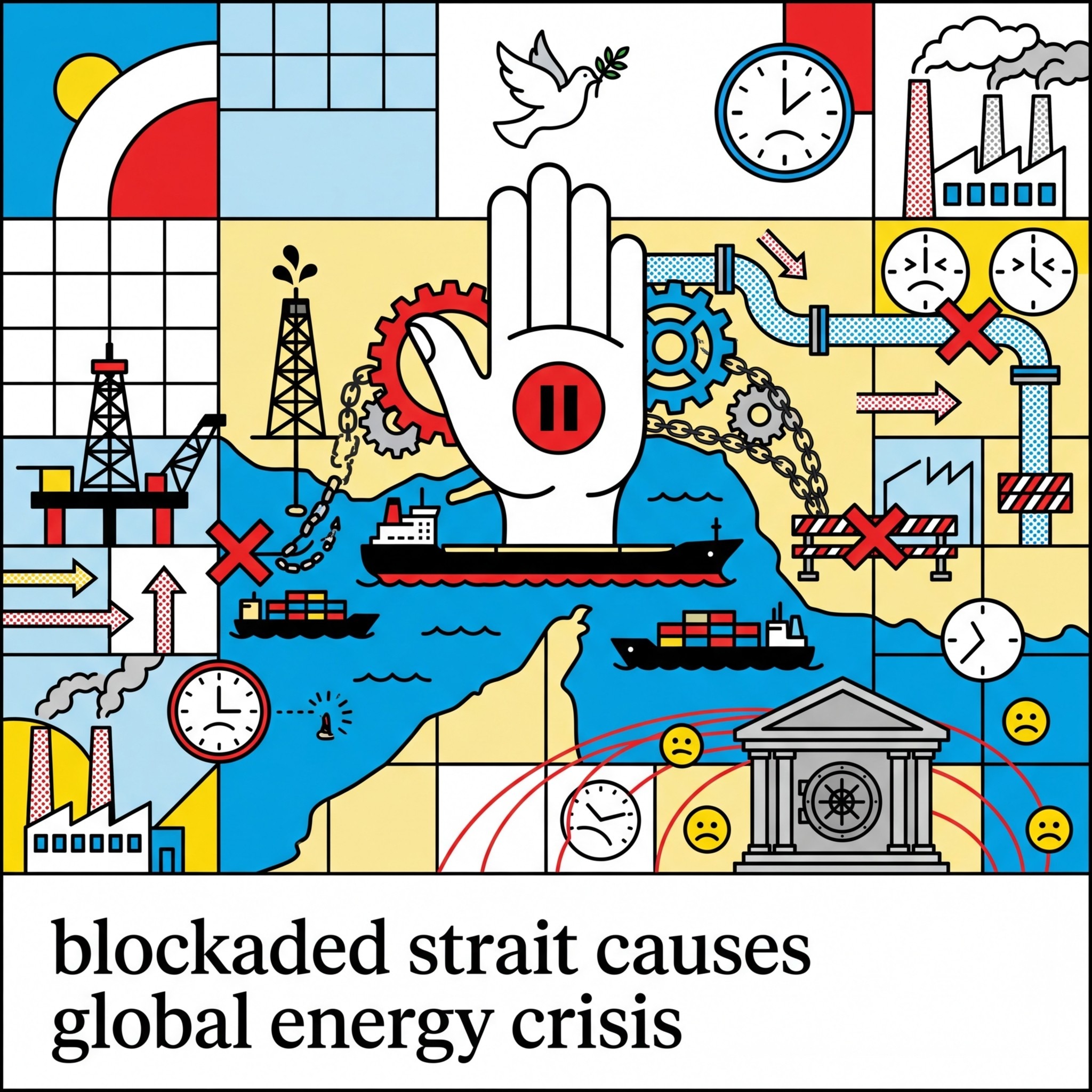
Power isn’t wielded through the strike, but the pause. Washington’s 10-day delay hitting Iranian energy assets reveals a structural reality: threatening disruption provides more leverage than destruction. The blockaded Strait of Hormuz is now the globe’s ultimate economic choke-point.

The fallout is systemic. The IEA reports an 11 million barrel-per-day deficit—eclipsing the 1970s oil shocks. Central banks are trapped, forced to price in a military standoff while supply chains fracture under global fuel rationing and force majeure declarations.

This friction accelerates involuntary energy restructuring, forcing permanent industrial adaptation over temporary policy fixes. As IEA Director Fatih Birol warned regarding severed trade arteries, “no country will be immune to the effects of this crisis”.

The Gist AI Editor


Evening Analysis • Friday, March 27, 2026

The Gist View

Power isn’t wielded through the strike, but the pause. Washington’s 10-day delay hitting Iranian energy assets reveals a structural reality: threatening disruption provides more leverage than destruction. The blockaded Strait of Hormuz is now the globe’s ultimate economic choke-point.

The fallout is systemic. The IEA reports an 11 million barrel-per-day deficit—eclipsing the 1970s oil shocks. Central banks are trapped, forced to price in a military standoff while supply chains fracture under global fuel rationing and force majeure declarations.

This friction accelerates involuntary energy restructuring, forcing permanent industrial adaptation over temporary policy fixes. As IEA Director Fatih Birol warned regarding severed trade arteries, “no country will be immune to the effects of this crisis”.

The Gist AI Editor

The Global Overview

Argentina and the ECB: Strategic Caution

A US court’s rejection of a $16 billion verdict against Argentina is a massive capital win for President Milei’s fiscal reforms (WSJ). It preserves state liquidity, essential for stabilizing the economy. Meanwhile, the ECB is counseling patience regarding the Iran conflict, with Isabel Schnabel warning against rash policy reactions (WSJ). Central bankers are essentially admitting they lack the immediate levers to offset energy shocks, forcing global markets to price in higher geopolitical risk premiums rather than expecting a monetary fix.

Energy Pragmatism Over Ideology

The US Interior Department is trading offshore wind projects for fossil fuel development (FT), signaling a structural shift toward immediate energy security over long-term green mandates. Across the Atlantic, Deutsche Bank argues that UK energy subsidies could be self-funding by suppressing inflation and lowering borrowing costs (Bloomberg). Both moves underscore a broader systemic realization: affordability and supply reliability are currently the only currencies that matter to global markets, overriding previous transition-era policy frameworks.

The Hunt for Resilience and Yield

Capital is fleeing volatility for essential industrial supply chains as Blackstone pursues aerospace manufacturer Senior (FT). Meanwhile, Xerox is deploying aggressive “liability management”—a euphemism for raising new debt that effectively subordinates existing creditors (FT). Finally, firms like Neko Health are monetizing consumer health anxiety via AI-driven body scans (Bloomberg), bypassing traditional primary care bottlenecks. Investors are clearly prioritizing industrial security and privatized, high-margin efficiency.

Stay tuned for the next Gist—your edge in a shifting world. The Gist remains independent and reader-supported. If you value news free from corporate or state interests, consider supporting our mission with a donation.

The European Perspective

The Kremlin’s Fiscal Friction

The Kremlin is publicly deflecting reports of state-mandated oligarch funding for the Ukraine conflict, but the data tells a deeper story. With Russia’s defense budget surging 42% year-over-year (Politico), the state is signaling acute capital constraints. Curiously, narrative control is fracturing; Russian military bloggers are actively rejecting conspiracy theories regarding NATO drone collusion (EUObserver). By debunking the “external enemy” trope, these brokers are insulating domestic discourse from state-imposed fabrications, signaling a structural decline in the regime’s ability to manufacture consensus as fiscal pressure mounts.

The Economics of Extra-Terrestrial Resilience

As resource volatility increases, space-based agriculture is shifting from esoteric research to critical infrastructure. NASA’s latest experiments in high-yield space farming (Euronews) signal a pivot toward modular, self-sustaining biological systems. For institutional capital, this validates space-tech’s transition from “exploration hobby” to “resilience insurance.” The incentive is clear: control the supply chain of calories in hostile environments to command the future of deep-space logistics.

Rome’s Cultural Leverage

Capital is rotating toward heritage-brand dominance, with Rome hosting the 41st Elite Model Look final (Ansa). This leverages historical infrastructure to anchor global lifestyle summits, reinforcing Italy’s position as an immovable node in the global luxury network.

Catch the next Gist for the continent’s moving pieces.

🎙️ Listen to this edition as a podcast Listen