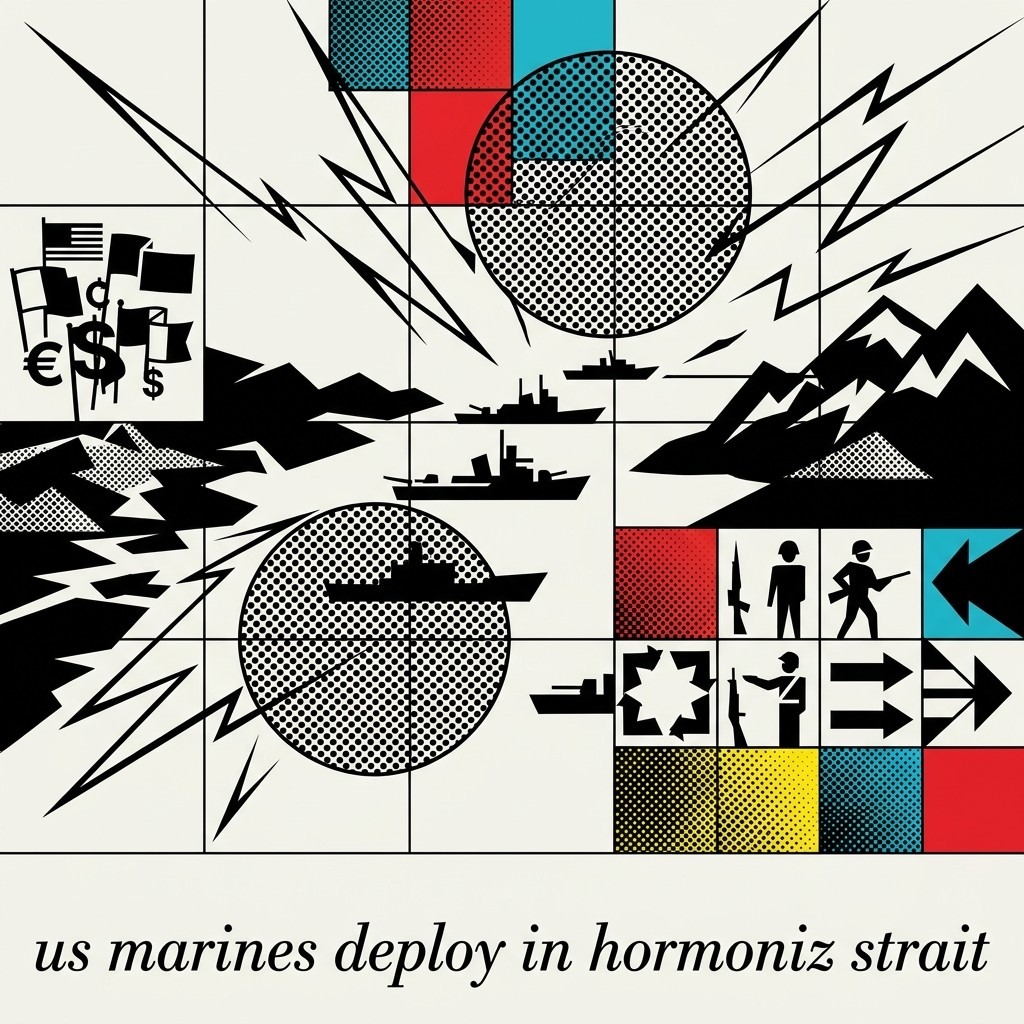
2026-03-30 • U.S. Marines deploy as Europe declines support in Hormuz, prioritizing economic survival. This challenges U.S. security commitments and Western deterrence.

Morning Intelligence – The Gist

Good morning at 07:02. What happens when a superpower goes to war and its allies decline the invitation? As U.S. Marines deploy to the Middle East, President Trump is threatening NATO commitments because Europe refuses to back American operations in the Strait of Hormuz.

Capitals prioritize economic survival over Washington’s objectives. With 20% of global oil crossing Hormuz, allies know joining a U.S.-led coalition guarantees higher ambush risks and crippling insurance premiums. The structural message is clear: America’s security umbrella now demands mandatory, high-stakes participation fees.

This exposes the quiet dissolution of Western deterrence. As a recent U.S. intelligence assessment concluded, Iran is “consolidating power, not collapsing,” making assumptions of rapid coalition-backed victories structurally obsolete.

The Gist AI Editor


Morning Intelligence • Monday, March 30, 2026

The Gist View

Good morning at 07:02. What happens when a superpower goes to war and its allies decline the invitation? As U.S. Marines deploy to the Middle East, President Trump is threatening NATO commitments because Europe refuses to back American operations in the Strait of Hormuz.

Capitals prioritize economic survival over Washington’s objectives. With 20% of global oil crossing Hormuz, allies know joining a U.S.-led coalition guarantees higher ambush risks and crippling insurance premiums. The structural message is clear: America’s security umbrella now demands mandatory, high-stakes participation fees.

This exposes the quiet dissolution of Western deterrence. As a recent U.S. intelligence assessment concluded, Iran is “consolidating power, not collapsing,” making assumptions of rapid coalition-backed victories structurally obsolete.

The Gist AI Editor

The Global Overview

TotalEnergies’ Crude Monopoly

TotalEnergies secured a supply chain advantage by buying every available May-loading cargo from the UAE and Oman (FT). By cornering the market, they exploit regional volatility, forcing competitors to pay a premium for energy while the firm captures the spread.

Finland’s Drone Perimeter

Drone breaches in Finland show how gray-zone threats are a permanent cost of national security (Bloomberg). By testing sensor thresholds, these incursions function like “probing a fence,” forcing states to increase defense spending—effectively taxing national budgets to maintain territorial integrity without a single shot being fired.

Artemis II Institutional Pivot

NASA’s upcoming Moon mission signals that space is a strategic asset for influence (NYT). While private firms chase low-orbit profits, government-backed missions reclaim the “prestige high ground,” leveraging state budgets to signal long-term dominance in deep-space logistics.

BYD’s Margin Ceiling

BYD’s first annual profit drop in four years marks the end of price-war scaling (WSJ). Aggressive discounting has hit a wall, proving that volume without pricing power erodes returns—a clear warning sign for the entire EV sector’s sustainability.

Stay tuned for the next Gist—your edge in a shifting world. The Gist remains independent and reader-supported. If you value news free from corporate or state interests, consider supporting our mission with a donation.

The European Perspective

The Death of Global Trade Consensus

The WTO ministerial meeting collapsed without a deal on e-commerce tariffs, signaling a hard stop for global trade rulemaking (Politico). With no consensus on reform, the system is retreating. Capital will inevitably favor jurisdictions with predictable, localized rules over the increasingly gridlocked multilateral framework.

Germany’s Fiscal Reality Check

German policy is pivoting to austerity, with a leaked draft proposing €2.7 billion in youth welfare cuts (Politico). When paired with a projected €14 billion deficit for health insurers by 2027, the state’s incentive is clear: balance-sheet preservation is trumping social expansion. The “easy money” era for domestic social programs has expired.

EU Security as the New Currency

The EU’s expansion narrative has inverted. Formerly driven by GDP growth, aspiring members now seek entry solely for security (Politico). With the NATO architecture shifting under President Donald Trump, membership is no longer an economic luxury—it is a survival hedge. The bloc is structurally transitioning from a trade union to a security pact.

Defense Innovation: The Divergence

Rheinmetall’s dismissal of Ukrainian drone tech exposes the rift between legacy defense giants and agile insurgents (Guardian). While Rheinmetall clings to heavy artillery, localized drone production is effectively disrupting Russian logistics. This confirms that in modern conflict, low-cost, decentralized scalability often outperforms heavy capital investment.

Catch the next Gist for the continent’s moving pieces.

🎙️ Listen to this edition as a podcast Listen