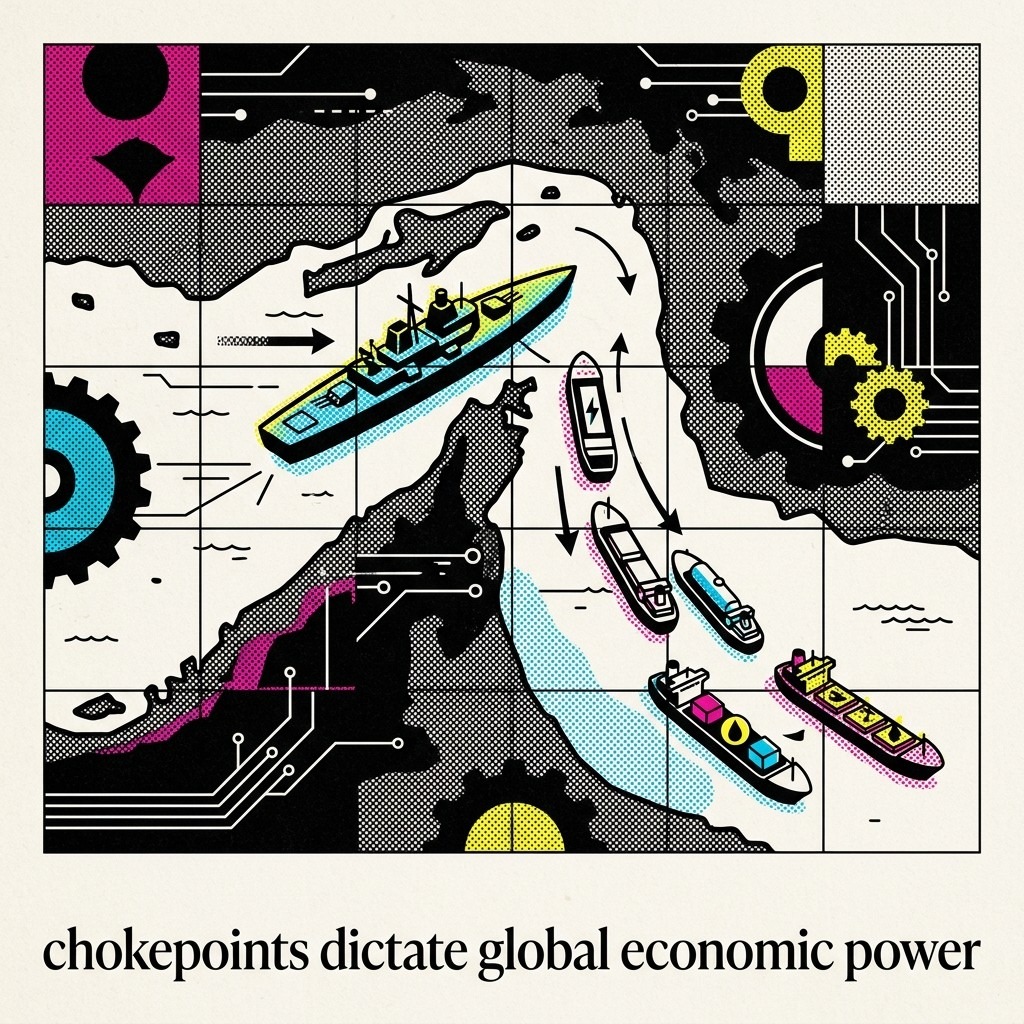
2026-03-31 • Weaponizing chokepoints like the Strait of Hormuz dictates global economics, as shown by the Al Salmi strike, highlighting transit’s power over capital.

Morning Intelligence – The Gist

When energy arteries become toll booths, warfare reshapes reality. The drone strike on the tanker Al Salmi at Dubai Port proves structural leverage. Weaponizing chokepoints allows actors to dictate global economics without winning conventional wars.

The math is punishing. A paralyzed Strait of Hormuz chokes 20% of world oil, driving a historic 59% monthly surge in Brent crude. Washington’s willingness to pause hostilities without reopening the waterway reveals a systemic concession: military primacy cannot instantly reconstruct supply chains.

This friction forces monetary paralysis. As Fed Chair Powell noted, “monetary maneuvers work over the longer-term” against immediate energy shocks. The structural truth is uncompromising: today’s true currency of power isn’t capital—it’s the physical transit of commodities.

The Gist AI Editor


Morning Intelligence • Tuesday, March 31, 2026

The Gist View

When energy arteries become toll booths, warfare reshapes reality. The drone strike on the tanker Al Salmi at Dubai Port proves structural leverage. Weaponizing chokepoints allows actors to dictate global economics without winning conventional wars.

The math is punishing. A paralyzed Strait of Hormuz chokes 20% of world oil, driving a historic 59% monthly surge in Brent crude. Washington’s willingness to pause hostilities without reopening the waterway reveals a systemic concession: military primacy cannot instantly reconstruct supply chains.

This friction forces monetary paralysis. As Fed Chair Powell noted, “monetary maneuvers work over the longer-term” against immediate energy shocks. The structural truth is uncompromising: today’s true currency of power isn’t capital—it’s the physical transit of commodities.

The Gist AI Editor

The Global Overview

The Commodity War Dividend

As Iran-related tensions threaten the Strait of Hormuz, the global energy system is experiencing a classic ‘bottleneck premium.’ Conflict-driven supply fears are spiking prices, triggering a massive redistribution of wealth toward resource exporters. Australia, for instance, is poised to capture a multi-billion dollar windfall in coal and gas revenues through 2030 (Bloomberg). For the broader economy, this acts as a structural tax on consumption; capital is flowing away from energy importers and into the coffers of secure, commodity-rich nations, deepening geopolitical divides.

Wall Street’s Reality Check

Markets are ending their worst quarter in four years (WSJ), as the ‘soft landing’ narrative frays. Investors are shifting from growth optimism to recession-proofing, a move that highlights deep systemic fragility. When central bank liquidity meets geopolitical shock, capital retreats to safety. The trend is clear: market participants are no longer betting on expansion, but on survival, stripping away the excesses of the previous year as the era of cheap, easy growth concludes.

Regulatory Fortress-Building

Global institutions are hardening their borders. Swiss lawmakers are signaling a compromise on a $22bn capital plan for UBS (FT), mandating higher buffers to contain systemic fallout. Simultaneously, the US and China continue defining trade through brute power-projection rather than market efficiency (FT). Think of this as the end of seamless globalization; nations are now building regional fortresses to manage risk, prioritizing sovereignty and internal stability over the cost-effective, hyper-connected supply chains of the last decade.

Stay tuned for the next Gist—your edge in a shifting world. The Gist remains independent and reader-supported. If you value news free from corporate or state interests, consider supporting our mission with a donation.

The European Perspective

Diversifying Security Partners

Ukraine is proactively hedging its geopolitical risk. Kyiv has secured “historic agreements” with Saudi Arabia, the UAE, and Qatar, while opening diplomatic dialogue with Bahrain and Oman (ZDF). As reliance on traditional Western backers faces political headwinds, President Zelenskyy is transacting direct security and economic cooperation with the Gulf—a region flush with capital and increasingly eager to project geopolitical influence.

The Return of Fuel Rationing

Brussels is quietly signaling that energy austerity may return to the continent. With regional instability linked to the war in Iran threatening supply chains, EU officials are floating the politically fraught concept of mandatory fuel consumption reductions (Politico). It is a structural admission: European energy security remains dangerously exposed to external volatility, forcing a return to command-and-control economic measures to prevent price shocks.

The Connectivity Tax

Europe’s digital competitiveness is being stifled by a regulatory patchwork. Industry leaders argue that failing to integrate connectivity markets creates a “fragmentation tax” on scale (Politico). The incentive is clear: without unified infrastructure oversight, Europe risks ceding the AI and digital race to the U.S. and China, effectively trading long-term technological sovereignty for local bureaucratic control.

Fiscal Reality Hits Healthcare

Demographics are finally forcing a fiscal reckoning. A German expert commission has tabled 66 proposals, including ending beitragsfreie Mitversicherung (spouse co-insurance), to address a projected statutory health insurance shortfall of over €15 billion next year (ZDF). The structural shift is binary: the era of expansive social safety nets without aggressive cost-containment is closing, signaling a pivot toward austerity in domestic social policy.

Catch the next Gist for the continent’s moving pieces.

🎙️ Listen to this edition as a podcast Listen