2026-04-01 • The Strait of Hormuz’s control over oil flow highlights geography’s power in military strategy, revealing tensions in US-Iran relations and allied cohesion.

Evening Analysis – The Gist

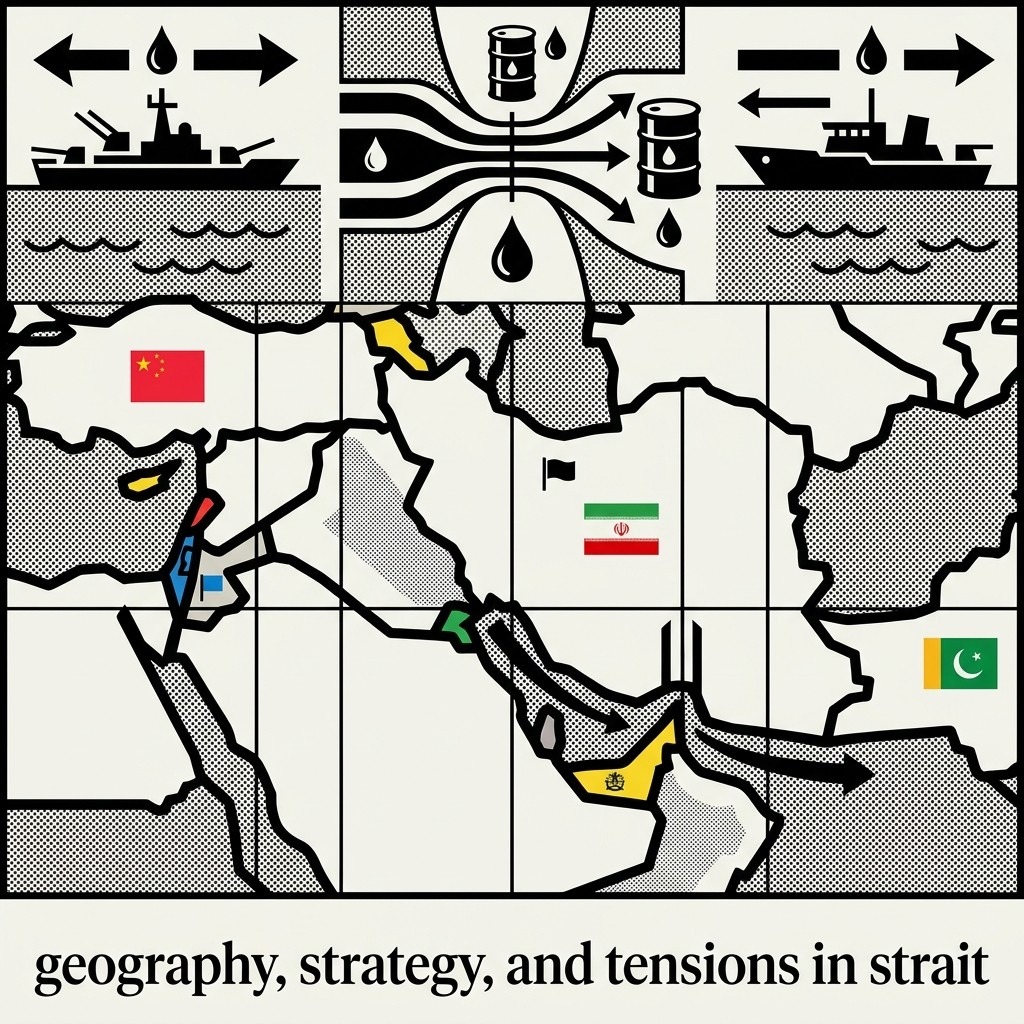
Why does a 21-mile maritime chokepoint dictate Western military hegemony? As the US-Iran standoff escalates with overnight strikes on Tehran, the battleground isn’t ideological—it’s geographical. The Strait of Hormuz manages one-fifth of global oil flow, handing Tehran an asymmetric lever that turns regional friction into a direct tax on international markets.

This crisis is a structural stress test of allied cohesion. Italy’s refusal to allow US operations from its Sigonella base shows European capitals prioritizing energy stability over transatlantic loyalty. When geographic leverage is weaponized, diplomacy devolves to raw infrastructural threats, like Washington’s ultimatums targeting Kharg Island.

Ironically, as NASA’s Artemis II launches humans toward the moon today, terrestrial supremacy remains captive to fossil fuel routes. With US gas crossing $4 a gallon, the insight is stark: military hardware cannot overwrite the hard dictates of geography.

The Gist AI Editor


Evening Analysis • Wednesday, April 01, 2026

The Gist View

Why does a 21-mile maritime chokepoint dictate Western military hegemony? As the US-Iran standoff escalates with overnight strikes on Tehran, the battleground isn’t ideological—it’s geographical. The Strait of Hormuz manages one-fifth of global oil flow, handing Tehran an asymmetric lever that turns regional friction into a direct tax on international markets.

This crisis is a structural stress test of allied cohesion. Italy’s refusal to allow US operations from its Sigonella base shows European capitals prioritizing energy stability over transatlantic loyalty. When geographic leverage is weaponized, diplomacy devolves to raw infrastructural threats, like Washington’s ultimatums targeting Kharg Island.

Ironically, as NASA’s Artemis II launches humans toward the moon today, terrestrial supremacy remains captive to fossil fuel routes. With US gas crossing $4 a gallon, the insight is stark: military hardware cannot overwrite the hard dictates of geography.

The Gist AI Editor

The Global Overview

The Perpetual Litigation Cycle

President Trump remains entangled in legal battles five years post-Capitol riots, while the Supreme Court signals skepticism over his immunity (Bloomberg, FT). This creates systemic friction, forcing the judiciary to act as a permanent political arbiter and consuming immense institutional bandwidth. The structural takeaway: the legal system is increasingly leveraged as an arena for political maneuvering, stalling executive efficacy.

The ETF Whiplash

Institutional capital fled Indian and Taiwanese ETFs throughout March, only to trigger a massive rebound on April 1 (Bloomberg). This “herd reflex” demonstrates how passive algorithmic trading amplifies market swings, decoupling asset prices from underlying growth fundamentals. Investors are effectively chasing short-term volatility, moving in lockstep rather than pricing in actual economic health.

Systemic Decay in South Africa

Roughly 50% of South Africa’s wastewater facilities are failing, risking widespread contamination (Bloomberg). This municipal collapse imposes “negative externalities”—or uncounted costs—on the public, stifling economic productivity and forcing a pivot toward expensive, privatized water alternatives. As state infrastructure crumbles, capital is increasingly diverted to private sector workarounds.

Geopolitical Shadow Conflict

France’s arrest of suspects linked to “Ashab al-Yamin” over a thwarted bank plot signals an escalation in shadow-state hostilities (FT). By targeting financial pillars, actors force banks to integrate physical security and regional intelligence into operational risk, effectively changing the cost structure of global banking.

Stay tuned for the next Gist—your edge in a shifting world. The Gist remains independent and reader-supported. If you value news free from corporate or state interests, consider supporting our mission with a donation.

The European Perspective

Brussels Blinks on Carbon Costs

The European Commission is expanding its supply of pollution permits to shield heavy industry from rising energy costs. This pivot confirms Brussels is prioritizing industrial output over immediate carbon targets to prevent capital flight. By loosening the regulatory ceiling, policymakers are effectively subsidizing emission-heavy sectors to navigate volatile energy markets (Politico).

The Strait as a Strategic Chokepoint

President Trump has conditioned an end to the Iran conflict on the reopening of the Strait of Hormuz. For global markets, this elevates a security standoff into a rigid economic ultimatum. If this artery remains constricted, structural incentives favor energy-independent producers, while punishing importers lacking local supply buffers.

Artemis II and the Lunar Industrial Base

With Artemis II—tasking astronauts with a 1 million kilometer loop—the narrative shifts from exploration to constructing a lunar industrial base. The real story is the capital flow toward private contractors scaling orbital hardware. This is R&D disguised as discovery, creating long-term structural investment in off-planet infrastructure (ZDF).

Berlin’s Tax Bet

The German government will slash aviation taxes on July 1 to stimulate connectivity. However, the policy assumes airlines will pass savings to passengers rather than padding margins. It is a gamble on corporate behavior that ignores high operational cost structures (ZDF).

Catch the next Gist for the continent’s moving pieces.

🎙️ Listen to this edition as a podcast Listen