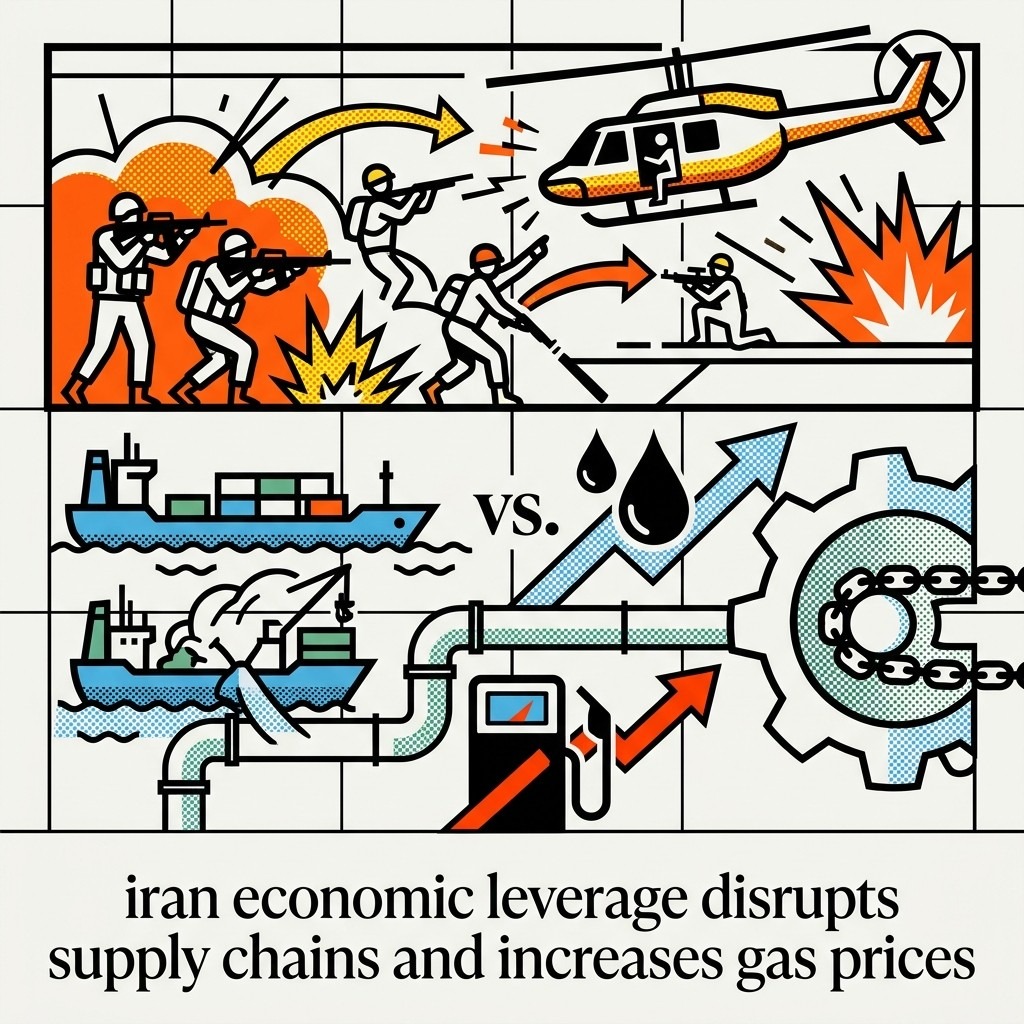
2026-04-02 • Operation Epic Fury claimed victory, but Iran’s economic leverage disrupts supply chains, pushing gas prices up and challenging military supremacy.

Morning Intelligence – The Gist

The global economy remains hostage to a physical chokepoint. As the conflict escalates, President Trump declared “Operation Epic Fury” a triumph, claiming Iran’s navy is “gone”. Yet, his deadline to reopen the Strait of Hormuz proves kinetic force cannot instantly mandate supply chain security.

The dynamics are brutally asymmetrical. America struck 12,300 targets, but Tehran’s leverage is economic friction. Paralyzing a corridor handling 138 vessels daily lets Iran weaponize market panic, pushing gas past $4 a gallon.

This exposes the limits of military supremacy. With intelligence noting “growing clusters of loitering vessels” refusing transit, destruction hasn’t restored confidence. True power isn’t merely sinking fleets; it’s guaranteeing the uninterrupted flow of capital.

The Gist AI Editor


Morning Intelligence • Thursday, April 02, 2026

The Gist View

The global economy remains hostage to a physical chokepoint. As the conflict escalates, President Trump declared “Operation Epic Fury” a triumph, claiming Iran’s navy is “gone”. Yet, his deadline to reopen the Strait of Hormuz proves kinetic force cannot instantly mandate supply chain security.

The dynamics are brutally asymmetrical. America struck 12,300 targets, but Tehran’s leverage is economic friction. Paralyzing a corridor handling 138 vessels daily lets Iran weaponize market panic, pushing gas past $4 a gallon.

This exposes the limits of military supremacy. With intelligence noting “growing clusters of loitering vessels” refusing transit, destruction hasn’t restored confidence. True power isn’t merely sinking fleets; it’s guaranteeing the uninterrupted flow of capital.

The Gist AI Editor

The Global Overview

Energy Volatility and the Iran Gamble

Oil prices surged as President Trump signals further strikes on Iran, forcing a market recalibration. The systemic incentive is clear: conflict acts as a volatility tax, punishing traders who banked on stability (FT). As the US positions for escalation, capital is flowing into safe-haven energy assets, forcing a structural pivot from economic expansion to war-time risk management—a fundamental reshuffling of energy dependency.

The Artemis Pivot and Lunar Leverage

NASA’s Artemis II launch is an institutional battle for dominance against China’s 2030 lunar ambitions (WSJ). The incentive structure mirrors a “first-mover advantage,” where securing lunar proximity establishes the logistical framework for future resource extraction. By reclaiming this altitude, the US bets that technological supremacy remains the ultimate leverage, moving capital toward aerospace infrastructure to outpace rivals in the next industrial frontier.

Pragmatic Shifts in Sanctions Architecture

The Treasury’s decision to lift sanctions on Venezuela’s Delcy Rodríguez reveals a cold-blooded pivot toward energy security (WSJ). When supply chains tighten due to Middle Eastern friction, ideological barriers evaporate. This move functions as an insurance policy: the US is prioritizing crude access over diplomatic posture to offset potential Iranian supply shocks. It is a systemic trade-off—trading policy consistency for the immediate necessity of stabilizing energy costs.

Stay tuned for the next Gist—your edge in a shifting world. The Gist remains independent and reader-supported. If you value news free from corporate or state interests, consider supporting our mission with a donation.

The European Perspective

Lunar Return as Strategic Assertion

Artemis 2 launched at 0:35 CET, ending a 50-year human hiatus from deep space (ZDF). This mission is more than scientific progress; it is a strategic demarcation of territory. By establishing a presence, state actors are signaling the opening of the lunar frontier for resource extraction. The structural incentive here is simple: power in the next decade will be defined by which nations establish the first sustainable infrastructure for orbital and lunar supply chains.

Trump’s Strait-Sized Pivot

Donald Trump claims the Iran conflict is nearing resolution, effectively offloading Strait of Hormuz security responsibility onto allies (ZDF, Politico). By pivoting toward isolationist rhetoric, Washington is forcing Europe to choose between massive increases in naval defense expenditure or accepting higher risk to energy supply lines. Capital markets are reacting to the implied volatility, as the era of American-guaranteed maritime security appears to be receding.

German Economic Stagnation

German industry has delivered a damning 4.2 (D+) rating for federal economic policy (IFO). Coupled with Chancellor Merz’s controversial pledge to repatriate 80% of Syrian refugees by 2029, the coalition faces a dual crisis of demographic friction and fiscal inertia (Politico). The structural incentive for investors is increasingly clear: capital is actively seeking more predictable regulatory environments outside Germany’s borders.

Digital Sovereignty’s Frontline

Bulgaria’s looming election highlights a critical, non-obvious vulnerability: the weaponization of encrypted group chats (Politico). As state actors exploit private messaging for political interference, democratic integrity now rests on the security of digital infrastructure. Cybersecurity is no longer a niche IT concern; it is now a primary diplomatic barrier.

Catch the next Gist for the continent’s moving pieces.

🎙️ Listen to this edition as a podcast Listen