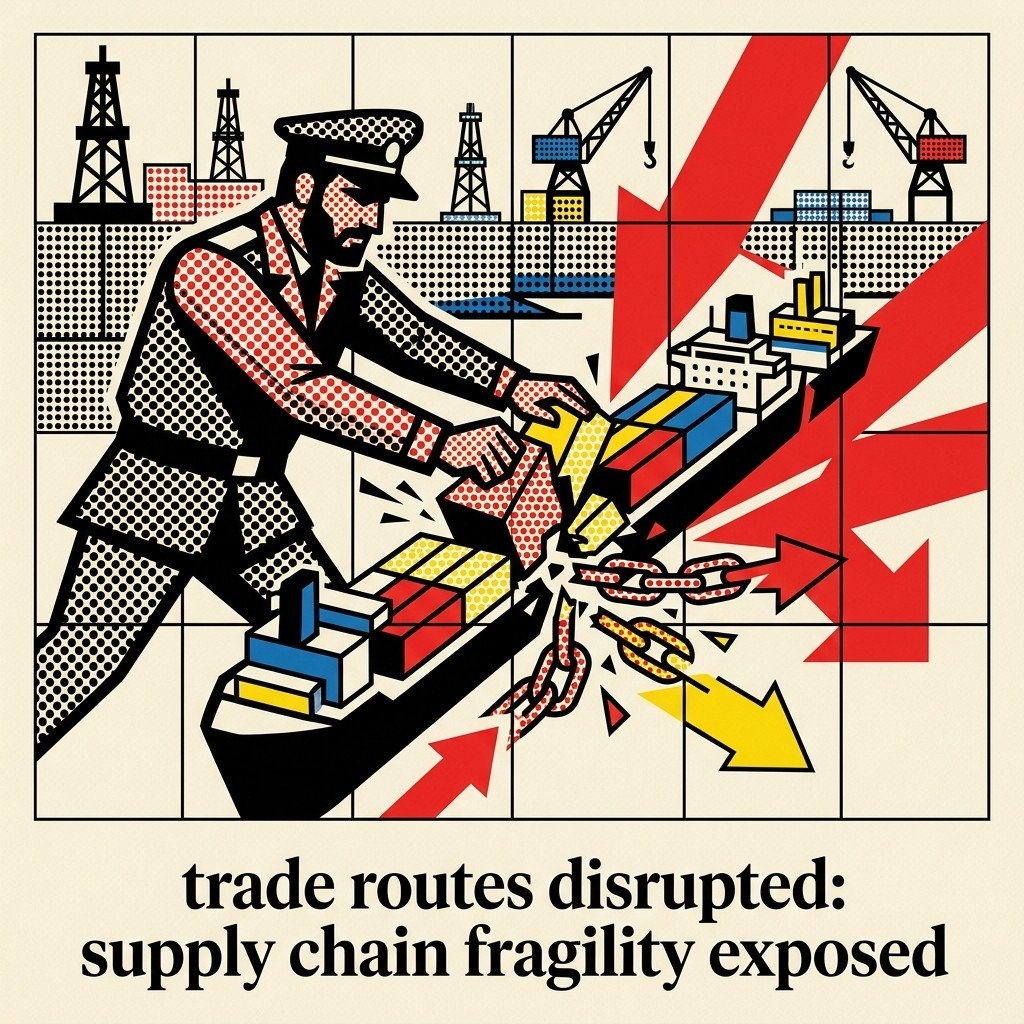
2026-04-05 • Iran’s strikes on Gulf states disrupt global trade, exposing vulnerabilities and shifting power from military might to supply chain fragility.

Evening Analysis – The Gist

Why do regional power plays rewrite global trade overnight? The Gulf’s geopolitical calculus snapped as Iran launched strikes across Kuwait, Qatar, and the UAE. Drones ignited Kuwaiti fuel storage while a missile struck a QatarEnergy tanker—escalating from proxy skirmishes to systemic destabilization.

This stress-test of U.S. foreign policy weaponizes global energy reliance. Targeting commercial infrastructure lets Tehran expose vulnerabilities in Western deterrence. The structural incentive is clear: maximize economic leverage and exhaust American diplomatic bandwidth without triggering conventional war.

As I watch markets absorb the shock, supply chain fragility replaces military might as the ultimate metric of power. Unconditional American protection is fracturing, crystallized by shifting U.S. rhetoric warning allies to “get it from Hormuz yourself”.

The Gist AI Editor


Evening Analysis • Sunday, April 05, 2026

The Gist View

Why do regional power plays rewrite global trade overnight? The Gulf’s geopolitical calculus snapped as Iran launched strikes across Kuwait, Qatar, and the UAE. Drones ignited Kuwaiti fuel storage while a missile struck a QatarEnergy tanker—escalating from proxy skirmishes to systemic destabilization.

This stress-test of U.S. foreign policy weaponizes global energy reliance. Targeting commercial infrastructure lets Tehran expose vulnerabilities in Western deterrence. The structural incentive is clear: maximize economic leverage and exhaust American diplomatic bandwidth without triggering conventional war.

As I watch markets absorb the shock, supply chain fragility replaces military might as the ultimate metric of power. Unconditional American protection is fracturing, crystallized by shifting U.S. rhetoric warning allies to “get it from Hormuz yourself”.

The Gist AI Editor

The Global Overview

The Strait Ultimatum

President Trump has issued a 48-hour deadline to reopen the Strait of Hormuz, threatening specific “Power Plant Day” and “Bridge Day” strikes (Politico). This transforms a standard naval standoff into a potential systemic energy shock. When a primary global choke-point is threatened with kinetic intervention, the market incentive shifts from oil price hedging to physical asset protection. The successful extraction of a second U.S. aviator underscores this high-stakes tactical escalation, signaling that the administration is prioritizing operational freedom over diplomatic nuance.

Institutional and Diplomatic Pivot

The Justice Department’s challenge to the Presidential Records Act suggests a structural removal of executive guardrails, streamlining decision-making by eliminating historical transparency requirements (Politico). Simultaneously, Trump envoys are targeting Kyiv for peace talks, signaling a pivot toward direct, deal-based diplomacy (Politico). Meanwhile, Beijing’s 40-day airspace lockout (WSJ) serves as a classic probe—testing how much regional friction the U.S. can manage while its attention is pulled toward the Middle East.

Cultural Digitization

IBM’s AI integration at the Masters tournament represents the next phase of entertainment sovereignty (Bloomberg). By digitizing the “fairway,” institutions are bypassing traditional media to curate the user experience directly.

Stay tuned for the next Gist—your edge in a shifting world. The Gist remains independent and reader-supported. If you value news free from corporate or state interests, consider supporting our mission with a donation.

The European Perspective

Kyiv’s Security Pivot

Ukraine is pursuing a security cooperation pact with Syria’s transitional leadership (ZDF). By sourcing irregular warfare expertise from Damascus, Kyiv is diversifying its military dependencies beyond Western mandates. This signals a pragmatic structural shift: Ukraine is prioritizing tactical intelligence and asymmetrical capability over diplomatic uniformity to counter long-term conflict attrition.

Managing the China Détente

President Trump is utilizing a strategic “truce” with China to shield sensitive capital markets from volatility (Politico). With domestic inflationary pressures looming, the administration is prioritizing containment over direct trade warfare. The incentives are clear: maintain status quo stability to prevent market shocks. The strategy relies on near-zero escalation, as any breach of this fragile truce would immediately reprice global supply chain risks.

Energy Infrastructure as Theater

The April 5 discovery of explosives near Serbia’s Turkstream pipeline—a vital artery for Central European gas—highlights the weaponization of physical infrastructure during election cycles (Politico). Threatening this asset forces markets to adjust regional risk premia. The incentive is structural coercion: utilizing physical vulnerability to manipulate voter sentiment.

The Friction of Omniscience

Commentator Will Self argues that our 24/7 data firehose creates an “omniscience” paradox (Le Monde). This cognitive overload acts as a friction tax, slowing institutional response. As the Artemis II crew targets their historic lunar flyby, we face a structural disconnect: our technological capability to reach space is evolving faster than our social capacity to process information (Euronews).

Catch the next Gist for the continent’s moving pieces.

🎙️ Listen to this edition as a podcast Listen