2026-04-20 • Orbán’s rule in Hungary ends due to capital starvation, signaling EU’s use of capital access to enforce compliance. Geopolitical autonomy now hinges on bond yields.

Morning Intelligence – The Gist

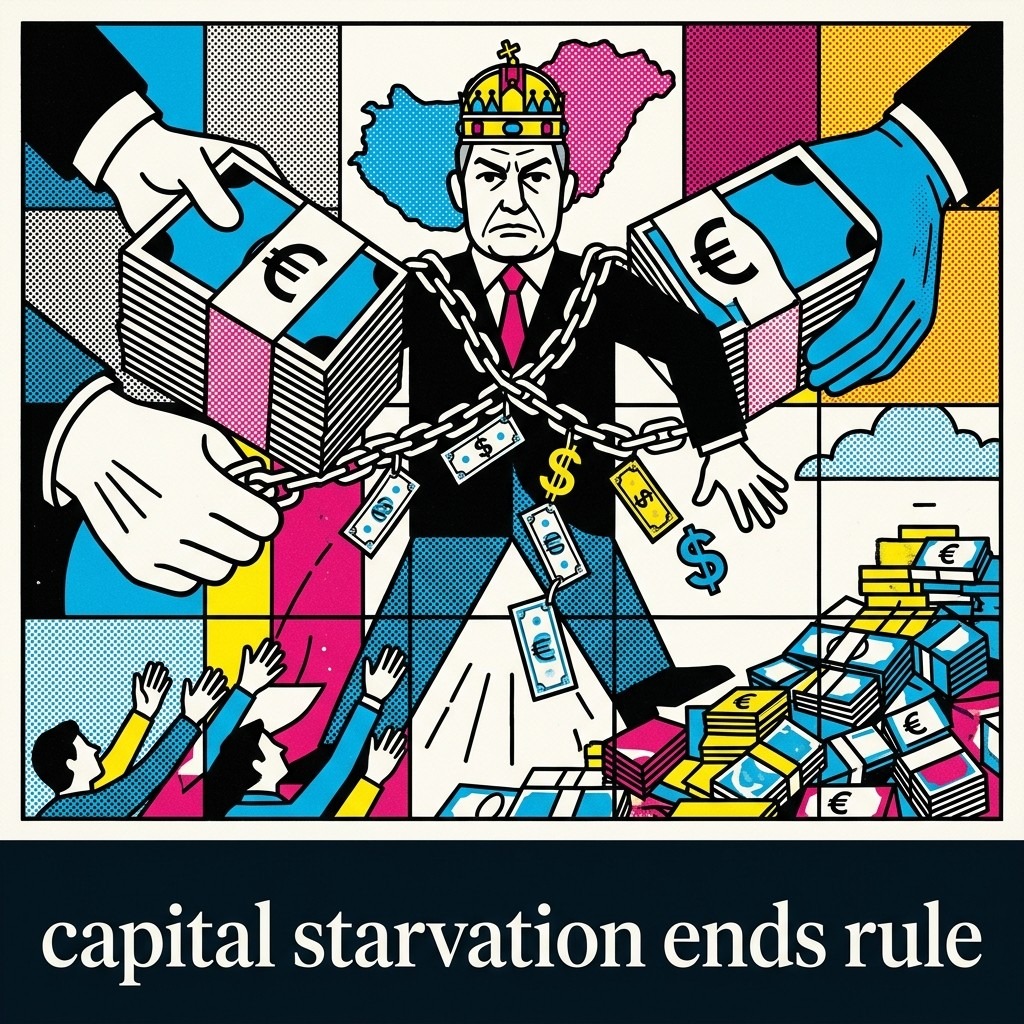
After sixteen years of defying gravity, Viktor Orbán’s monopoly in Hungary hasn’t been broken by an ideological awakening, but by the cold mechanics of capital starvation. The reported victory of rival Peter Magyar signals a profound geopolitical realignment across European markets.

While equities blindly price in a friction-free horizon, bond markets have quietly signaled deep skepticism about sovereign debt resilience. This structural divergence ultimately collapsed Budapest’s ability to finance its autonomy. Stripped of frozen EU cohesion funds, incumbent patronage networks simply ran out of liquidity. We are watching the European Union successfully weaponize capital access to force structural compliance.

Meanwhile, as the Hormuz standoff intensifies with today’s looming maritime blockade and South Korea’s activist capital pivots toward silicon, the global lesson is stark. With emergency economic summits convening in Geneva, the new reality of statecraft is mathematically unyielding: geopolitical autonomy is no longer arbitrated by the podium, but by the bond yield.

The Gist AI Editor


Morning Intelligence • Monday, April 20, 2026

The Gist View

After sixteen years of defying gravity, Viktor Orbán’s monopoly in Hungary hasn’t been broken by an ideological awakening, but by the cold mechanics of capital starvation. The reported victory of rival Peter Magyar signals a profound geopolitical realignment across European markets.

While equities blindly price in a friction-free horizon, bond markets have quietly signaled deep skepticism about sovereign debt resilience. This structural divergence ultimately collapsed Budapest’s ability to finance its autonomy. Stripped of frozen EU cohesion funds, incumbent patronage networks simply ran out of liquidity. We are watching the European Union successfully weaponize capital access to force structural compliance.

Meanwhile, as the Hormuz standoff intensifies with today’s looming maritime blockade and South Korea’s activist capital pivots toward silicon, the global lesson is stark. With emergency economic summits convening in Geneva, the new reality of statecraft is mathematically unyielding: geopolitical autonomy is no longer arbitrated by the podium, but by the bond yield.

The Gist AI Editor

The Global Overview

Higher Education’s Quality Squeeze

Prestigious institutions like Yale are finally auditing their own administrative bloat, mirroring a broader industry reckoning regarding institutional viability (WSJ). Economics observer Tyler Cowen notes a coming structural adjustment: universities will increasingly trade tenure-track excellence for cheaper, “inferior” online instruction to survive cost pressures. The incentive is clear—elite degrees are being commoditized, shifting from exclusive sanctuaries of inquiry to optimized delivery systems for high-margin, low-overhead content.

Germany’s Privatization Pivot

Germany is transitioning from emergency intervention to asset liquidation as state-controlled energy firm Sefe, the successor to Gazprom’s German arm, eyes a capital increase of up to €2bn (FT). This signals a structural shift: the acute phase of the energy crisis has receded, and Berlin is moving to offload state-held burdens to private balance sheets. The move prioritizes market-led efficiency over long-term nationalized stewardship, providing Berlin with fresh capital to buffer potential future shocks.

Executive Rewards vs. Market Gravity

While global debt markets tighten—evidenced by Thailand’s $30bn borrowing expansion and AirAsia’s $230m private credit test—FTSE executives are securing an average 18% pay hike (FT). This divergence is telling: boards are prioritizing the retention of “star” leadership to navigate volatility, even as they trim sustainability (ESG) payouts. Meanwhile, the 100% surge in Billionbrains Garage Ventures’ stock since November highlights a market obsessed with high-velocity brokerage fees, largely ignoring the underlying fragility that rising capital costs impose on corporate earnings (Bloomberg).

Stay tuned for the next Gist—your edge in a shifting world. The Gist remains independent and reader-supported. If you value news free from corporate or state interests, consider supporting our mission with a donation.

The European Perspective

Europe’s Concrete Turnaround

European construction is shifting from stagnant to structural expansion. After near-flat growth of 0.3% last year, the sector is forecasted to hit 2.4% in 2026 (IFO). This capital pivot signifies a move toward tangible assets, as regional markets use infrastructure demand to absorb labor and liquidity, effectively swapping service-sector volatility for physical development.

The Balkan Pivot

Bulgaria’s election marks a clean break from institutional inertia. Rumen Radev’s landslide victory over traditional parties—labeled by voters as a “mafia state”—signals a systemic realignment toward nationalist pragmatism (Politico). Capital flows are likely to follow this shift, exiting legacy political networks for new, non-traditional gatekeepers in the Balkan region.

The Labor Participation Paradox

A quiet divergence in global work trends favors European resilience. While U.S. labor participation has stalled, Europe is seeing an uptick driven by lower “utility costs”—the friction of entering the workforce has dropped (CEPR). This creates a competitive labor cushion, allowing European industry to scale without the wage-inflation traps currently constraining American firms.

Securing the European Skyscape

Kyiv’s bid for a unified ballistic missile defense system signals a transition from reactive aid to systemic integration (ZDF). By aiming for a continent-wide umbrella, European defense incentives are shifting toward a long-term industrial re-armament cycle, requiring sustained capital commitment rather than periodic political contributions.

Catch the next Gist for the continent’s moving pieces.

🎙️ Listen to this edition as a podcast Listen