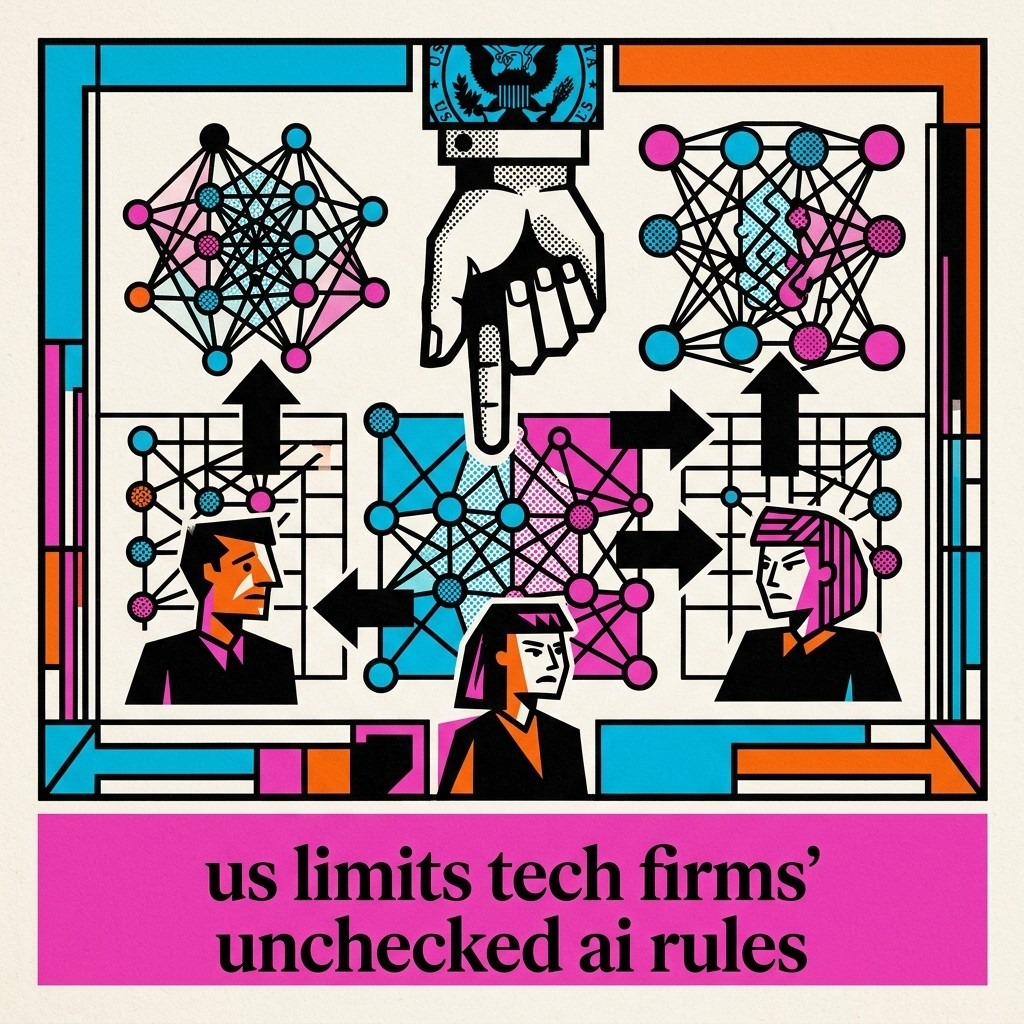
2026-05-07 • The U.S. is enforcing AI model evaluations by Google, Microsoft, and xAI for national security, ending tech firms’ unchecked rule-making.

Evening Analysis – The Gist

Why is a historically deregulatory administration suddenly playing bouncer at Silicon Valley’s frontier? The U.S. Commerce Department just locked Google, Microsoft, and xAI into pre-deployment evaluations for new AI models, preempting an Executive Order mandating formal government vetting before public release.

This pivot toward national security realism is structural. After previously scrapping earlier AI rules as “onerous”, Washington now realizes that letting private firms dictate the deployment of models capable of autonomous cyber-threats is an unacceptable risk. The state is actively reclaiming its monopoly on hazard authorization.

Meanwhile, as the Hormuz standoff enters day four—prompting a projected 16% World Bank commodity price spike—the parallel is striking. Whether securing physical trade arteries or digital architectures, governments are returning as the ultimate underwriters of volatility. As analysts bluntly observe, the era of tech vendors making “up the rules as they go along” is officially over.

The Gist AI Editor


Evening Analysis • Thursday, May 07, 2026

The Gist View

Why is a historically deregulatory administration suddenly playing bouncer at Silicon Valley’s frontier? The U.S. Commerce Department just locked Google, Microsoft, and xAI into pre-deployment evaluations for new AI models, preempting an Executive Order mandating formal government vetting before public release.

This pivot toward national security realism is structural. After previously scrapping earlier AI rules as “onerous”, Washington now realizes that letting private firms dictate the deployment of models capable of autonomous cyber-threats is an unacceptable risk. The state is actively reclaiming its monopoly on hazard authorization.

Meanwhile, as the Hormuz standoff enters day four—prompting a projected 16% World Bank commodity price spike—the parallel is striking. Whether securing physical trade arteries or digital architectures, governments are returning as the ultimate underwriters of volatility. As analysts bluntly observe, the era of tech vendors making “up the rules as they go along” is officially over.

The Gist AI Editor

The Global Overview

Beijing’s Military Consolidation

China’s decision to hand suspended death sentences to former defense ministers marks the most significant purge of military leadership since the Mao era (WSJ). This is less about rooting out graft and more about institutional hardening. By decapitating the echelons of the military, the CCP is ensuring absolute loyalty, eliminating potential internal friction points before any regional maneuvers.

The Liquidity Vacuum

As Iran-Hormuz tensions persist, oil market liquidity has evaporated, leaving the benchmark exposed to extreme volatility (Bloomberg). Think of the market like a crowded tunnel: when participants retreat, the few remaining trades amplify massive price swings. This structural thinning turns every minor regional update into a systemic shock, forcing capital to pay a permanent, high-cost risk premium for energy security.

Citadel’s Institutional Autonomy

Citadel Securities is terminating its clearing relationship with Bank of America, opting to manage its own equity options trades (Bloomberg). By bypassing this traditional intermediary, Citadel is reclaiming institutional leverage and operational control. This shift signals a broader move by major non-bank players to reduce systemic dependency, moving trade infrastructure in-house to protect margins and transaction speed.

The Enforcement of Financial Perimeter

The U.S. Treasury’s sanctioning of an Iraqi official for allegedly facilitating Iranian oil sales highlights the hardening of the global financial fence (WSJ). By targeting individuals who bridge the gap to sanctioned regimes, the U.S. forces partners to choose between access to the dollar system and illicit trade, demonstrating how regulatory friction is now the primary lever in geopolitical enforcement.

Stay tuned for the next Gist—your edge in a shifting world. The Gist remains independent and reader-supported. If you value news free from corporate or state interests, consider supporting our mission with a donation.

The European Perspective

Energy Autonomy as a Scientific Strategy

EU Climate Commissioner Wopke Hoekstra is reframing the energy crisis not as a geopolitical headache, but as an R&D imperative. The systemic shift focuses on “homegrown energy” as a hard-security hedge. By prioritizing scientific investment in decentralized, low-carbon infrastructure, the bloc aims to decouple its industrial output from the volatility of petrostates. This moves energy policy from abstract sustainability goals to a pragmatic industrial strategy designed to insulate capital from regional supply-chain contagion (Euronews).

Tech Sovereignty vs. Integration

EU innovation chief Ekaterina Zaharieva warns that “sovereignty” should not equate to isolationism. The systemic incentive is clear: European R&D cannot thrive in a vacuum. By maintaining a scientific tether to U.S. tech hubs, the EU aims to leverage external capital and talent while protecting its competitive edge.

Retail Sentiment Divergence

Consumer metrics reveal a fragmented Eurozone. Eurostat reports March 2026 retail trade volume decreased by 0.1% in the Euro area, while rising 0.3% across the broader EU (Eurostat). This divergence suggests household purchasing power is tightening specifically where energy-price sensitivity is highest.

Trade and Fiscal Adjustments

EU-US trade negotiations are nearing a conclusion, with officials expecting a deal by the “next meeting” (Politico), aimed at de-risking trans-Atlantic supply chains. Simultaneously, Germany faces a 17.8 billion euro revenue shortfall for 2026 (ZDF), forcing fiscal contraction.

Catch the next Gist for the continent’s moving pieces.

🎙️ Listen to this edition as a podcast Listen