Lazard Warns Debt Issues Crippling Emerging Democracies

Evening Analysis – The Gist


Evening Analysis • Friday, June 12, 2026

The Gist View

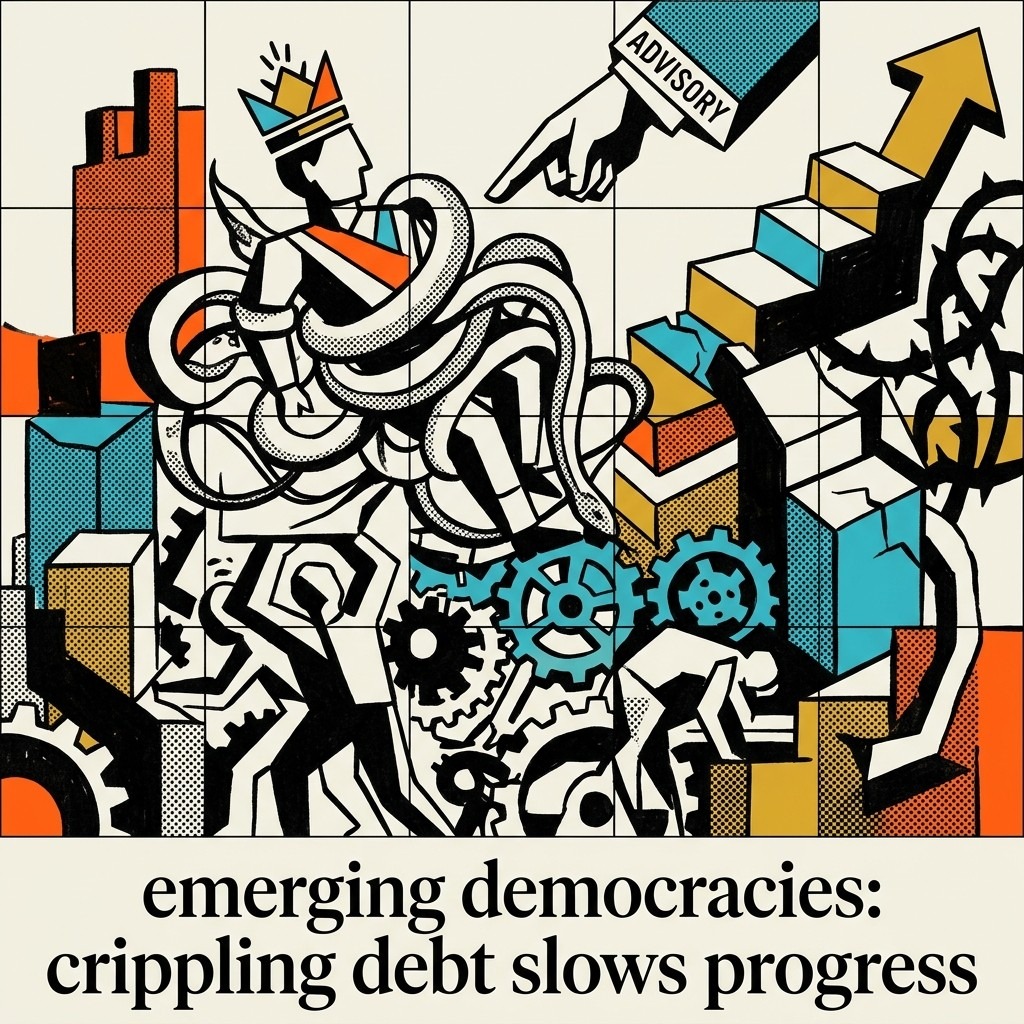
While global attention fixates on mega-cap tech IPOs, the most consequential shifts are unfolding in the labyrinthine debt ledgers of emerging democracies. A new advisory from Lazard exposes a critical vulnerability: the sovereign debt architecture has become too convoluted to function.

Borrowing nations are caught in a punishing crossfire between private bondholders, opaque bilateral lenders, and domestic obligations. This complexity reflects broader geopolitical fragmentation, where fractured creditor incentives stall vital renegotiations. For frontier markets, this systemic gridlock weaponizes transaction costs, forcing agonizing institutional realignments simply to secure liquidity.

The true casualty is future resilience. Layered liabilities strain state capacity, ensuring that “without more streamlined coordination, creditors and borrowers may face prolonged impasses,” discouraging vital private capital flows.

The Gist AI Editor

The Global Overview

South African Institutional Fragility

South African President Cyril Ramaphosa’s move to seek a High Court injunction halting his parliamentary impeachment inquiry signals a dangerous shift in local governance. By attempting to leverage the judiciary to block legislative oversight, Ramaphosa is judicializing a political process. When executive survival relies on court intervention rather than democratic mandate, the separation of powers erodes. This establishes a precedent where the legislature is effectively subordinated, creating institutional fragility that global investors will likely price as increased sovereign risk.

Eastern Europe’s Orthodox Pivot

While Western Europe remains stalled, Eastern Europe is leaning into economic discipline. Czech central bank Governor Ales Michl labels a June rate hike a “real possibility” to contain domestic inflation (Bloomberg). Alongside Romania’s commitment to continued austerity, these nations are prioritizing long-term solvency over political expediency. It is a strategic flight-to-quality: accepting short-term contraction to preempt the structural rot affecting more indebted economies.

Capital’s Bifurcation

Capital flows reveal a clear divergence. EQT’s planned $600 million divestment of a Singaporean healthcare stake (WSJ) highlights a shift toward ‘boring’ essential services in stable Asian markets. Meanwhile, consumer brands continue weaponizing cultural polarization—mirroring the marketing tactics we’ve tracked in US motorcycle sectors—to capture market share. Additionally, SpaceX’s Nasdaq debut confirms space is transitioning from venture speculation to a core institutional infrastructure pillar.

Stay tuned for the next Gist—your edge in a shifting world. The Gist remains independent and reader-supported. If you value news free from corporate or state interests, consider supporting our mission with a donation.

The European Perspective

Romania’s Market-First Austerity

Romania’s PM-designate Eugen Tomac is prioritizing fiscal consolidation, banking on long-term capital inflows over immediate populist relief (Politico). By framing austerity as a prerequisite for private-sector expansion rather than mere budget-cutting, Tomac is testing a new political vocabulary. He aims to secure bond market confidence, gambling that institutional stability will eventually outweigh the costs of domestic political friction.

Eastern Europe’s Orthodoxy

While Western Europe remains mired in fiscal inertia, Eastern capitals are proactively embracing structural pain. With Romania committing to continued austerity and the Czech central bank signaling June rate hikes, these economies are preempting structural crises through disciplined monetary and fiscal tightening. This bifurcation signals a maturing risk appetite: regional leaders are betting that short-term economic strain is the only viable path to insulating their markets, contrasting sharply with the Western tendency to delay reform.

Capital’s Strategic Bifurcation

SpaceX’s $1.77T IPO confirms the migration of space from speculative venture capital to core institutional infrastructure (ZDF). Space is now a utility play. Simultaneously, consumer brands are weaponizing identity; Indian Motorcycle’s anti-DEI marketing mirrors a calculated pivot to monetize cultural polarization, treating societal friction as a deliberate customer-segmentation strategy rather than an ideological stance.

Catch the next Gist for the continent’s moving pieces.

🎙️ Listen to this edition as a podcast Listen


The Gist is an independent daily digest: AI-curated, human-directed, unapologetically liberal (how it’s made). Hundreds of sources, only what matters. Subscribe free or listen to the podcast.


Comments

Leave a Reply

Your email address will not be published. Required fields are marked *

This site uses Akismet to reduce spam. Learn how your comment data is processed.