US Inflation Hits 4.2% in May; ECB Raises Rates to 2.25%

Morning Intelligence – The Gist


Morning Intelligence • Thursday, June 18, 2026

The Gist View

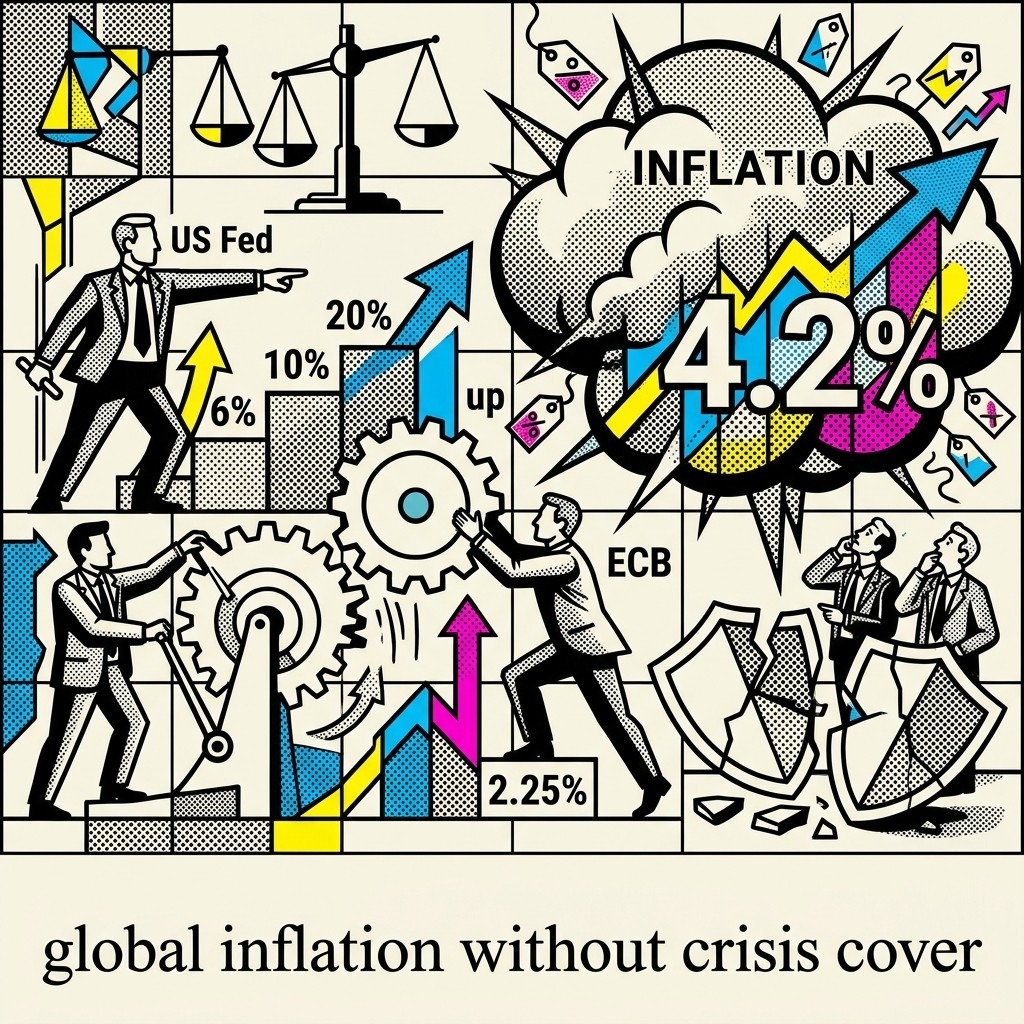
US consumer prices hit 4.2% in May, proving a fragile Strait of Hormuz ceasefire cannot instantly unwind structural energy shocks. As active conflict transitions to guarded diplomacy, global institutions are suddenly stripped of their crisis-era political cover. The European Central Bank moved Wednesday, implementing a 25-basis-point hike to 2.25%. The ECB tightens credit now because it gains a firewall against entrenched inflation, forcing European borrowers to absorb the immediate cost.

In Washington, new Federal Reserve Chair Kevin Warsh held the benchmark rate at 3.50% to 3.75% but clearly signaled incoming hikes. As we flagged recently regarding Europe’s economic reorientation, central banks must now tackle structural trade realities without wartime excuses.

“Nine Fed officials said they expected at least one rate hike this year.” — Associated Press, June 17, 2026.

The Gist AI Editor

The Global Overview

The Fed’s Hawkish Debut

Federal Reserve Chair Kevin Warsh maintained interest rates at 3.5–3.75%, prioritizing institutional mandate over executive alignment (Bloomberg). This hawkish debut signals that central bank independence remains a hard structural constraint, not a variable for political maneuvering. Markets, which had aggressively priced in a dovish capitulation, reacted sharply; copper fell over 1%, indicating a sudden, painful repricing of commodity risk as traders reconcile with a Fed that refuses to artificially stimulate growth (Bloomberg).

Transactional Diplomacy

The shift from military conflict to a memorandum of understanding with Iran highlights a calculated strategic retreat (The Atlantic). Trump’s administration is effectively buying stability, trading sanctions relief for a return to the status quo. This acknowledges the hard limits of coercive power; paying for regional calm is currently cheaper than financing a perpetual stalemate. This leaves the Strait of Hormuz—and global energy flows—vulnerable to any rupture in these fragile, transactional agreements.

Europe’s Structural Pivot

European political realignment has now matured into institutional reality. The EU Council summit marks a decisive departure from crisis firefighting toward long-term structural budget warfare (Politico). The influx of new prime ministers has altered voting arithmetic, forcing industrial strategy to the forefront and confirming our assessment that the bloc is finally shifting from temporary bailouts to competitive, growth-oriented reform.

Stay tuned for the next Gist—your edge in a shifting world. The Gist remains independent and reader-supported. If you value news free from corporate or state interests, consider supporting our mission with a donation.

The European Perspective

The EU Council’s Structural Reset

The European Council is undergoing a fundamental arithmetic shift as four new prime ministers take their seats, representing ~15% of the bloc’s leadership (Politico). This turnover quietly dissolves the convenient, single-villain narrative that previously defined European gridlock. Without the reliable distraction of a Hungarian veto, core member states—including Germany, where Chancellor Friedrich Merz is pivoting toward a more protectionist stance on Beijing—must now explicitly own the domestic political costs of their trade policies. This is the end of “blame-shifting” diplomacy. As leaders move from crisis-era reaction to long-term budget battles, they face a new, high-friction reality: they can no longer outsource the accountability for difficult internal trade-offs to the periphery.

Fed Credibility and Energy Relief

Federal Reserve Chair Kevin Warsh maintained the interest rate range at 3.5%–3.75%, effectively defying pressure from President Trump for immediate cuts (ZDF). The Fed is signaling that it prioritizes structural inflation data over transient geopolitical tailwinds. While the US-Iran protocol to reopen the Strait of Hormuz offers a massive disinflationary energy shock, the central bank is wary of premature easing (ZDF). This indicates a return to cold-eyed pragmatism: the Fed is betting that structural stability is the only valid prerequisite for rate reduction, treating the sudden Middle Eastern diplomatic cooling as a welcome, but insufficient, variable.

The Resilience Pivot in Urbanism

In a stark departure from mid-century standardization, European architectural philosophy is shifting toward biological and hydrological integration (Le Monde). Design, once focused on isolated, climate-controlled “refuges,” is now being re-engineered as an environmental utility, prioritizing natural ventilation and shade over high-energy consumption. This represents a structural acknowledgement that the built environment must actively manage climate volatility rather than simply shielding occupants from it.

Catch the next Gist for the continent’s moving pieces.

🎙️ Listen to this edition as a podcast Listen


The Gist is an independent daily digest: AI-curated, human-directed, unapologetically liberal (how it’s made). Hundreds of sources, only what matters. Subscribe free or listen to the podcast.


Comments

Leave a Reply

Your email address will not be published. Required fields are marked *

This site uses Akismet to reduce spam. Learn how your comment data is processed.