UK Bond Markets Front-Run Leadership Succession
The political volatility surrounding Keir Starmer’s premiership is no longer a matter of party loyalty, but a structural response to capital market pressure. Following Andy Burnham’s commanding victory in the Makerfield by-election—securing 55% of the vote (24,927 ballots)—the urgency behind his leadership bid reveals a market-driven shift in British politics. Labour factions are preemptively debating a prospective Chancellor—weighing Ed Miliband, Shabana Mahmood, and Yvette Cooper—not to appease internal party bases, but to signal fiscal stability to bondholders (Politico).
This dynamic illustrates that for modern administrations, the bond market serves as the ultimate veto. Investors are pricing the risk of political gridlock, and potential successors are already vying to be the “market-safe” candidate. The collapse in UK confidence operates on two fronts: institutional bond markets are imposing fiscal discipline, while retail equity markets erode due to continued allocation into low-quality domestic stocks. Leadership survival is no longer an internal ballot affair; it is a negotiation with the creditors holding the UK’s balance sheet (Financial Times).
COP31 Shifts Strategy to Industrial Electrification
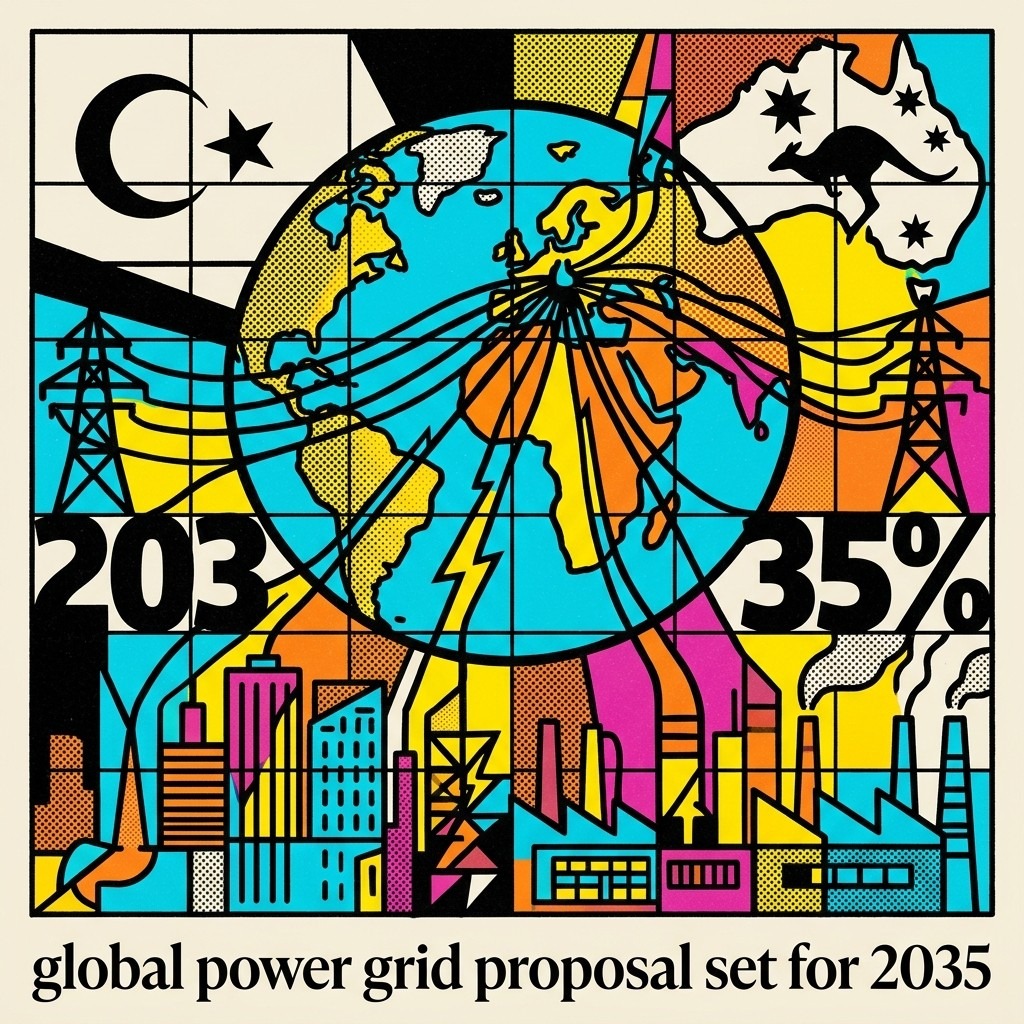
Global climate strategy is pivoting from punitive emission reductions to an industrial electrification boom, a trend cemented at recent pre-COP31 talks in Bonn. The incentive is purely fiscal: shifting toward electric heating, cooling, and heavy industry aims to replace the 80% of global energy currently derived from hydrocarbons. With data suggesting that a fully electrified global energy model could effectively halve energy demand, the move is less about moral imperative and more about capital efficiency and reducing long-term overhead for businesses (The Guardian).
This structural pivot signals a departure from the “nerdish backwater” of climate policy toward hard industrial strategy. By positioning electrification as a cost-saving mechanism rather than a regulatory burden, COP31 hosts Turkey and Australia are aligning their domestic industrial bases with global market incentives. Capital is moving away from speculative green tech toward tangible, mass-scale infrastructure that lowers the structural energy costs of manufacturing.
EU Migration Policy Faces Structural Fragmentation
European border policy is fracturing as member states attempt to bypass centralized gridlock through the outsourcing of migration centers. Led by Rome and Copenhagen, 19 member states are petitioning the European Commission to finance “extra-European” return platforms to process migrants, aiming to lower domestic administrative costs and operationalize external capacity. This movement highlights a deepening divide between states seeking modular, third-party solutions and traditionalists like France, which remains opposed to the fiscal commitment required for such infrastructure (Le Monde).
This is a shift from debating immigration rhetoric to a pragmatic, if contested, search for “offshore” processing efficiency. The capital incentive here is clear: states are attempting to shift the liability of migration management away from their own stretched physical and legal infrastructure, viewing external centers as a way to avoid the political and budgetary costs of domestic handling.
AI Automation Bypasses Regulatory Bottlenecks
As global AI adoption accelerates, the anticipated European regulatory gridlock is being mitigated through bottom-up means: the widespread use of automated workflows to circumvent bureaucracy. In both EU institutions and private sector compliance departments, high-level policy delays are increasingly bypassed by AI tools that automate the administrative “middle-layer” responsible for slowing cross-border compliance.
This development confirms that capital and innovation prioritize access over sovereignty, utilizing digital tools to erode the friction created by fragmented regional rules. Rather than waiting for harmonized EU digital policy, private entities are deploying autonomous systems to navigate, and effectively neutralize, existing regulatory traps. This ensures that operational momentum is maintained, regardless of the legislative status quo in Brussels (Politico).
Brexit’s Decade-Long Economic Reckoning
A decade on from the 52% to 48% vote to leave the EU, the structural legacy of Brexit has shifted from a political project to an economic reality defined by “boats, bankers, and borders.” The decade-long fallout has created a bifurcated reality: the UK’s labor and manufacturing sectors are still grappling with the friction of leaving the single market, while financial services pivot to adjust to new regulatory realities (The Guardian).
The systemic incentive now is for the UK to find new trade alignment, though the cost of this transition remains visible in stagnant productivity figures. Investors are increasingly viewing the post-Brexit landscape not through the lens of political sovereignty, but through the hard math of trade barriers and institutional alignment, acknowledging that the decade of tortuous transition has fundamentally reset the nation’s economic potential.
Catch the next Gist for the continent’s moving pieces.