The Global Overview
Hardware Constraints Reprice Consumer Tech
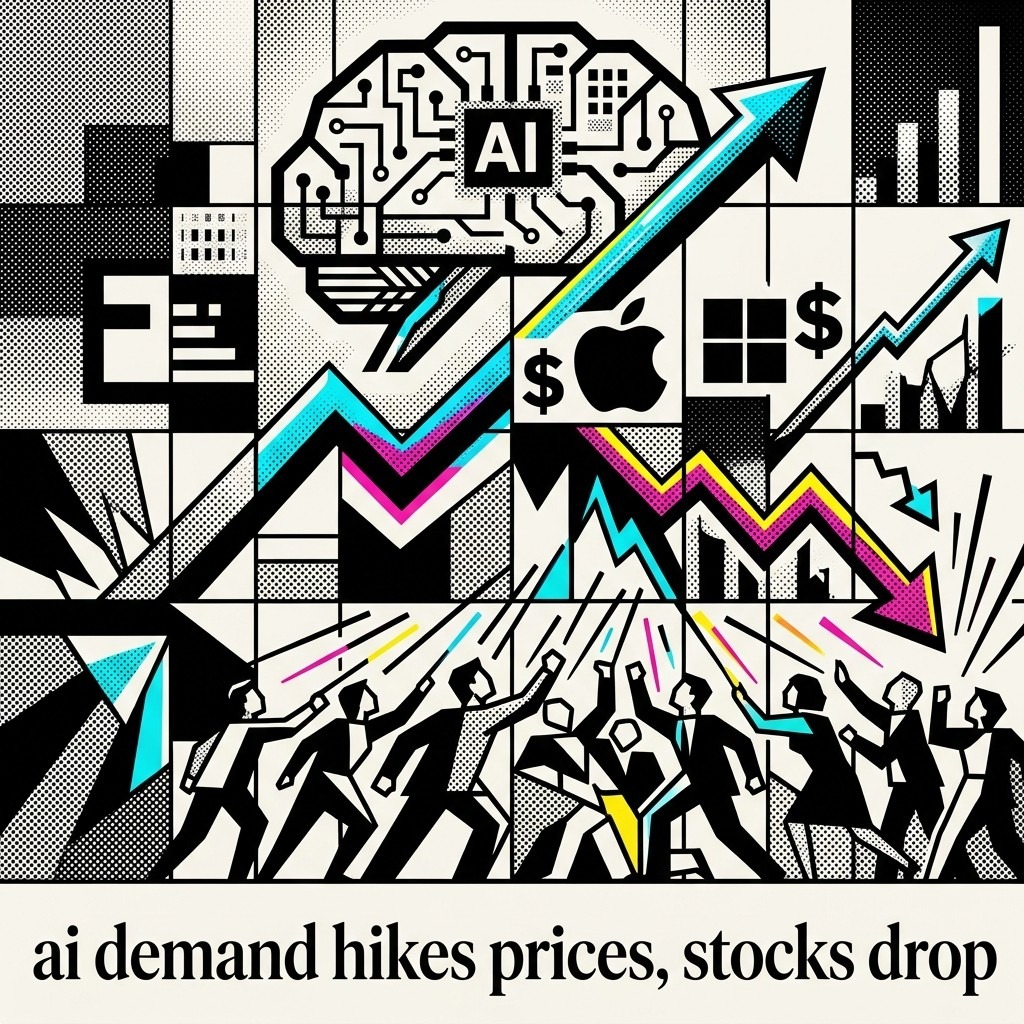
The physical toll of the AI data-center build-out we noted earlier this month has finally reached the consumer. Explosive data-center demand is draining the global memory supply, forcing tech giants to pass the premium directly to everyday consumers. Apple raised MacBook and iPad prices by up to 54%, or $300, while Microsoft added $150 to the cost of some Xbox consoles (Le Monde). Apple CEO Tim Cook described the global storage and memory supply shortage as ‘unprecedented in 40 years.’ Investors are punishing consumer tech companies for these price hikes, demanding they prove pricing power rather than just algorithmic capability. Following the price hike announcements, Apple’s stock dropped 6.15% and Microsoft fell 3.45% amid fears of consumer pushback (KuCoin). Still, Apple and Microsoft possess massive pricing power and locked-in ecosystems; they can likely pass on hardware costs without suffering long-term demand destruction.
Algorithmic Finance Hits Temporal Limits
Both stories reveal the physical and temporal limits of artificial intelligence: while hardware constraints are forcing up the physical cost of AI infrastructure, the models themselves are failing to generate the sustained financial alpha required to justify those massive investments. A new study finds that large-language models deployed for stock-market timing fail to outperform traditional benchmarks over extended periods (WSJ). Much like an autopilot relying on an outdated map, the models struggle to successfully adapt to changing macroeconomic conditions, exposing the limits of algorithmic finance.
Supreme Court Expands Deportation Authority
The operational stability that US Democratic moderates have been projecting faces an immediate stress test as the Supreme Court hands the incoming administration virtually unchecked deportation powers. The US Supreme Court ruled 6-3 in Mullin v. Doe et al. to allow the revocation of Temporary Protected Status (TPS)—a US humanitarian program granting legal residency and work permits to migrants from unsafe countries—without judicial review. The decision exposes roughly 300,000 Haitians and 7,000 Syrians legally living in the US to imminent deportation.
Stay tuned for the next Gist—your edge in a shifting world. The Gist remains independent and reader-supported. If you value news free from corporate or state interests, consider supporting our mission with a donation.
|