SpaceX $20B Bond Debut to Fund xAI, Rated Baa1

Morning Intelligence • Monday, June 29, 2026

The Gist View

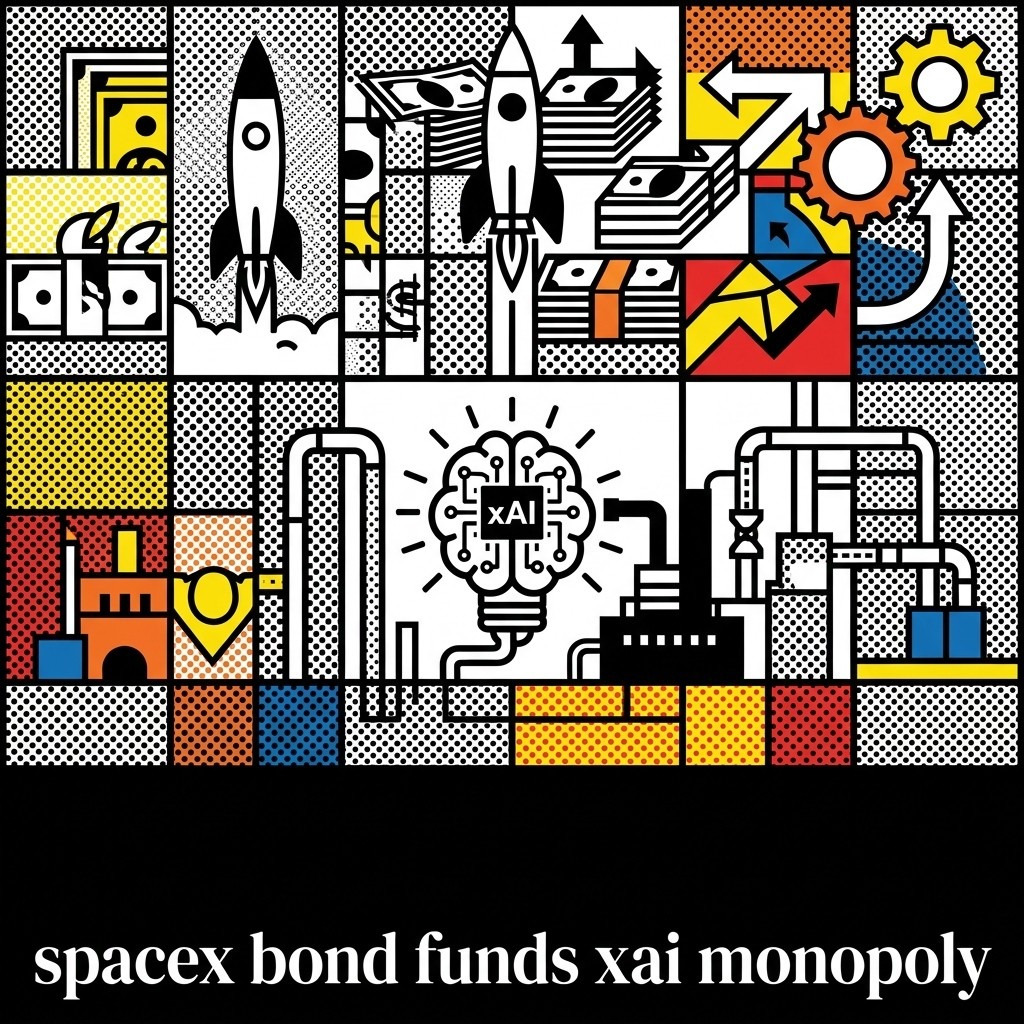
SpaceX is raising $20 billion in its bond debut to refinance loans and fund xAI, Elon Musk’s artificial intelligence startup. This debut proves private capital will now finance deeply cash-flow negative frontier infrastructure without state subsidies. By accepting venture-style horizons for capped fixed returns, bondholders are treating Musk’s space logistics network as a quasi-sovereign monopoly.

Unlike equity buyers who ride massive valuations, bondholders require reliable yields. Yet Moody’s assigned the debt a ‘Baa1’ rating—a lower-medium investment grade implying low default risk—placing the rocket company on par with steadily profitable consumer giants. Creditors swallow this risk because they calculate the firm’s strategic indispensability makes default impossible. While credit analysts at S&P project SpaceX will remain cash flow negative until 2030, bond buyers essentially price in the assumption that eager equity investors will endlessly bail out the debt.

To bridge that deficit, S&P estimates the company’s net debt will potentially swell to $132 billion by 2028.

The Gist AI Editor

The Global Overview

SpaceX Debt and US Justice Department Pivot
SpaceX is raising $20 billion to refinance a bridge loan and fund artificial intelligence after integrating xAI, Elon Musk’s artificial intelligence startup (FT). Moody’s assigned the debt a Baa1 rating—a lower-medium investment grade implying low default risk—placing the deeply free-cash-flow negative venture on par with profitable consumer giants (Bloomberg). Bondholders accept fixed returns, viewing SpaceX’s market dominance and strategic indispensability as so absolute that default is functionally impossible. However, S&P projects SpaceX will remain cash flow negative until 2030, with net debt swelling to $132 billion by 2028, meaning this rating essentially prices in the assumption of endless future equity bailouts (Reuters). Concurrently, the US Justice Department formally dropped “Environment” from its title, renaming the unit the “Energy and Natural Resources Division” to signal a strategic pivot toward defending energy production (WSJ). Both developments rest on the premise that expanding hard physical capacity—whether space logistics or energy extraction—now supersedes the environmental and regulatory constraints that defined the previous decade.

China Restricts Dual-Use Exports to Japan
China’s commerce ministry added 20 Japanese entities to an export control list, blocking access to critical dual-use products in direct retaliation for allied semiconductor restrictions (WSJ). This economic pressure aligns with maritime friction, as Japan formally protested Chinese coast guard incursions near its southern islands following the scrambling of fighter jets against joint Chinese and Russian bomber flights (Bloomberg). Separately, the immediate drop in global corn futures following the US-Iran ceasefire confirms our assessment that markets will eagerly price in the short-term relief of transactional diplomacy, despite the structural risks of abandoning institutional statecraft (Bloomberg).

Join us for the next edition to track exactly where global capital moves next. The Gist remains independent and reader-supported. If you value news free from corporate or state interests, consider supporting our mission with a donation.

The European Perspective

Lower Saxony Vetoes Volkswagen Job Cuts

Volkswagen plans to cut 100,000 jobs and close four German assembly plants to halt financial losses against Chinese competitors (ZDF). Lower Saxony—a German state holding a 20 percent voting stake and veto power over major decisions at Volkswagen—pledged to block the closures. This mandate demonstrates that political ownership prioritizes localized, short-term employment over structural adaptation. Minister President Olaf Lies’s proposal to manufacture Chinese-designed vehicles domestically tacitly admits Volkswagen has lost the engineering race, reducing Germany to a high-cost assembly hub. While rapidly closing four factories would permanently remove domestic industrial capacity, state intervention might sustain operations while Volkswagen localizes foreign technology to regain competitiveness.

EU Suspends MCC Brussels

The EU suspended MCC Brussels, a right-wing think tank linked to former Hungarian Prime Minister Viktor Orbán, over undisclosed finances (Le Monde). Following Orbán’s April 2026 electoral defeat by Péter Magyar and domestic efforts to abolish its state funding, this action structurally severs the organization’s remaining institutional access in Europe.

UK Cabinet Transition

Andy Burnham will succeed Keir Starmer as UK Prime Minister within weeks. With Ed Miliband emerging as the frontrunner for the Treasury, this protracted instability shifts market focus toward whether the new administration will maintain fiscal discipline or aggressively pursue devolution. Separately, persistent drought has prompted the French Senate to advance restricted neonicotinoid pesticides, prioritizing immediate crop yields over long-term ecological outcomes (Le Monde).

Catch the next Gist for the continent’s systemic developments.

🎙️ Listen to this edition as a podcast Listen

The Gist is an independent daily digest: AI-curated, human-directed, unapologetically liberal (how it’s made). Hundreds of sources, only what matters. Subscribe free or listen to the podcast.


Comments

Leave a Reply

Your email address will not be published. Required fields are marked *

This site uses Akismet to reduce spam. Learn how your comment data is processed.