Russia Exploits NATO Radar Gaps with 150 UAV Incursions

Evening Analysis • Thursday, July 02, 2026

The Gist View

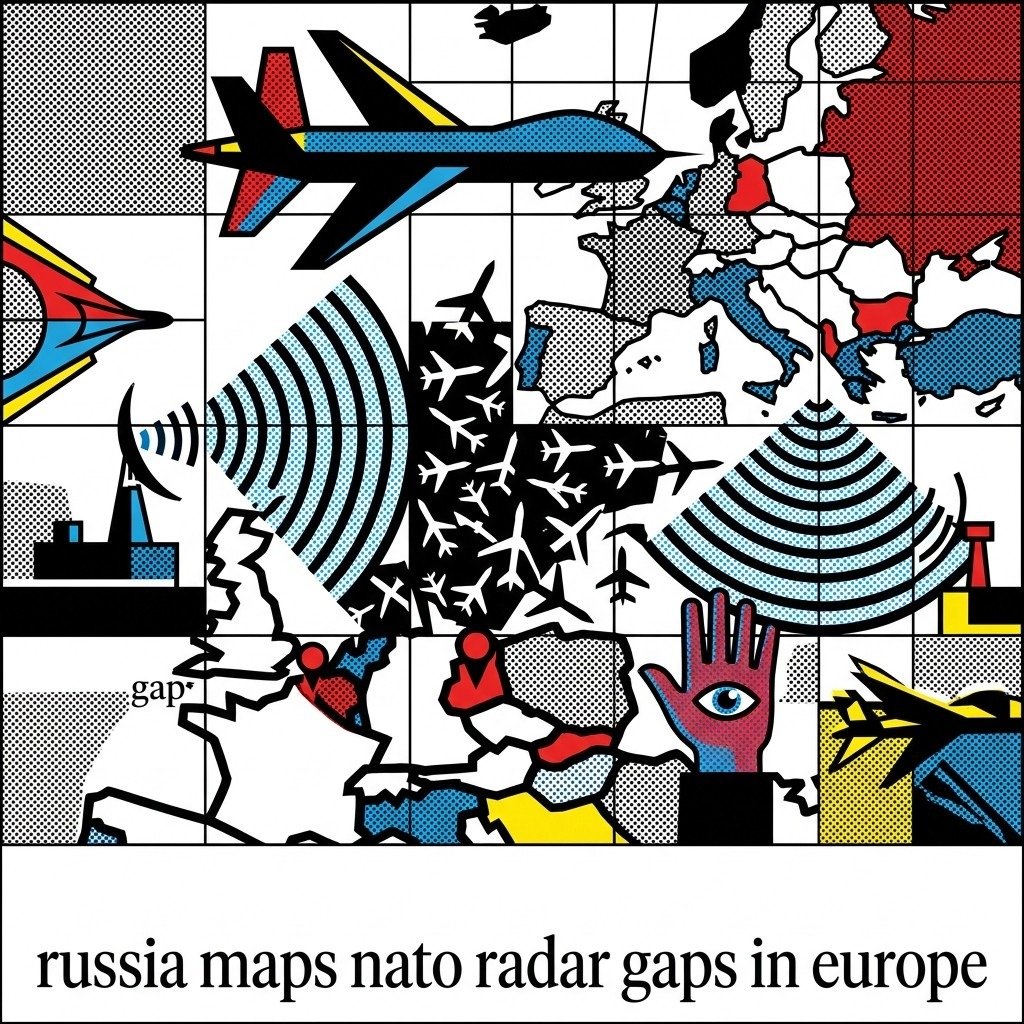
The International Institute for Strategic Studies, a global security and military think tank, reports nearly 150 Russian Unmanned Aerial Vehicle (UAV) incursions into more than a dozen European countries over the past 19 months. By systematically launching drones across borders, Moscow is running a high-yield intelligence operation to map NATO’s radar blind spots and test its political thresholds for retaliation.

While accidental airspace violations frequently occur in intense border conflicts, this deliberate campaign exploits an asymmetrical incentive. By deploying low-stakes UAVs, Russia forces a gray-zone dilemma: shooting them down risks unwarranted military escalation, but ignoring them hands critical response-time data to Moscow. NATO’s reluctance to intercept these incursions effectively transforms the alliance’s defensive caution into a strategic asset for the Kremlin.

The tactic mirrors Soviet bomber probes during the Cold War, now automated and stripped of human risk. As the Financial Times reports, these drone flights successfully map defense gaps today without triggering direct armed conflict.

The Gist AI Editor

The Global Overview

Russian Airspace Reconnaissance

The International Institute for Strategic Studies, a global security and military think tank, reports nearly 150 Unmanned Aerial Vehicle, commonly known as a drone, incursions into over a dozen European countries over 19 months (FT). Moscow maps NATO air defense gaps by testing radar and response times. This gray zone dictates that shooting UAVs down risks escalation, while ignoring them hands Russia critical data. Admittedly, accidental airspace violations frequently occur in border conflicts; treating every stray drone as a deliberate probe risks unwarranted military escalation.

US Hiring Deceleration

June US nonfarm payrolls increased by only 57,000, sharply curbing job-market momentum (Bloomberg). The Bureau of Labor Statistics reported downward revisions to prior hiring data, even as the unemployment rate fell. This data signals a structural cooling of labor momentum, not an absolute economic contraction.

Kratom Market Consolidation

The US Drug Enforcement Administration, responsible for federal drug policy and classification, will temporarily schedule the kratom compound 7-OH as a controlled substance (Wired). Banning this ‘gas station heroin’ directly benefits mainstream industry players distancing themselves from potent synthetic isolates.

Join us for the next Gist. The Gist remains independent and reader-supported. If you value news free from corporate or state interests, consider supporting our mission with a donation.

The European Perspective

Chancellor Merz’s CDU/CSU-SPD Coalition Advances Labor Reforms

After seven hours of talks, Chancellor Friedrich Merz’s CDU/CSU-SPD—the current governing coalition in Germany, comprising the center-right Christian Democrats and center-left Social Democrats—finalized tax cuts, pension overhauls, and stricter sick leave rules (Euronews). Germany is prioritizing economic revitalization over its welfare consensus to counter industrial decline. While tying output to strict labor controls ignores the systemic causes of stagnation—high energy costs and under-digitization—the sick leave changes structurally shift workforce policing onto doctors. Medical professionals denounce this mandate to enforce state economic targets as ‘catastrophic’ (ZDF).

Rencontres d’Aix-en-Provence Economic Forum Excludes Populist Parties

The Rencontres d’Aix-en-Provence convenes mainstream leaders while excluding RN and LFI representatives, despite strong presidential polling (Politico). Alongside Germany’s sweeping reforms, this reflects a coordinated institutional defense by Europe’s political center, which increasingly relies on structural exclusion and hardline economic pivoting to lock out surging populist factions.

European Commission Advances Infrastructural Climate Adaptation

EU officials assert air conditioning cannot primarily cool cities, pushing instead for comprehensive infrastructural climate adaptation (Euronews). This confirms our view: Europe must redesign basic urban resilience rather than merely deploying energy-intensive cooling systems, directing capital toward permanent physical overhauls.

Catch the next Gist for further systemic developments.

🎙️ Listen to this edition as a podcast Listen

The Gist is an independent daily digest: AI-curated, human-directed, unapologetically liberal (how it’s made). Hundreds of sources, only what matters. Subscribe free or listen to the podcast.


Comments

Leave a Reply

Your email address will not be published. Required fields are marked *

This site uses Akismet to reduce spam. Learn how your comment data is processed.