The Global Overview
Global Fungal Mapping
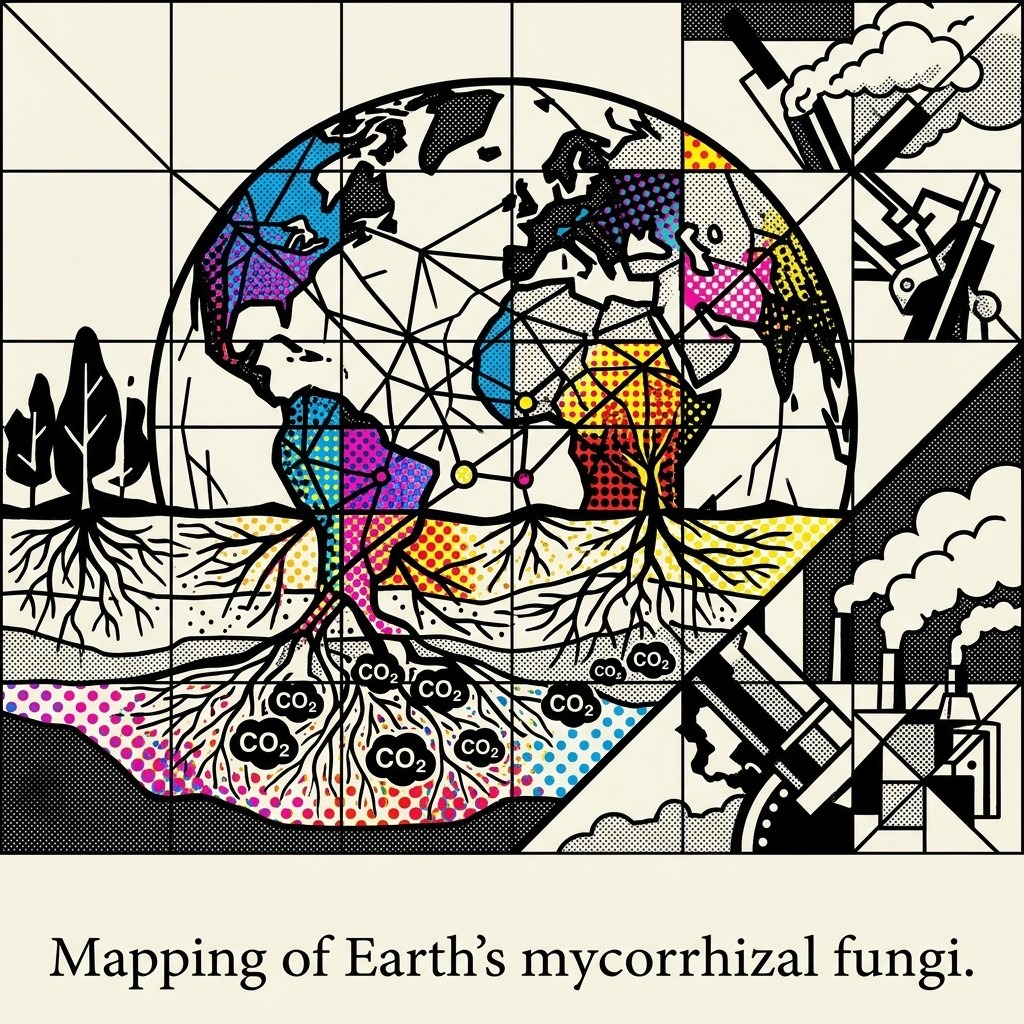
On June 11, the Society for the Protection of Underground Networks (SPUN)—scientists mapping mycorrhizal fungi—published the first global map of these systems. Stretching 110 quadrillion kilometers, this biological infrastructure moves roughly 4 billion tons of carbon dioxide into soils annually (ScienceDaily) (Live Science). Revealing this decentralized network underscores the hubris of top-down mechanical interventions. Its scale proves market-driven conservation of existing ecosystems offers a far higher return on investment than speculative, unproven technological climate overrides. However, quantifying this underground infrastructure provides exactly the empirical baseline needed to design safer, highly targeted ecological interventions in the future.
Radical Geoengineering Mainstreaming
Governments are promoting marine cloud brightening and stratospheric sulphur injection as inevitable measures to artificially cool the Earth as emission targets fail. While the EU has recently prioritized infrastructural climate adaptation, mainstreaming radical geoengineering marks an escalation toward hacking the planetary system. Both expose the tension in climate strategy between trusting the resilience of staggeringly complex, decentralized organic systems and attempting blunt, top-down mechanical overrides of the atmosphere.
World Cup Attendance Records
The expanded FIFA World Cup in the United States shattered historical attendance records heading into the Round of 16. Packed stadiums are delivering massive tourism and economic stimulus to host cities (Bloomberg).
Stay tuned for the next Gist—your edge in a shifting world. The Gist remains independent and reader-supported. If you value news free from corporate or state interests, consider supporting our mission with a donation.
|