The Global Overview
Sanctions Reversal Triggers Energy Volatility
Crude oil rose in early Asian trade as Asia-Pacific government bonds fell amid supply disruption fears (WSJ). The U.S. struck targets in Iran and restored oil sanctions just 20 days after signing a memorandum of understanding, a non-binding agreement, on maritime security. This policy reversal demonstrates hard geopolitical leverage overriding recent diplomatic frameworks, directly impacting global energy costs and forcing investors to price higher risk premiums into supply chains.
AI Hardware Correction Shifts Market Focus
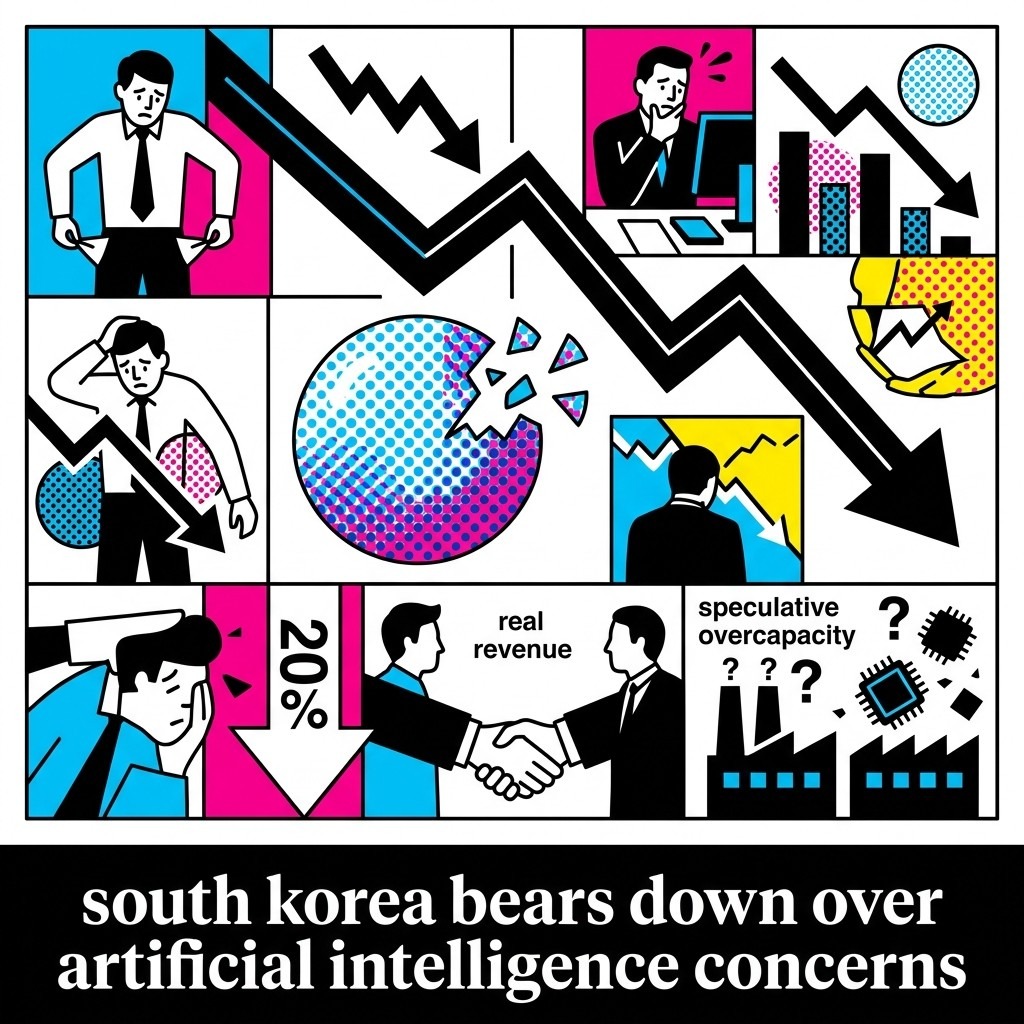
South Korea’s equity gauge dropped 20% from its peak into a technical bear market, while global semiconductor stocks tumbled late in Wall Street trading (Bloomberg). This steep AI hardware correction provides a healthy price signal, punishing speculative overcapacity and forcing a pivot toward software revenue and tangible returns. This selloff restricts the blank-check liquidity previously afforded to hardware manufacturers, shifting the industry’s primary bottleneck from chip production to viable commercial deployment. However, foundational AI models require massive upfront capital with inherently delayed payoffs; penalizing short-term returns risks stalling long-term computational breakthroughs.
Testing AI Governance Frameworks
Extending our coverage of AI’s rapid academic impact, we are now seeing the emergence of highly speculative meta-research, with academics attempting to apply human constitutional theory to large language models. A new paper published on SSRN, a repository for preprints and early-stage academic research, assesses whether AI models can meaningfully consent to frameworks like Anthropic’s ‘Claude Constitution’ (Marginal Revolution).
Discover further developments in the next edition of The Gist. The Gist remains independent and reader-supported. If you value news free from corporate or state interests, consider supporting our mission with a donation.
|