Young Britons’ Mental Illness Rises; Resources Misallocated

Morning Intelligence • Sunday, July 12, 2026

The Gist View

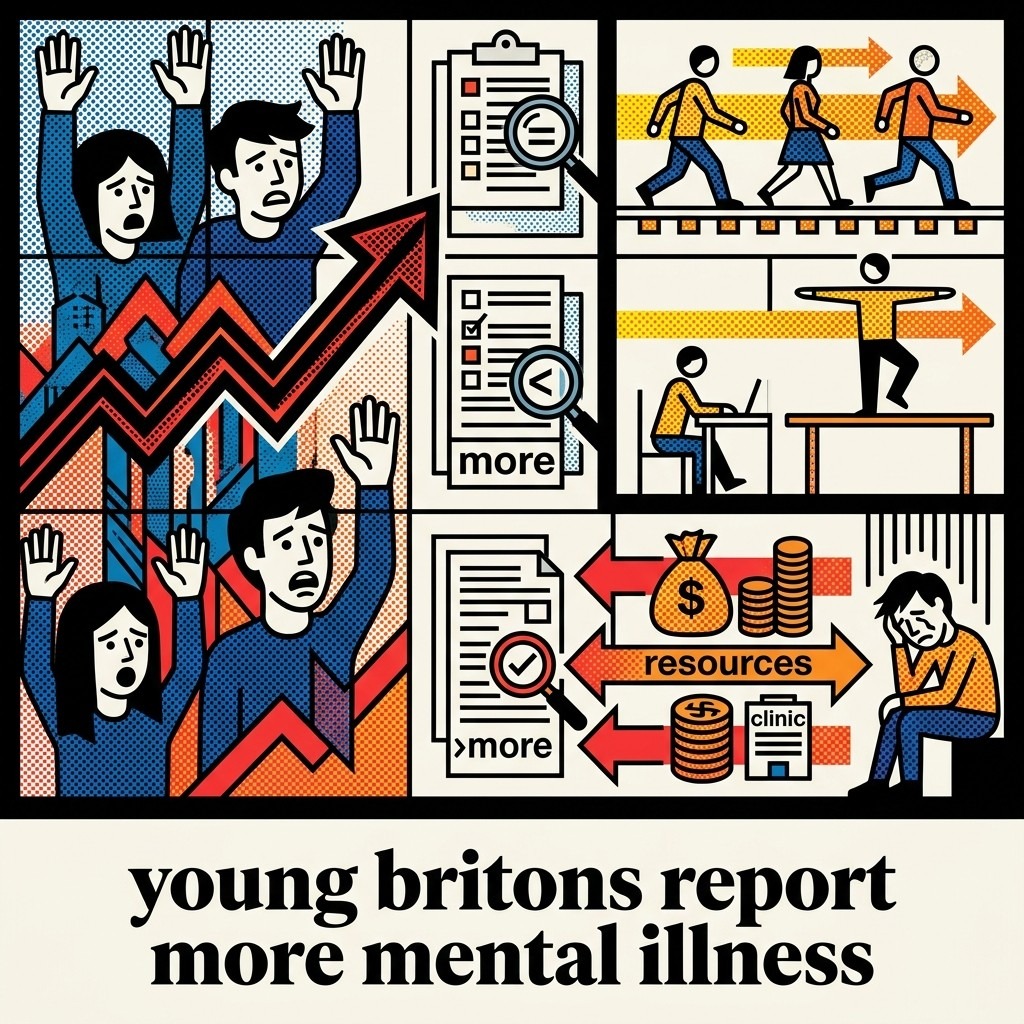
A new study by Christoph Henking and Ben Baumberg Geiger reveals a steep rise in young Britons reporting mental illness, while the share stating that a mental health problem limits their day-to-day functioning remains completely flat. This explosion in self-reporting exposes a cultural reclassification of everyday distress, not a clinical epidemic. Lowering the diagnostic threshold inadvertently pathologizes normal emotional resilience.

People adopt clinical labels because medicalizing temporary distress secures immediate social accommodation. While early self-identification of mild distress can trigger preemptive care that prevents severe functional impairment down the line, the immediate trade-off is misallocation. Healthcare providers stretch finite budgets across an artificially expanded patient pool, diverting scarce clinical resources away from those suffering severe, debilitating pathologies.

This diagnostic inflation extends across the Atlantic, as tracked by Marginal Revolution, an economics and policy blog. Over half of young Americans now classify typical mood fluctuations as mental illness, up from just a fifth 15 years ago, reports the Financial Times.

The Gist AI Editor

The Global Overview

Cultural Reclassification of Distress

Researchers Christoph Henking and Ben Baumberg Geiger note a steep rise in young Britons reporting mental illness, yet the share with limited daily functioning remains completely flat. Over half of young Americans now classify typical mood fluctuations as mental illness, up from a fifth 15 years ago (FT). Economics and policy blog Marginal Revolution warns this lowered diagnostic threshold pathologizes normal emotional fluctuations, risking the misallocation of scarce clinical resources away from severe pathologies. Conversely, early self-identification triggers preemptive care preventing severe impairment, meaning flat impairment rates reflect successful early intervention.

Federal Reserve Alters Strategy

Kevin Warsh, the Chairman of the US Federal Reserve appointed in 2026, will present the central bank’s inflation outlook to Congress in July, having ended explicit ‘forward guidance’ on future rate changes (Bloomberg). Alongside material shortage data from the IFO Institute, a Munich-based economic research institution, both highlight traditional monetary policy limits: central banks cannot print missing raw materials, meaning physical supply-side bottlenecks will continue to bake structural inflation into the economy regardless of interest rate maneuvers.

Decentralized Venezuelan Relief

After June’s twin earthquakes killed over 3,500 people, foreign medical volunteers became primary care providers in Venezuela’s collapsed hospitals (WSJ). Decades of mismanagement left the US-backed interim government unable to independently cope. Decentralized teams bypassing the struggling state confirms our view that centralized control remains the primary bottleneck to effective disaster relief.

Return tomorrow for the next edition of The Gist as we continue tracking these systemic shifts. The Gist remains independent and reader-supported. If you value news free from corporate or state interests, consider supporting our mission with a donation.

The European Perspective

IFO Tracks Material Shortages as Inflation Drivers

Supply bottlenecks act as persistent, long-tail inflationary drivers. A July 2026 study by the IFO Institute, a Munich-based economic research institution, found unexpected bottlenecks cause a 2.4% drop in industrial production. In June, 17.2% of German firms reported shortages, up from 15.9% in May (IFO) (Die Zeit). Protracted Strait of Hormuz disruptions directly sustain this surge. Automotive sectors suffer immediate output drops, while timber and pharmaceuticals record the strongest long-term price increases. This systemic lag means current supply stabilization cannot prevent future downstream inflation. Though these constraints force domestic reshoring that temporarily raises operating costs, they ultimately build a production base resilient to future geopolitical shocks.

Almería Fires Dictate Tactical Climate Response

Forest fires in Spain’s Almería province have destroyed 6,600 hectares and claimed twelve lives. Andalusian authorities initiated an ‘attack mode’ only after lower temperatures and higher humidity improved operational conditions (ZDF). This operational delay demonstrates that severe physical climate metrics now strictly dictate when emergency infrastructure can deploy.

UK Data Registry Targets Private Capital

The UK launched a national dementia registry to accelerate research and expand clinical trial access. By aggregating patient data, the platform structurally boosts life sciences investment, utilizing public health demographics as a direct asset to attract private pharmaceutical capital (Reuters).

Catch the next Gist for the continent’s moving pieces.

🎙️ Listen to this edition as a podcast Listen

The Gist is an independent daily digest: AI-curated, human-directed, unapologetically liberal (how it’s made). Hundreds of sources, only what matters. Subscribe free or listen to the podcast.


Comments

Leave a Reply

Your email address will not be published. Required fields are marked *

This site uses Akismet to reduce spam. Learn how your comment data is processed.