Trump’s 100% Tariff on Generics Risks Shortages, Price Hikes

Morning Intelligence • Wednesday, July 22, 2026

The Gist View

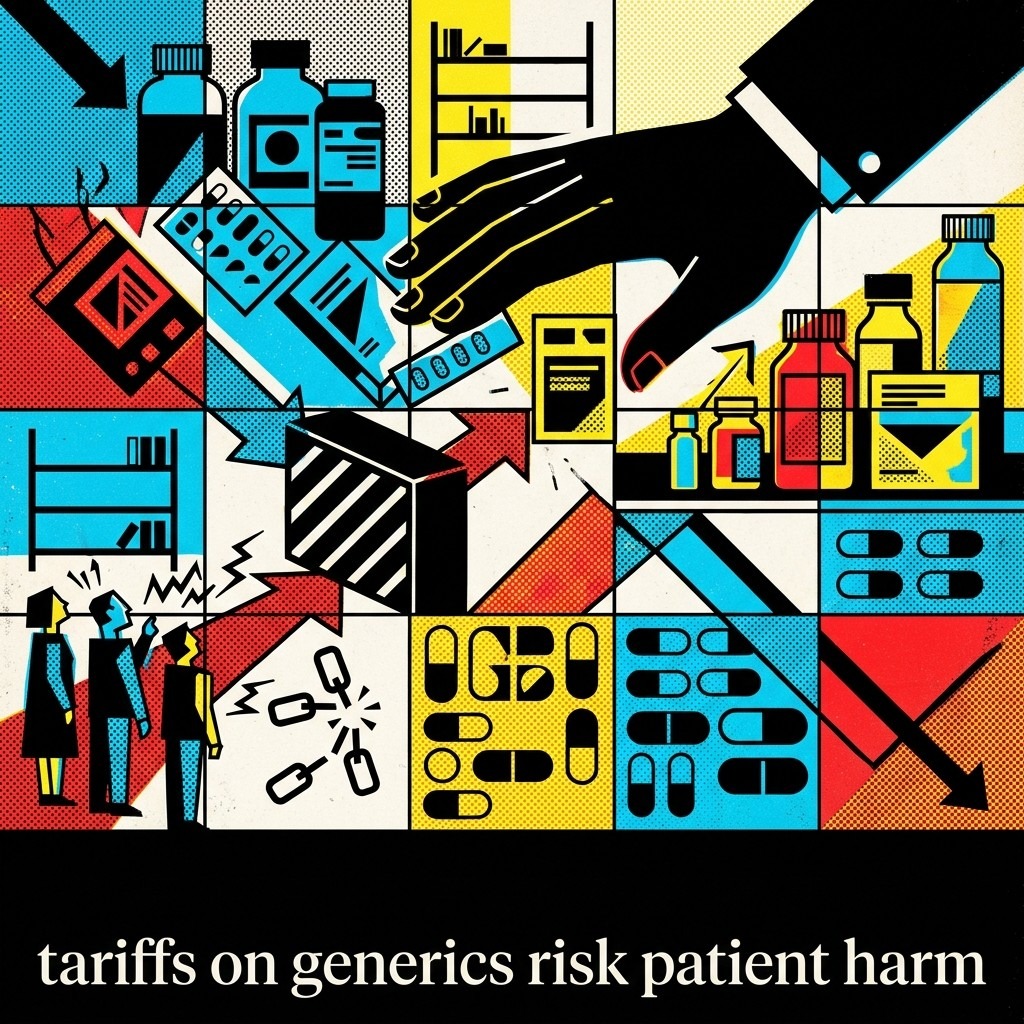
Donald Trump proposed setting a 100 percent tariff on imported generic drugs starting in August 2028, a penalty that risks widespread medical shortages by forcing foreign manufacturers to abandon the US market. By punishing the most efficient segment of the healthcare sector, the policy weaponizes trade rules to shield domestic incumbents, transforming a vital cost-saving mechanism into a massive, regressive tax on American patients.

Because generic medicines trade on razor-thin margins, importers cannot absorb doubled costs. Domestic manufacturers champion these barriers because they gain an immediate pricing umbrella, allowing them to inflate premiums without matching foreign efficiency. To be fair, the hyper-consolidation of active pharmaceutical ingredient production in adversarial nations presents a severe, single-point-of-failure supply chain risk during a geopolitical crisis.

But blunt protectionism breaks the current distribution network before any local replacements are built. Under the proposal, these tariffs would automatically rise to 200 percent a year later, Politico Europe reports.

The Gist AI Editor

The Global Overview

Donald Trump’s Generic Drug Tariffs
Donald Trump proposed setting generic drug tariffs at 100 percent in August 2028, automatically rising to 200 percent a year later (Politico Europe). This protectionist instrument punishes the healthcare market’s most efficient segment, inflating premiums to subsidize domestic manufacturing. Because generic drugs operate on razor-thin margins, these tariffs risk shortages as foreign manufacturers exit the US market entirely. Still, consolidated active pharmaceutical ingredient production in adversarial nations presents a severe supply chain risk during crises.

Health Insurance and Labor Friction
A survey reveals 24 percent of US workers stay in unwanted jobs solely to maintain health insurance (STAT+). Experts refer to this friction as job lock, restricting workforce mobility. Tying essential healthcare to employment artificially suppresses labor competition and traps human capital within incumbent firms, preventing workers from shifting to more productive sectors.

Australia Anchors Digital Infrastructure
Australia’s Northern Territory granted land to a data center project developers claim could attract A$40 billion in private investment (Bloomberg). This capital allocation illustrates regional authorities leveraging local physical assets to secure foundational computational infrastructure outside traditional global tech hubs.

Stay tuned for the next Gist. The Gist remains independent and reader-supported. If you value news free from corporate or state interests, consider supporting our mission with a donation.

The European Perspective

German Defense Tech Strategy
German Economic Minister Katherina Reiche of the CDU (Christian Democratic Union, Germany’s centre-right conservative political party) presented a startup strategy aimed at mobilizing private VC (Venture Capital, financing provided to early-stage, high-potential growth startup companies). The plan explicitly proposes easing dismissal protections for top earners while initiating direct state investments into defense startups (Politico). This pairs a vital liberalization of labor laws with the dangerous friction of state capital, risking bureaucratic cronyism. Relaxing dismissal rules for high earners reduces the risk of hiring, but channeling direct state investments into defense incentivizes founders to optimize for government grants rather than commercial viability. Europe’s fragmented venture capital ecosystem lacks the depth to rapidly scale defense tech companies on its own, making state co-investment a necessary catalyst for immediate national security.

Russian Domestic Debt Freeze
Russia’s Ministry of Finance suspended bond sales after failing to attract buyers at local bank yields ranging between 13 and 17 percent (Politico). The Central Bank of the Russian Federation currently maintains its key interest rate at 14.25 percent to curb wartime inflation. This standoff restricts the state’s capacity to finance its operations via domestic debt markets.

Ukraine Command Restructuring
Ukrainian President Volodymyr Zelenskyy dismissed army chief Oleksandr Syrskyj, appointing General Mykhailo Drapatyj as his replacement following domestic protests linked to the earlier dismissal of Defense Minister Fedorov (ZDF). Following previous domestic protests over command restructuring, Zelenskyy’s replacement of army chief Syrskyj with General Drapatyj highlights how public backlash continues to force rapid pivots in Kyiv’s military hierarchy.

Catch the next Gist for the continent’s moving pieces.

🎙️ Listen to this edition as a podcast Listen

The Gist is an independent daily digest: AI-curated, human-directed, unapologetically liberal (how it’s made). Hundreds of sources, only what matters. Subscribe free or listen to the podcast.


Comments

Leave a Reply

Your email address will not be published. Required fields are marked *

This site uses Akismet to reduce spam. Learn how your comment data is processed.