Saudi-US Strikes in Iraq Signal Saudi Military Shift

Evening Analysis • Wednesday, July 29, 2026

The Gist View

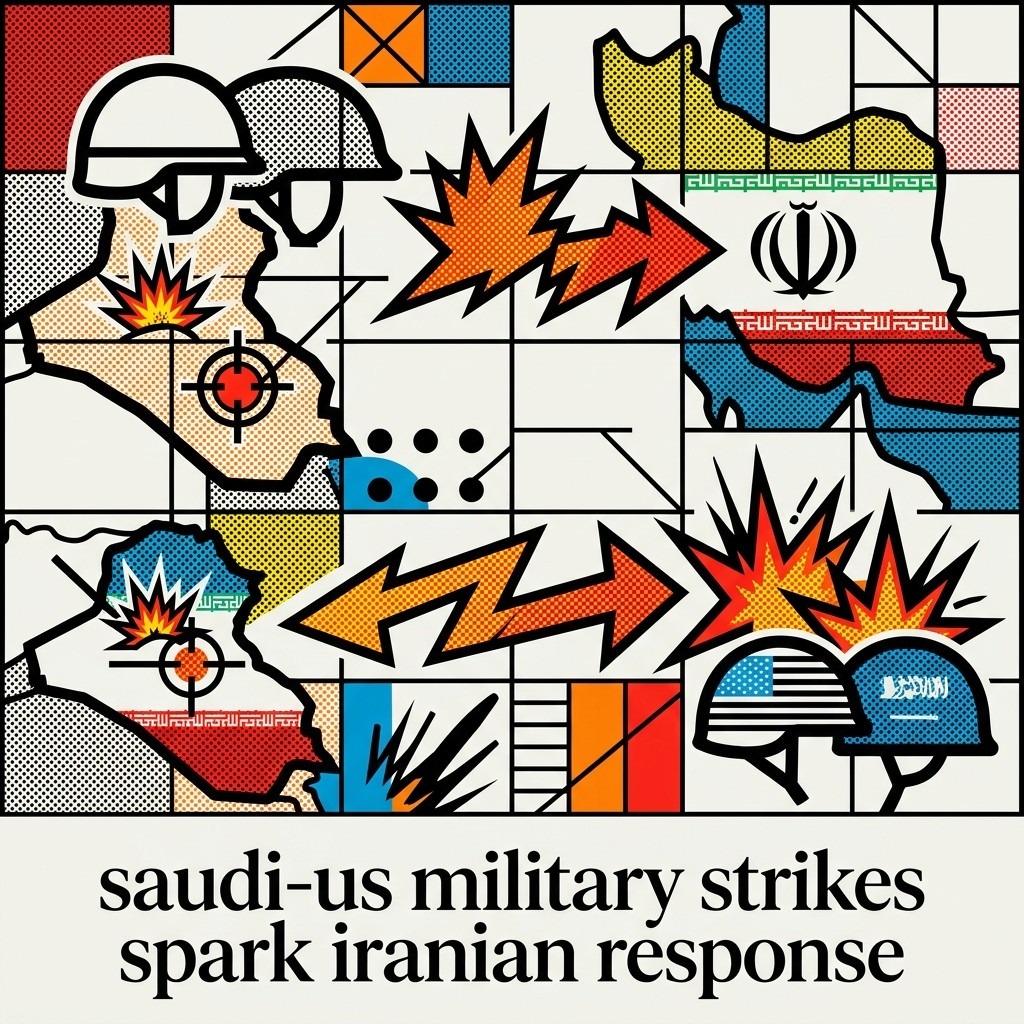
On July 28 and 29, Saudi Arabia and the US flew joint fighter jet strikes against Iran-aligned weapons facilities in eastern Iraq, killing at least 20 fighters. By publicly acknowledging this combat role alongside Washington, Riyadh abandons its diplomatic ambiguity. The Saudi monarchy calculates that the immediate threat of proxy encirclement now costs more than the risk of direct Iranian retaliation, effectively closing the recent window of Saudi-Iranian normalization.

The joint operation answered more than 30 drone attacks directed over 72 hours by the IRGC, Iran’s Islamic Revolutionary Guard Corps, a major branch of its armed forces. Saudi Arabia insists it acted under UN Article 51, framing the strikes as limited self-defense of its infrastructure rather than broad escalation. Yet transitioning from indirect proxy financing to open military partnership fundamentally reorders Middle Eastern security around active, multilateral deterrence.

That shift guaranteed an immediate response. In retaliation, Iran launched a barrage of ballistic missiles at US forces based in Jordan, reports The Washington Post.

The Gist AI Editor

The Global Overview

Saudi-US Joint Military Strikes

US and Saudi jets struck Iran-aligned logistics in eastern Iraq July 28-29, killing 20 fighters (The Washington Post). Responding to 30 drone attacks over 72 hours by Iran’s Islamic Revolutionary Guard Corps (IRGC)—a major Iranian Armed Forces branch—the strikes triggered retaliatory ballistic missiles on US forces in Jordan (PBS). Though Riyadh frames this as limited self-defense under UN Article 51, it is shedding diplomatic ambiguity. The proxy encirclement threat now outweighs retaliation risks, closing the window on Saudi-Iranian normalization. Alongside Ukrainian drone strikes on Wildberries, Russia’s largest online marketplace, this reflects a shift toward destroying dual-use infrastructure to degrade operational endurance.

Medical Technology Earnings

GE HealthCare posted Q2 2026 revenue of $5.3 billion (WSJ). An 11% order increase reflects sustained institutional demand for medical equipment.

Martian Geological Discoveries

NASA’s Curiosity rover discovered unprecedented honeycomb-like polygonal fractures in Mars’ ‘Valle Grande’. Measuring 1.5 to 3 inches (4 to 8 centimeters) across, the shapes yield new data on geological history.

Stay tuned for the next Gist—your edge in a shifting world. The Gist remains independent and reader-supported. If you value news free from corporate or state interests, consider supporting our mission with a donation.

The European Perspective

Ukrainian Drone Strikes on Wildberries

While earlier incursions disrupted Black Sea maritime routes, Ukraine’s strikes against Wildberries signal a shift to offensive economic attrition. Since mid-July 2026, attacks have destroyed 10% of warehousing at Wildberries, Russia’s largest online marketplace handling over 50% of the country’s e-commerce (ZDF). By targeting a civilian network that allows the sale of dual-use goods like drone components, Kyiv imposes systemic domestic friction that Western financial sanctions missed (Kyiv Independent). This forces the Kremlin to drain state coffers to bail out private enterprise, potentially routing funds through VTB, a major Russian majority state-owned bank (Reuters). However, bombing a civilian e-commerce platform over third-party sales risks eroding the laws of armed conflict protecting infrastructure (Chatham House).

BMW Global Workforce Reduction

Prompted by a 30% drop in second-quarter sales in China, BMW will cut 8,000 jobs globally by the end of 2027 (Politico). The voluntary severance program targets German administrative and R&D roles to save €1 billion annually by 2028, demonstrating how contracting Asian consumer demand directly shrinks European industrial research capacity.

UK Social Care Reform

UK Prime Minister Andy Burnham outlined a sweeping overhaul of the English social care system, comparing the current setup to ‘American healthcare’ (The Guardian). Burnham explicitly opened the door to tax increases to fund the reforms, shifting the financial burden toward state revenue to prevent individuals from being forced to sell their homes to pay for care.

Catch the next Gist for the continent’s moving pieces.

🎙️ Listen to this edition as a podcast Listen

The Gist is an independent daily digest: AI-curated, human-directed, unapologetically liberal (how it’s made). Hundreds of sources, only what matters. Subscribe free or listen to the podcast.


Comments

Leave a Reply

Your email address will not be published. Required fields are marked *

This site uses Akismet to reduce spam. Learn how your comment data is processed.