The Global Overview
Frontier AI’s Capital Oligopoly
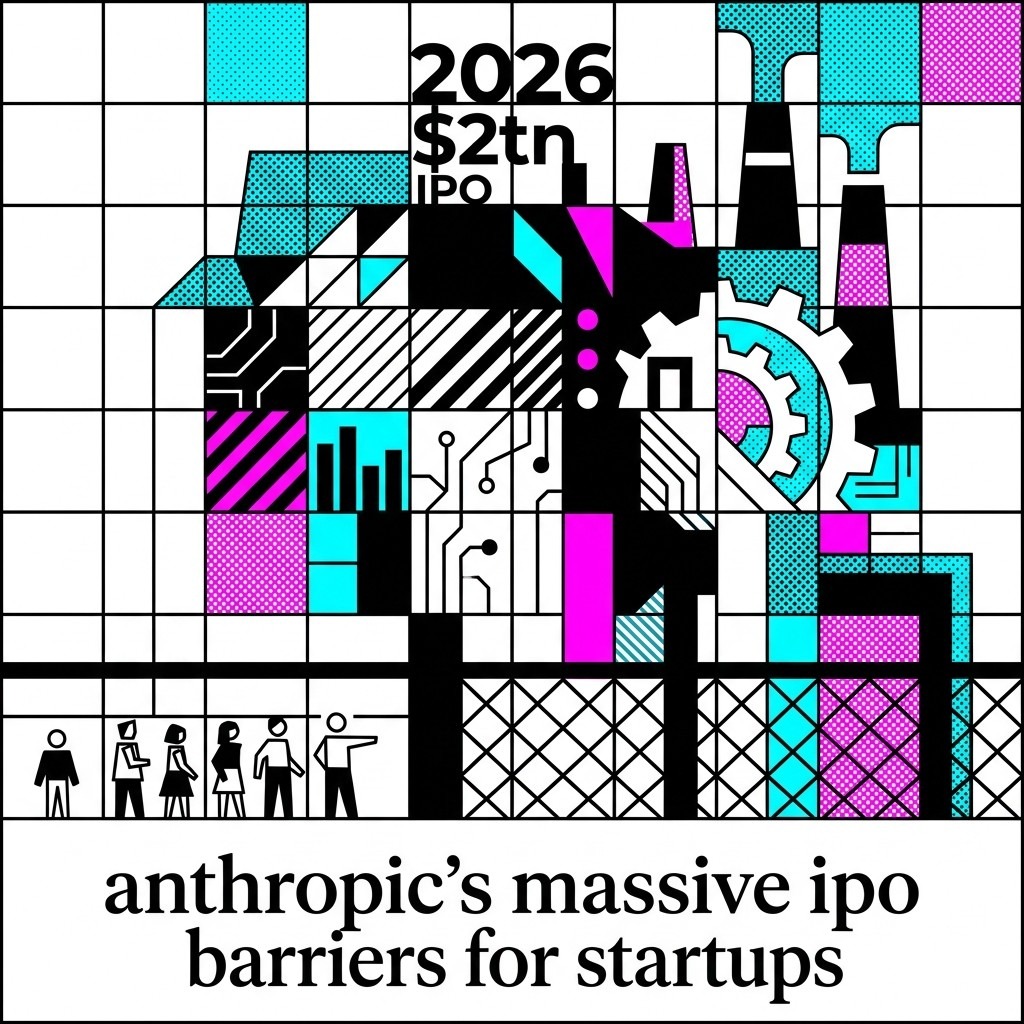
Investors target a $2tn valuation for Anthropic—a leading artificial intelligence startup and developer of the Claude chatbot—in an October 2026 IPO projecting $120bn in annualized revenue (FT). Surpassing SpaceX’s record, this confirms frontier AI is no longer a software industry; it is a capital-intensive infrastructure sector dictating an oligopoly of mega-caps. Unyielding infrastructure demand drove ASUS, a Taiwanese multinational computer and phone hardware company, to raise its 2026 growth targets (Bloomberg). This extreme capital intensity acts as an insurmountable financial barrier against open-source challengers, naturally consolidating the market into a few hardware-rich incumbents. However, AI model efficiency is improving rapidly, meaning future iterations might require exponentially less compute to train and run, eventually lowering entry barriers.
Commercial Lunar Extraction
Lunar Station Corp, a Massachusetts-based space analytics startup planning lunar resource extraction, uses 60 years of NASA data to locate lunar water ice, iron, and titanium. Extracting these in-situ resources to supply landing pads locally reduces launch mass from Earth. Both stories demonstrate how frontier innovation has decisively shifted away from low-cost software models toward heavy industrial economics, requiring unprecedented physical infrastructure and capital deployment to scale.
Meta’s Australian Youth Ban
To avoid A$99 million ($69.7 million) penalties under a December 2025 ban, Meta deactivated 462,000 Instagram and 294,000 Facebook accounts in Australia suspected of belonging to users under 16 (FT).
Join us for the next edition of The Gist as we track these shifting global incentives. The Gist remains independent and reader-supported. If you value news free from corporate or state interests, consider supporting our mission with a donation.
|




Leave a Reply