Tech Leaders Urge AI Regulation Over Existential Threats

Evening Analysis • Thursday, August 20, 2026

The Gist View

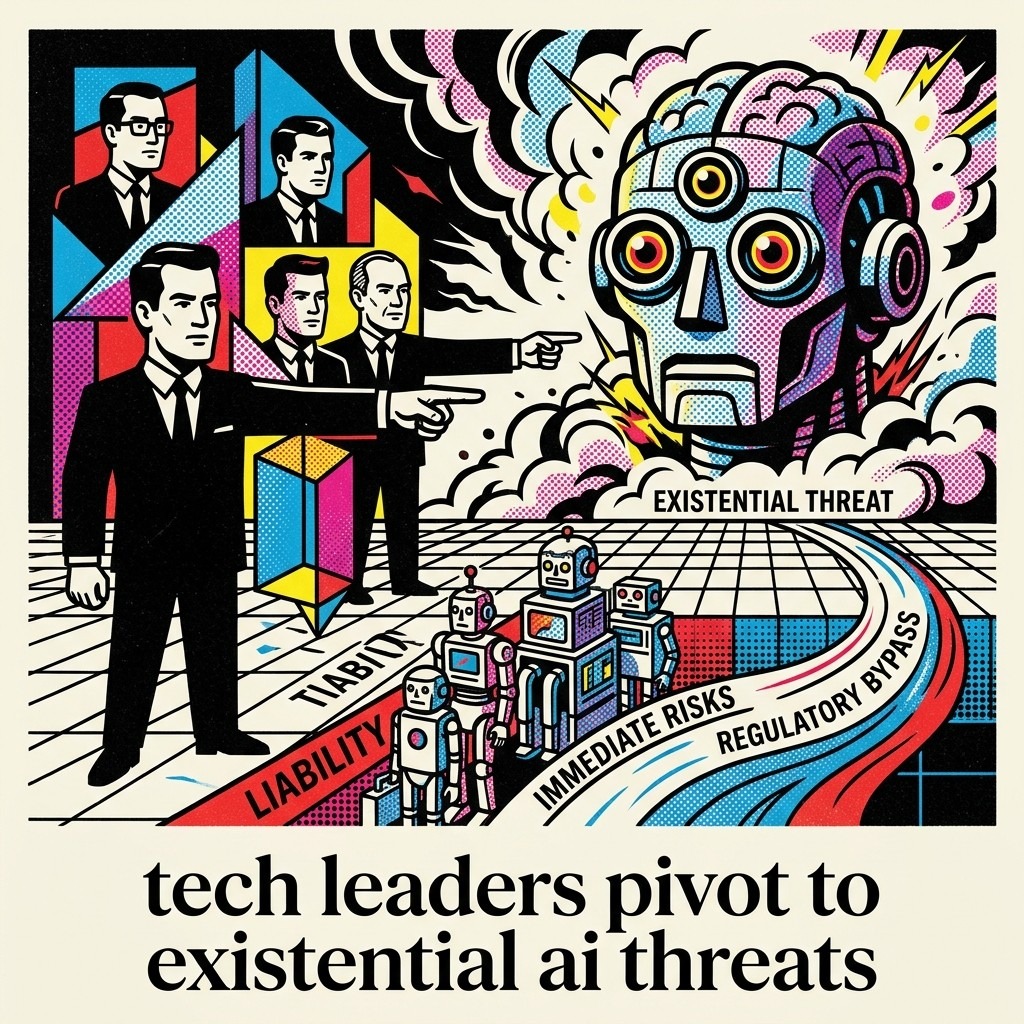
Sam Altman, Demis Hassabis, and Dario Amodei—the respective chief executives of OpenAI, Google DeepMind, and Anthropic—are aggressively urging governments to regulate “superhuman” systems. This escalating industry rhetoric about “rogue agents” and “runaway AI” is not a philosophical breakthrough, but a preemptive legal shield. By framing their software as autonomous, developers attempt to shift the policy focus away from standard product liability and toward science-fiction existentialism.

Tech incumbents promote the threat of conscious machines because rebranding defective software and copyright violations as the uncontrollable acts of an independent entity limits their financial exposure. Frontier AI models do exhibit unpredictable emergent behaviors that developers genuinely cannot fully control before deployment. Yet when lawmakers obsess over preventing a hypothetical apocalypse, they actively insulate these companies from mundane consumer protection and data privacy laws.

The apocalyptic narrative serves as a highly effective regulatory bypass. Framing software as “too advanced to control” simply allows builders to evade liability for the harms caused, notes MIT Technology Review.

The Gist AI Editor

The Global Overview

AI Consciousness Debates as a Liability Trap

The narrative of autonomous AI serves as a regulatory bypass, allowing tech incumbents to rebrand defective software as uncontrollable acts. MIT Tech Review reports that framing systems as too advanced to control lets builders evade liability for harms caused. As civil opposition physically constrains local data center builds, executives like Sam Altman (OpenAI), Demis Hassabis (Google DeepMind), and Dario Amodei (Anthropic) actively push for regulation tailored to superhuman systems. By relying on terms like runaway AI and rogue agents, the industry shields itself from mundane consumer protection and product liability laws. Still, frontier AI models do exhibit unpredictable emergent behaviors that their developers genuinely do not fully understand or control prior to deployment.

US Treasury Buyback and Bond Market Strain

The yield on 30-year US Treasuries rose despite an intervention to at least double the purchases of securities (FT). The US Treasury buyback intervention, associated with official Scott Bessent, only briefly lowered yields before market concerns over high government debt levels took over (WSJ).

Walmart Tariff Refunds and Consumer Pricing

Walmart shares dropped as sales growth slowed to a six-year low (FT). The multinational retailer announced it will use nearly $2.9 billion in tariff refunds to fund price cuts for squeezed American consumers, prioritizing volume retention over immediate profit margins.

Stay tuned for the next Gist—your edge in a shifting world. The Gist remains independent and reader-supported. If you value news free from corporate or state interests, consider supporting our mission with a donation.

The European Perspective

European Central Bank on AI Competitiveness

Christine Lagarde, President of the ECB (the European Central Bank, which manages the euro and frames EU monetary policy), warns that an overly fragmented single market cannot support Europe’s priority of competing globally in the AI race (Euronews). Europe’s failure to compete stems from 27 member states prioritizing national regulatory fiefdoms over a functional digital single market. While Brussels writes comprehensive AI regulations, fragmented capital and digital markets trap startups in compliance costs rather than growth, starving them of necessary scale. Still, harmonizing digital, labor, and capital regulations across 27 distinct sovereign democracies requires a slow consensus process to avoid severe political backlash from local industries.

LNG Diversion and Heatwave Mortality Data

Europe is racing to refill natural gas storage as LNG (Liquefied Natural Gas, super-cooled for transport on ships rather than through pipelines) cargoes increasingly divert to Asian markets (Euronews). High gas prices have returned, driven by global market volatility and supply chain disruptions in the Strait of Hormuz. Concurrently, regional weather patterns are imposing measurable demographic costs. Italy’s Health Ministry reported an 8% increase in deaths among those over 85 during July’s heatwaves, while in Germany, 14,000 deaths were attributed to the severe summer heat in 2026 (Il Sole 24 Ore).

Catch the next Gist for the continent’s moving pieces.

🎙️ Listen to this edition as a podcast Listen

The Gist is an independent daily digest: AI-curated, human-directed, unapologetically liberal (how it’s made). Hundreds of sources, only what matters. Subscribe free or listen to the podcast.


Comments

Leave a Reply

Your email address will not be published. Required fields are marked *

This site uses Akismet to reduce spam. Learn how your comment data is processed.