U.S.-Iran Tensions Spike Bond Yields, Raise Debt Costs

Evening Analysis • Monday, August 31, 2026

The Gist View

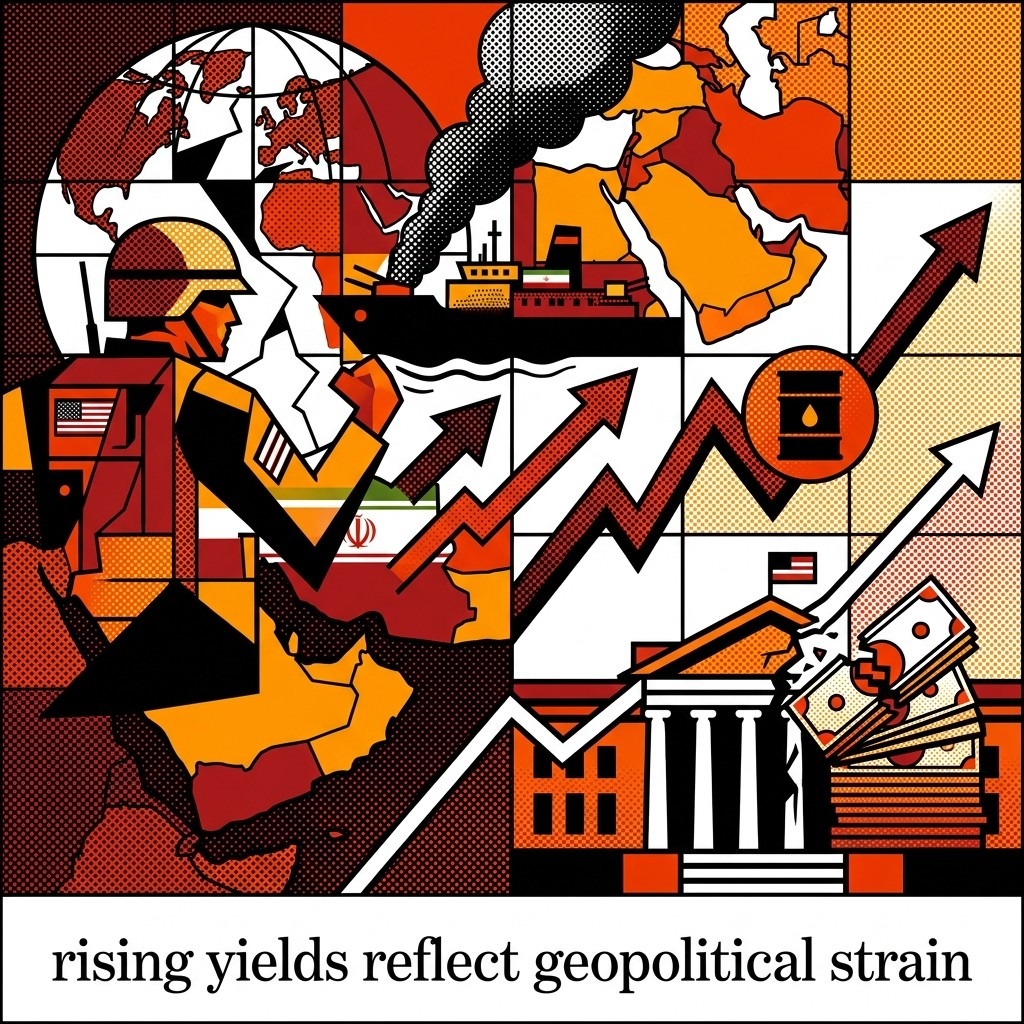
As fresh U.S.-Iran military escalation pushed long-dated global government bond yields to new highs in late August 2026, U.S. Treasury Secretary Scott Bessent addressed the G20—an intergovernmental forum comprising 19 major sovereign economies, the EU, and the African Union. This rapid debt repricing exposes the strict limits of the Treasury’s fiscal immunity.

Washington projects military force because it gains the deterrence required to secure global shipping and preserve dollar hegemony. While a temporary borrowing premium is a necessary price to check regional adversaries, the bond market treats war-driven oil shocks mechanically. Investors demand higher yields to offset inflation risk, meaning every foreign strike instantly raises the cost of U.S. domestic debt.

A heavily indebted treasury fighting a two-front war against both foreign rivals and its own creditors eventually exhausts its borrowing capacity. The U.S. faced a similar mechanical toll during the 1990 Gulf War, when crude price shocks drove a rapid half-point surge in 10-year Treasury yields within weeks (Wall Street Journal).

The Gist AI Editor

The Global Overview

Global Bond Yields Surge on Middle East Escalation

Long-dated global government bond yields reached new highs in late August 2026 following fresh military escalation between the U.S. and Iran that lifted oil prices. Recent market optimism around the Strait of Hormuz is shattered. Washington’s Middle East objectives directly undermine its macroeconomic stability, as war-driven oil spikes translate into higher borrowing costs for a heavily indebted Treasury. U.S. Treasury Secretary Scott Bessent is now attempting to reassure the G20—an intergovernmental forum comprising 19 major sovereign economies, the EU, and the African Union—that the U.S. can manage its massive debt without risking global financial stability (WSJ).

White House Pushes Local Data Center Expansion

President Trump warned communities rejecting data centers will end up “backwards and poor” (Politico). This executive push ignores growing bipartisan concerns over the vast infrastructure and energy costs of local data center projects, pitting federal technological goals against local resource limits.

US Adjusts Trade and Agriculture Supply

The US Agriculture Department is easing regulations for domestic ranchers while simultaneously boosting imports. Separately, Wells Fargo analysts warn domestic US steel prices face downward pressure from new capacity and potential imports, as Canada readies counter-tariffs (Bloomberg).

Stay tuned for the next edition. The Gist remains independent and reader-supported. If you value news free from corporate or state interests, consider supporting our mission with a donation.

The European Perspective

German Fiscal and Welfare Constraints

Germany’s ongoing healthcare funding crisis has now crystallized into an acute emergency, with the Pflegekassen (statutory nursing care insurance funds) projecting a €10 billion shortfall next year as the state’s fiscal maneuvering room collapses (ZDF). An estimated €500 million deficit by the end of 2026 coincides with inflation rising to 2.9% in August 2026, up from 2.8% in July. The August inflation uptick is a transient supply shock driven by fuel costs linked to the external Iran conflict, not a structural failure of domestic economic management. However, this spike removes the political cover for borrowing to fix the welfare state. The simultaneous return of energy-driven inflation and the collapse of nursing care funding exposes the exhaustion of a German fiscal state unable to absorb both external and internal shocks, forcing a zero-sum choice between reviving past measures like the temporary 17-cent per liter fuel tax cut and bailing out healthcare.

French Presidential Primary Maneuvering

MEP (Member of the European Parliament) Raphaël Glucksmann will contest the Socialist primary for the 2027 French presidential election (Politico). Navigating procedural hurdles and internal challengers like Olivier Faure, his bid forces the structural consolidation of center-left political capital and apparatus control.

Czech Subsidy Fraud Conviction

Czech MEP Jana Nagyová, an ally of Andrej Babiš (former Prime Minister of the Czech Republic and populist political leader), was convicted of EU subsidy fraud (Politico). Pending a planned appeal to the Czech supreme court, the ruling applies direct judicial scrutiny to the financial mechanisms historically sustaining regional populist networks.

European Climate Adaptation Strategy

European Commission President Ursula von der Leyen mandated a policy shift from post-disaster response to preemptive prevention (Euronews). This redirection of infrastructure capital faces immediate implementation hurdles, as EU member states lack the fiscal room to fund the transition.

Catch the next Gist for the continent’s moving pieces.

🎙️ Listen to this edition as a podcast Listen

The Gist is an independent daily digest: AI-curated, human-directed, unapologetically liberal (how it’s made). Hundreds of sources, only what matters. Subscribe free or listen to the podcast.


Comments

Leave a Reply

Your email address will not be published. Required fields are marked *

This site uses Akismet to reduce spam. Learn how your comment data is processed.