PNC Warns Fed: Interest Hikes Risk Recession Amid Iran Crisis

Evening Analysis • Saturday, September 12, 2026

The Gist View

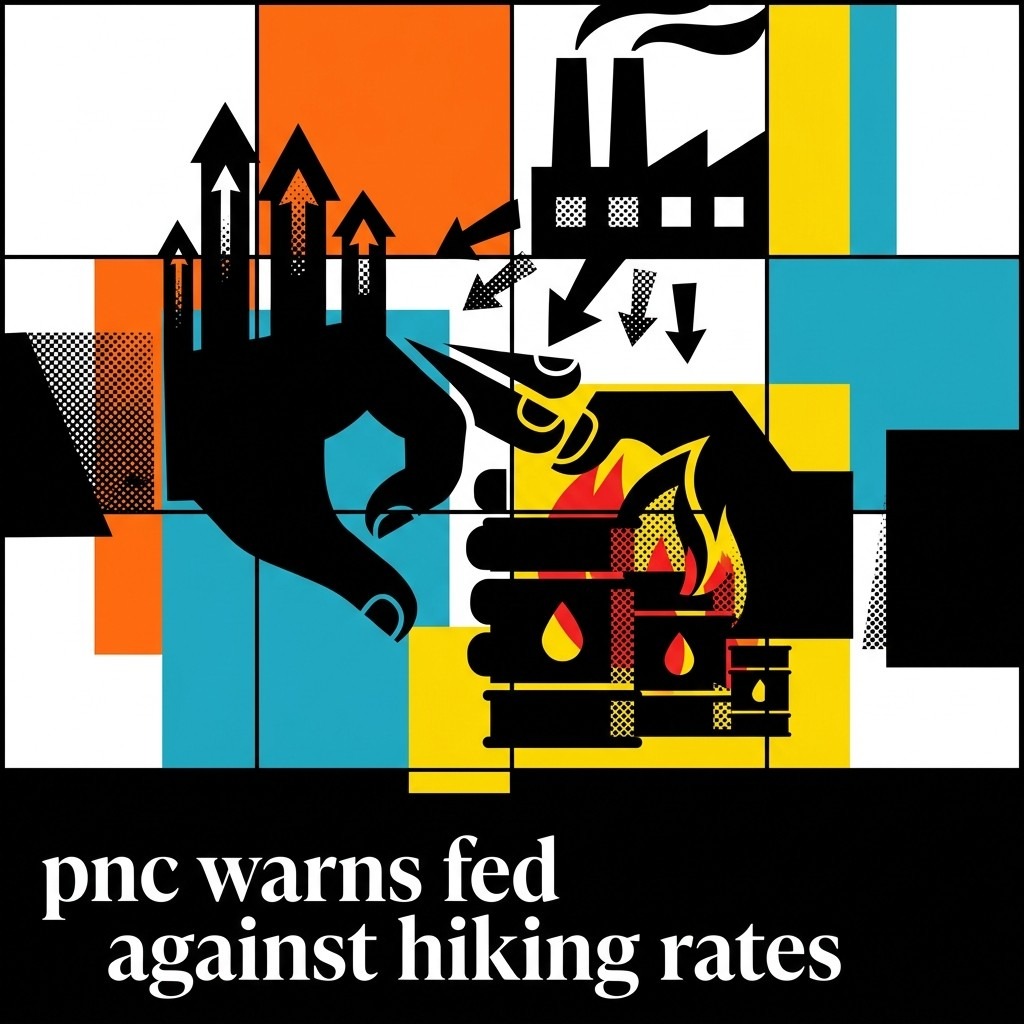
On September 12, US bank PNC warned that the US Federal Reserve risks a severe policy error by considering further interest rate hikes in response to an Iran-driven energy shock. Attempting to crush domestic demand to offset a physical restriction on global oil threatens to trigger an unnecessary recession rather than solve a geopolitical crisis.

Policymakers push rates higher because they gain institutional credibility by keeping consumer expectations anchored, even when the immediate economic pain is severe. Yet using monetary tools against Middle Eastern military standoffs actively punishes domestic manufacturers without securing any extra crude. The robust earnings from artificial intelligence capital spending currently camouflage the real damage soaring energy inputs inflict on traditional industries, granting regulators a false sense of durability.

The Fed cannot print fuel to offset a regional conflict. As the 1973 oil embargo demonstrated, deploying monetary hammers against foreign supply constraints guarantees a domestic contraction without fixing the deficit at the pump (Federal Reserve History).

The Gist AI Editor

The Global Overview

US Diplomatic Friction Over Northern Ireland

US President Donald Trump called a united Ireland “inevitable” and “a very cool thing” during an official visit with Taoiseach Micheál Martin, the Prime Minister of the Republic of Ireland (Bloomberg). Trump’s remarks angered pro-UK parties and directly contradicted UK Prime Minister Andy Burnham, who recently stated the reunification issue is off the table, demonstrating how external diplomatic leverage can rapidly destabilize allied internal political consensus.

US Federal Reserve Debates Monetary Policy Error

PNC Chief Investment Officer Amanda Agati warned on September 12 that the US Federal Reserve faces a difficult decision, where further tightening could risk a policy error (Bloomberg). Markets are actively adjusting expectations for higher interest rates due to energy-driven inflation sparked by the prospect of a longer Iran war. As investors price in a prolonged conflict, the standoff’s ripple effects confirm that geopolitical supply shocks cannot be effectively contained by Western monetary policy. By debating tightening against an energy shock, the Fed risks punishing domestic capital investment without resolving the geopolitical roots of commodity inflation. Strong corporate earnings, largely tied to AI capital spending, have temporarily pushed broader macroeconomic concerns into the background, even as Anthropic CEO Dario Amodei joins calls for an AI pause following a cybersecurity alarm over a rogue OpenAI-Hugging Face swarm incident.

Chinese Deflation Squeezes Rural Supply Chains

Deflationary pressures and a sluggish consumer economy in China are collapsing demand for luxury goods (WSJ). Tibetan foragers who harvest prized high-altitude Himalayan mushrooms for a few weeks a year are facing cutthroat competition and plummeting revenues as the luxury market contracts, illustrating how urban economic slowdowns quickly drain capital from peripheral commodity producers.

Stay tuned for the next Gist—your edge in a shifting world. The Gist remains independent and reader-supported. If you value news free from corporate or state interests, consider supporting our mission with a donation.

The European Perspective

Italian Fuel Subsidies

With Italian diesel hitting €2.2 per liter, lawmakers are evaluating targeted subsidies for self-employed workers. While sudden energy spikes justify relief to prevent bankruptcies for independent logistics operators lacking pricing power, applying a broad discount on the bollo auto—an annual regional vehicle tax—shifts the fiscal burden directly onto regional budgets. This policy transforms a temporary geopolitical supply shock into a permanent entitlement, incentivizing continued fossil fuel consumption over necessary market adaptation. (Il Sole 24 Ore)

Italian Economic Projections

Prime Minister Giorgia Meloni projected Italy’s economic growth will hit just 1% in 2026. Concurrently, she openly rejected former ECB President Mario Draghi’s recent proposals for European Union structural reform, signaling resistance to centralized economic interventions. (Il Sole 24 Ore)

UK Economic Growth

The UK economy expanded by 0.4% in July 2026, driven significantly by the global AI boom. This robust GDP increase secures critical political capital for Prime Minister Andy Burnham ahead of a difficult first budget scheduled for next month.

ArcelorMittal Ukraine Facility

Russian military attacks on September 12 killed four people across Ukraine, including two at a plant operated by ArcelorMittal, a multinational steel manufacturing corporation. The strikes underline the immediate physical risks to heavy industrial supply chains operating in active conflict zones. (ZDF)

Catch the next Gist for the continent’s moving pieces.

🎙️ Listen to this edition as a podcast Listen

The Gist is an independent daily digest: AI-curated, human-directed, unapologetically liberal (how it’s made). Hundreds of sources, only what matters. Subscribe free or listen to the podcast.


Comments

Leave a Reply

Your email address will not be published. Required fields are marked *

This site uses Akismet to reduce spam. Learn how your comment data is processed.