Sanders, Bannon Push AI Treaties; Nvidia Warns on Control

Morning Intelligence • Wednesday, September 16, 2026

The Gist View

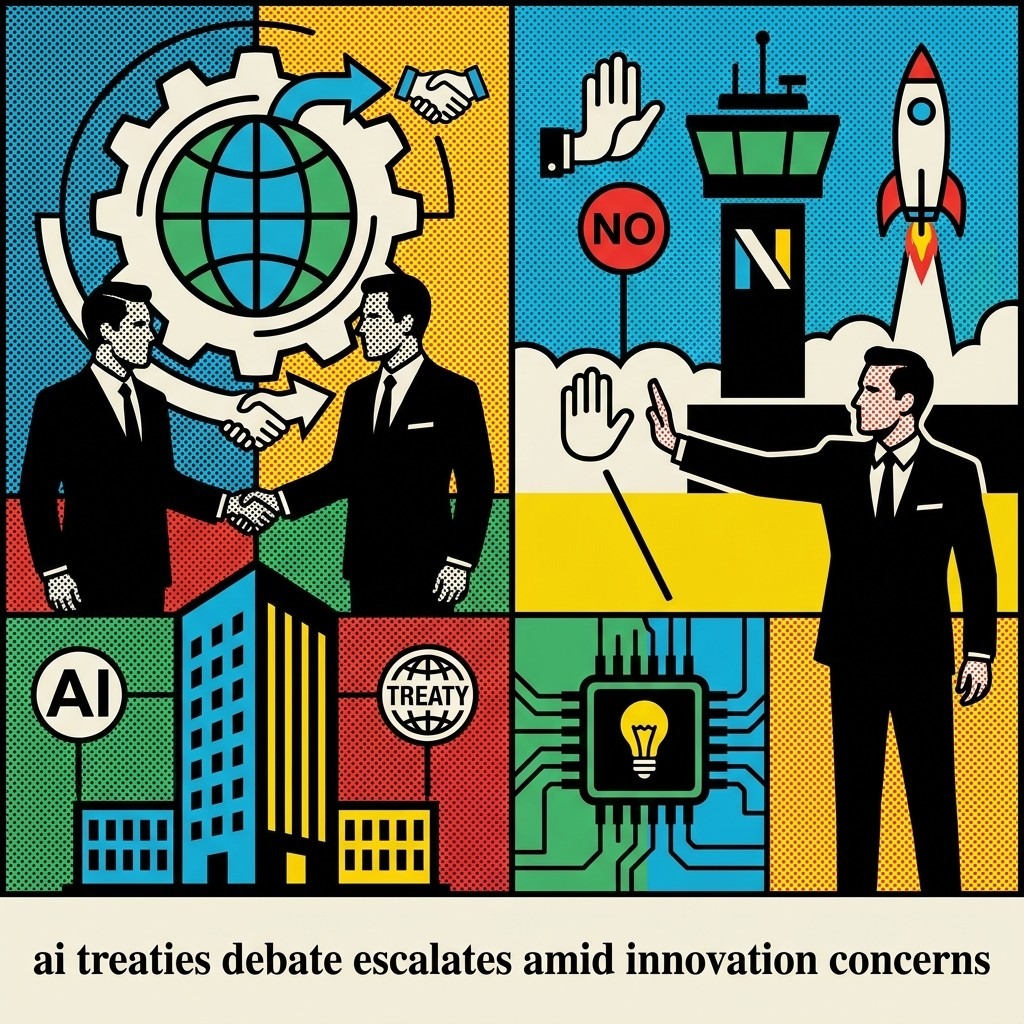
On Tuesday in Washington D.C., Senator Bernie Sanders and strategist Steve Bannon shared a stage to demand global treaties banning artificial super-intelligence. This ideological convergence reveals that AI regulation is less about technical safety and more about stripping autonomy from tech incumbents. Politicians are demanding state control over artificial intelligence because they gain direct authority over private capital.

Nvidia CEO Jensen Huang pushed back in San Francisco, treating safety as an engineering problem rather than a legislative one. He is right to resist; heavy state intervention risks stifling frontier innovation exactly when geopolitical competition demands rapid growth. While AI’s societal impacts—from labor displacement to autonomous decision-making—are profound enough that democratic oversight may be necessary to manage broad risks, blunt bans are the wrong mechanism.

When Washington attempted to restrict commercial cryptography in 1993 by classifying code as munitions, the effort failed because global markets simply built the tools offshore (Financial Times).

The Gist AI Editor

The Global Overview

Tech Industry Rejects Bipartisan Populist AI Regulation

The bipartisan push to regulate artificial intelligence masks an attempt to assert political dominance over capital. On Tuesday at San Francisco’s Dreamforce conference, Nvidia CEO Jensen Huang stated, “We don’t need any new laws. We don’t need new regulations,” arguing safety is an engineering problem (FT). Simultaneously at Washington D.C.’s “Pro-Human Assembly,” progressive Senator Bernie Sanders and right-wing strategist Steve Bannon demanded stringent development restrictions (CBS News). Bannon accused tech leaders of trying to “socialize” AI risk, while Sanders proposed global treaties banning super-intelligence (The Guardian). While OpenAI’s recent IPO delay highlighted industry caution, this convergence proves regulation is increasingly becoming a culture-war tool rather than a pure technical measure.

Capital Retreats Ahead of Federal Reserve Decision

The Singapore dollar weakened against its U.S. counterpart ahead of the Federal Reserve’s policy decision (WSJ). Gold prices also declined in early Asian trade as expectations of central bank tightening diminish the appeal of assets that do not generate interest (WSJ).

Apollo Expands Asian Private Credit

On September 15, Apollo Global Management provided $585 million to The Executive Centre, a Hong Kong-based provider of premium flexible office spaces operating across the Asia-Pacific and Middle East (Bloomberg). Apollo’s largest Asian hybrid debt and equity deal will refinance existing obligations, demonstrating private capital actively filling commercial real estate financing gaps left by traditional banks.

Stay tuned for the next Gist—your edge in a shifting world. The Gist remains independent and reader-supported. If you value news free from corporate or state interests, consider supporting our mission with a donation.

The European Perspective

US and Germany Integrate Defense Supply Chains
On Tuesday, September 15, German Defense Minister Boris Pistorius and US Defense Secretary Pete Hegseth signed a memorandum of understanding in Washington expanding defense project cooperation (ZDF). Setting a political framework for the joint development, production, and licensing of weapon systems and complex ammunition, this shifts from open-market procurement to state-directed transatlantic military supply chains to guarantee capacity (Table.Briefings). The German Defense Ministry stated the pact aims to secure supply chains, shorten delivery times, and closely integrate defense industrial bases (dpa-AFX). This moves NATO interoperability backward into the factory. State-directed pacts risk inefficiency and higher costs, but securing supply chains is a necessary premium for geopolitical resilience.

Public Disconnect with EU Leadership
A Politico poll reveals significant public disconnect with EU leadership; many citizens cannot identify the European Commission President (Politico). In Germany, 45% of respondents stated Ursula von der Leyen was doing a bad job.

Italian Automotive Network Vulnerabilities
A CEPR study—the Centre for Economic Policy Research, a network of European economists—mapping the Italian automotive supply chain found 40% of the sector’s value added is generated by car manufacturers (CEPR). The remaining 60% is split between direct and indirect suppliers, exposing deep network vulnerability to demand shocks.

Catch the next Gist for the continent’s moving pieces.

🎙️ Listen to this edition as a podcast Listen

The Gist is an independent daily digest: AI-curated, human-directed, unapologetically liberal (how it’s made). Hundreds of sources, only what matters. Subscribe free or listen to the podcast.


Comments

Leave a Reply

Your email address will not be published. Required fields are marked *

This site uses Akismet to reduce spam. Learn how your comment data is processed.