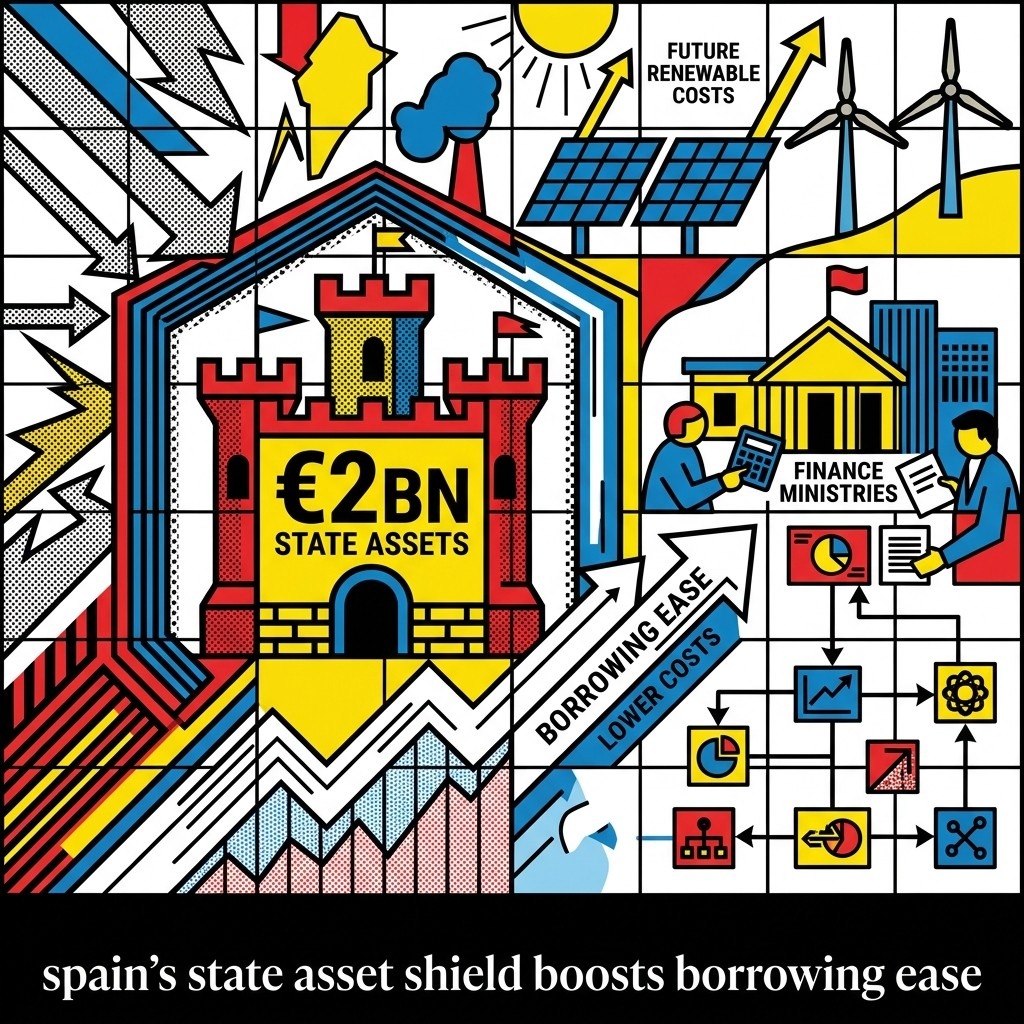
Spain’s €2bn Asset Shield Eases Borrowing, Raises Costs

Morning Intelligence • Friday, October 23, 2026

The Gist View

Spain, which scrapped its renewable-energy subsidies more than a decade ago, has won a ruling shielding €2bn of state assets from investors holding arbitration awards, the verdicts of private tribunals. The €2bn is the small part. An award is worth only what a creditor can seize, and that power has just shrunk.

Spain now has little reason to settle. It borrows cheaply from bond markets that have not penalised it for unpaid awards. Other finance ministries will notice: a retroactive cut saves cash this year, while the penalty arrives late and may never be collected. Developers will answer in prices, demanding higher guaranteed returns in the next European wind and solar auctions. Consumers will pay that premium.

Argentina shows when sovereigns pay. It settled with holdout creditors for about $9.3bn in April 2016, Reuters reported, fourteen years after its 2001 default and only once it wanted back into bond markets.

The Gist AI Editor

The Global Overview

Spain wins a ruling that shields €2 billion of state assets from investors

Spain scored a significant legal win this week in the long-running dispute over renewable energy subsidies it scrapped more than a decade ago, according to Politico Europe. Investors who lost out had been trying to freeze about €2 billion of Spanish state assets to collect awards. The ruling makes it harder to enforce those awards against a European government. That matters to any government weighing a retroactive subsidy cut, because the cost of reversing a promise has just fallen. Renewable investors in Europe may now ask for higher returns to cover that risk.

Japan’s stock market is splitting into winners and losers

The Nikkei fell 2.2% as chip and bank shares dragged, the WSJ reported. Eastspring Singapore says Japan’s market is entering a phase that rewards picking individual companies over buying the whole index. The valuation gap between firms is widening. Passive index funds therefore carry more exposure to expensive chip stocks, while cheaper domestic firms may offer better returns.

France’s finances: the cost of consumer support

The WSJ’s eight-chart review links France’s tight budget position to years of generous support for consumers. The government now has less room to cushion shocks, and bond buyers know it. This extends the recent pressure on French borrowing costs.

Censorship fights move into state courts

The WSJ’s editorial board says a New Mexico judge and the state attorney general are holding Meta responsible for not blocking enough political speech. This is an opinion piece, so the claim is contested. If courts impose liability for leaving speech up, platforms will probably remove more content to avoid lawsuits.

Non-obvious angle: AI could strain governments that don’t build it

Economist Jesús Fernández-Villaverde argues in a new paper that AI investment requires enormous saving. Countries that only watch the buildout may struggle to finance their governments, because domestic savings flow into AI projects elsewhere.

Stay tuned for the next Gist—your edge in a shifting world. The Gist remains independent and reader-supported. If you value news free from corporate or state interests, consider supporting our mission with a donation.

The European Perspective

Europe’s deadliest heat on record shifts costs to health systems and insurers

Extreme heat killed more than 50,000 people across 850 European cities this summer, and climate change caused about two-thirds of those deaths, according to two new peer-reviewed studies (Politico, The Guardian). The Guardian reports the added heat accounted for an extra 32,000 urban deaths between June and August. Death rates were highest in Malta, Italy and Hungary.

The financial consequence is a rising bill for public health systems, employers and municipal budgets. Cities now face a case for spending on cooling shelters, night-time care for older residents and building retrofits. Those costs fall on local governments, which have the least borrowing room.

UK budget on Oct. 28 tests how much room Chancellor John Healey has

Politico reports inflation is rising and borrowing costs are climbing, with national debt in the trillions of pounds. Healey’s room to act is set less by Parliament than by gilt buyers, the investors who lend to the government by buying its bonds. If they demand higher yields, every spending pledge costs more to finance. Treasury insiders told Politico that keeping bond markets onside outweighs most political promises, including Andy Burnham’s call for Britain to “hope again”.

Italy’s coalition leaders meet on the budget

Prime Minister Giorgia Meloni, deputy premiers Antonio Tajani and Matteo Salvini and Economy Minister Giancarlo Giorgetti met at Palazzo Chigi on the budget (Il Sole 24 Ore). The fight inside the coalition over who gets money will set Italy’s deficit path, which bond investors watch closely.

EU rallies behind the International Criminal Court after US sanctions

The Trump administration has sanctioned the entire International Criminal Court, threatening its ability to operate (Politico). The practical exposure is financial: banks, payroll providers and software vendors with US ties may cut services to avoid penalties. Brussels must decide whether to shield the court with legal protections, while it still depends on Washington for security.

Non-obvious angle: France’s first human Shamonda case

France reported its first human Shamonda virus infection. The patient died, though the health ministry says there is no danger to the public (ZDF). The signal is for livestock regulators and insurers, since the virus has circulated in animals.

Catch the next Gist for the continent’s moving pieces.

🎙️ Listen to this edition as a podcast Listen

The Gist is an independent daily digest: AI-curated, human-directed, unapologetically liberal (how it’s made). Hundreds of sources, only what matters. Subscribe free or listen to the podcast.