UN Ends Western Sahara Mission; Morocco Gains Edge

Morning Intelligence • Saturday, October 31, 2026

The Gist View

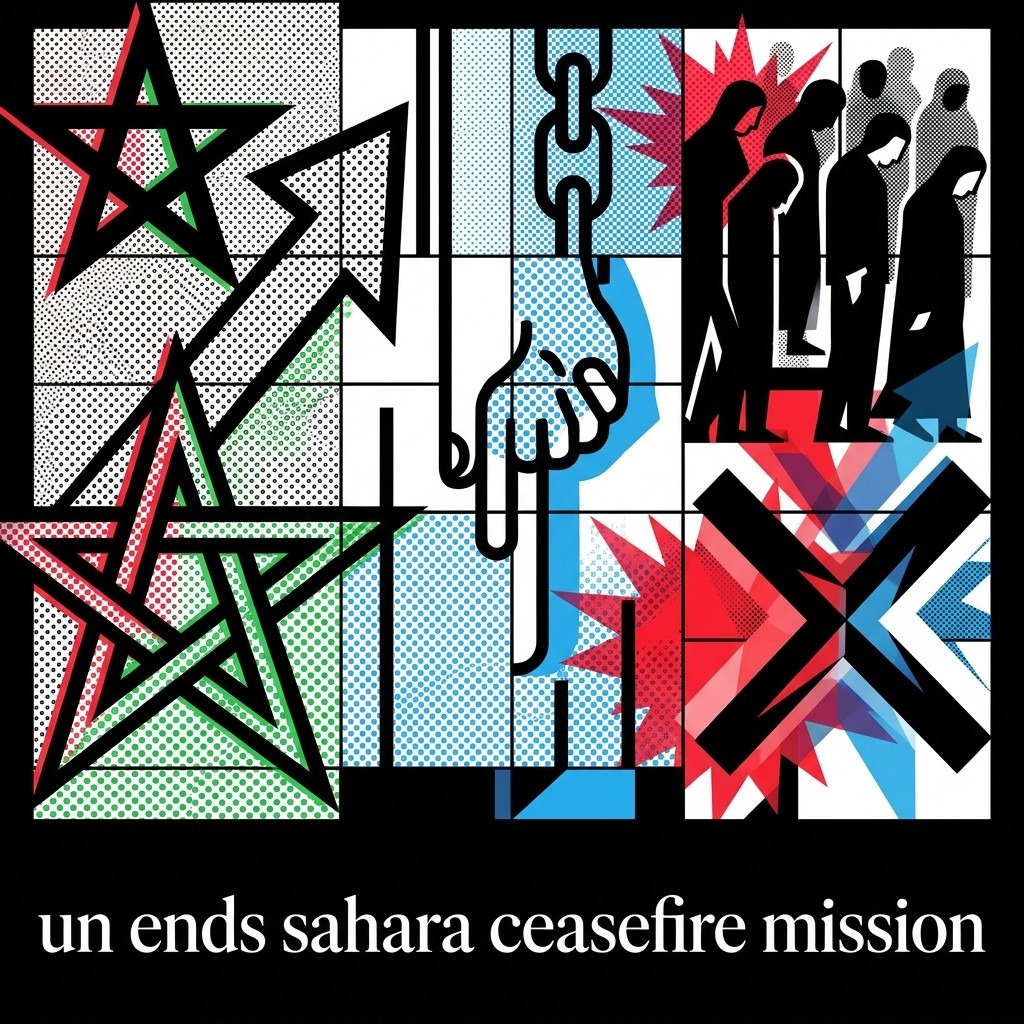
The UN Security Council has let MINURSO, its Western Sahara mission, lapse for the first time in 35 years. The visible loss is ceasefire monitoring. The larger one is legal. MINURSO stands for the UN Mission for the Referendum in Western Sahara, and it was the last institution still carrying that promise.

Morocco gains from its absence. It holds about four-fifths of the territory behind a 2,700km sand wall. It won US recognition of its sovereignty in December 2020. It wants its 2007 autonomy plan treated as the only offer, a position France endorsed in 2024. The Polisario Front, the Algeria-backed independence movement, declared the ceasefire void in November 2020. It now loses its only international witness.

Expect Rabat to resist any revived mandate that mentions a vote, because a vote is the one outcome it can lose. The Polisario has little left to protect, so it has reason to raise the cost of the status quo. That referendum was due in 1992, according to the UN’s own settlement plan.

The Gist AI Editor

The Global Overview

UN peacekeeping mandate for Western Sahara lapses for the first time in 35 years

The UN failed to renew its mission in the disputed territory, according to Bloomberg. The mission monitors the ceasefire between Morocco and Sahrawi rebels who want an independent state. With the mandate gone, neither side has an outside observer to confirm who violated what. That favors whichever party is more willing to act on its own account, which raises the chance of escalation. The lapse also shows the Security Council’s permanent members can no longer agree on routine renewals.

US early voting hits a record 47.9 million

The University of Florida’s Election Lab counted 47,922,669 early votes by midday on Oct. 30, up from 45.9 million at the same point in 2022 (Straits Times). Turnout is strongest in Texas, North Carolina, South Carolina, Kansas and Georgia, and Democrats hold a larger share of early ballots. Republicans often vote more on Election Day, so the early count does not predict the result. The FT reports that investors are jittery and expect caution in the coming weeks. Markets are pricing uncertainty over which party controls Congress, because that decides whether tax, tariff and spending proposals can pass.

China’s October activity slows sharply

The WSJ reports that China’s economic activity lost steam sharply in October. Activity data covers factory output, retail sales and investment, so a sharp drop suggests weaker domestic demand. That matters abroad: automakers such as Hyundai, Volvo Car and Renault, which WSJ Market Talk covers, depend on Chinese buyers. Weak demand at home also pushes Chinese manufacturers to export more, which adds pressure on trading partners.

India adds a navigation satellite

India launched a navigation satellite on its GSLV rocket to strengthen its location-tracking system, Bloomberg reports. Each satellite the country adds reduces its reliance on the US GPS network, which Washington controls.

Stay tuned for the next Gist—your edge in a shifting world. The Gist remains independent and reader-supported. If you value news free from corporate or state interests, consider supporting our mission with a donation.

The European Perspective

German firms pass energy costs on to customers as prices hit 2022 highs

The ifo institute’s price expectations index, which measures the share of firms planning to raise prices, rose to 25.9 in October from 23.0 in September (ifo). It was 21.4 in August. Crude oil and natural gas reached their highest levels since 2022 in the second half of October, according to ifo, after the Bab al-Mandab strait blockade in September pushed crude up again.

Firms with pricing power gain, because they can pass costs on. Households and firms that cannot do so absorb the squeeze. ifo’s economist Timo Wollmershäuser expects producer and consumer inflation to keep rising. In September he put the rate at above 3% in the coming months (ifo). Utilities are expected to raise power and gas tariffs this winter.

EU and Canada build a partnership in Montreal

Ursula von der Leyen, António Costa and Mark Carney spent 48 hours at the 21st EU-Canada summit on 30 October (Politico). They worked out the outline of a new partnership. For Ottawa, deeper ties with Brussels give it a second major trading partner alongside the US.

Washington approves 500 Patriot missiles for Ukraine

The US cleared the sale of 500 Patriot air-defence missiles to Kyiv (ZDF). Volodymyr Zelensky wants delivery before winter. The money flows to US manufacturers, with Ukraine as the buyer. Meanwhile, Sergei Lavrov said he sees no easing between Moscow and Washington, and Kaja Kallas accused him of lying about Ukraine at the G20 foreign ministers’ meeting (ZDF).

European research is monetised by US start-ups

Ifo president Clemens Fuest and more than 50 scientists argue in Science that publicly funded European research often ends up in patents held by US start-ups (ifo). Their proposal is to steer grants toward projects that can reach the market in Europe. The non-obvious point is that European taxpayers pay for the research while US investors collect much of the profit.

Catch the next Gist for the continent’s moving pieces.

🎙️ Listen to this edition as a podcast Listen

The Gist is an independent daily digest: AI-curated, human-directed, unapologetically liberal (how it’s made). Hundreds of sources, only what matters. Subscribe free or listen to the podcast.