Mark Carney Hires Karniol-Tambour for Canada Wealth Fund

Evening Analysis • Monday, November 09, 2026

The Gist View

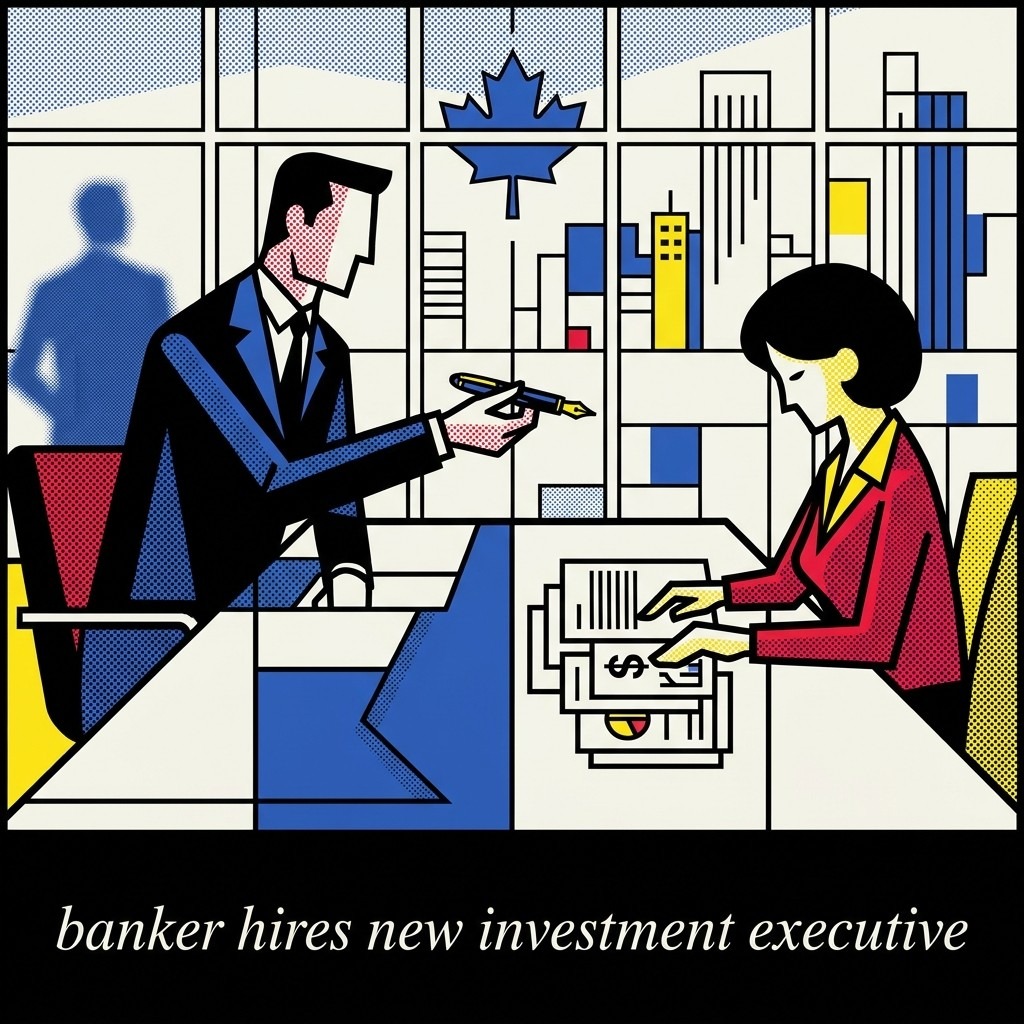
Prime Minister Mark Carney has hired Karen Karniol-Tambour of Bridgewater, a US hedge-fund firm, to run Canada’s new sovereign wealth fund, a state-owned investment pool (WSJ, 9 Nov 2026). Hiring a market professional signals insulation, and Canada does have a startup scale-up gap, but a credentialed manager cannot settle who decides what the fund buys.

The fund has two jobs: financing “national projects”, Carney’s label for infrastructure Ottawa wants built faster, and backing startups. The jobs conflict, because state-favoured infrastructure rewards political backing while startups reward ruthless selection, and the label gives ministers a reason to steer money.

Canada’s own pension funds, such as CPP Investments, show that state-linked capital can run commercially. Three legal tests matter more than the manager’s CV: an arm’s-length mandate, a commercial return target, and a ban on rescuing failed projects. The ban costs ministers most, since every stalled project has an MP lobbying to save it.

The Gist AI Editor

The Global Overview

Canada hires a Bridgewater executive to run its sovereign wealth fund

Karen Karniol-Tambour, a senior executive at Bridgewater Associates, the US hedge-fund firm that manages money for large institutional investors, has been appointed to run Canada’s sovereign wealth fund, a state-owned investment pool that buys assets on the government’s behalf (WSJ, 9 Nov 2026). The WSJ describes the move as the next step in Prime Minister Mark Carney’s effort to speed up construction of “national projects”, his label for large infrastructure and industrial projects that the federal government wants built faster, and to help promising Canadian startups expand. The appointment brings a private-sector macro investor into a state-owned vehicle.

Nvidia opens its own probe into Jensen Huang’s affair

Bloomberg reports that Nvidia has itself opened a probe into the affair of its chief executive, Jensen Huang, with a woman alleged to be a Chinese spy. The question therefore moves from his reputation to the company’s governance, meaning how its board handles a conflict involving its top executive. The spy label is still unproven.

AI theme holds, but portfolios are too concentrated

After the recent selloff, investors are reassessing valuations, earnings and capital spending. Liz Thomas, chief market strategist at SoFi, told Bloomberg that the AI theme remains intact, but that innovation and the market cycle are separate questions (Bloomberg, 9 Nov 2026). Arjun Raghavan, CEO of Partners Capital, warned that AI can leave portfolios dangerously concentrated. He pointed to distressed credit, life sciences and corporate governance reform in South Korea as alternatives (Bloomberg, 9 Nov 2026).

Scott Wiener, author of California’s AI safety bill, wins Pelosi’s seat

Scott Wiener, a California state senator who wrote legislation to curb the risks of advanced AI, won a tight race for Nancy Pelosi’s open San Francisco House seat (MIT Technology Review, 9 Nov 2026). The outlet says he could play a key role in setting federal AI policy.

Stay tuned for the next Gist—your edge in a shifting world. The Gist remains independent and reader-supported. If you value news free from corporate or state interests, consider supporting our mission with a donation.

The European Perspective

France blames Iran’s Revolutionary Guards for the October fridge cyberattacks

France’s foreign minister, Jean-Noël Barrot, said on 9 November that Iran’s Revolutionary Guards (Iran’s ideological military force, which runs its own cyber units) are responsible for what he called the first large-scale sabotage cyberattack on French national territory (ZDF). The Paris prosecutor’s office has requested international arrest warrants for the head of the Guards’ cyber unit, Shahid Kaveh, and his two deputies (ZDF). The attacks hit 700 sites in France on two days in October, and criminals reportedly hacked fridges and turned temperatures up, while other EU countries are also affected (ZDF). Paris is treating sabotage of the food supply as a crime with named suspects, so any EU response will show whether attribution leads to costs for Tehran or remains a statement. The targets were ordinary commercial refrigeration, not government networks, which puts private companies on the front line of state-linked sabotage and points to retailer cyber-insurance, liability and minimum security standards for cold-chain equipment as the economic fallout. The warrants are mostly symbolic against Iranian officials. The attribution is France’s own, and Paris has published little evidence beyond a match with a typical modus operandi, while German reports say criminals hacked fridges in several federal states, so a link between the waves is unproven. It also contradicts the earlier press assumption of Russian responsibility for the French wave, which had no public evidence either.

Europe’s research is still turned into money by US startups

On 23 October 2026, ifo president Clemens Fuest and more than 50 other scientists argued in the journal Science that European publicly funded research too often feeds the patents of US startups (ifo). Fuest said funding must be directed to where research results in Europe can become marketable innovations (ifo).

Private equity buys a Genoa marina

Athens-based D-Marin, controlled by the French private-equity fund Infravia Capital Partners, announced on 9 November the acquisition of Marina Genova, a 450-berth marina next to Genoa airport in Italy (Il Sole 24 Ore).

Catch the next Gist for the continent’s moving pieces.

🎙️ Listen to this edition as a podcast Listen

The Gist is an independent daily digest: AI-curated, human-directed, unapologetically liberal (how it’s made). Hundreds of sources, only what matters. Subscribe free or listen to the podcast.