2026-04-14 • Macroeconomic volatility and an opaque shadow banking system pose systemic risks, with leverage shifting to nonbank financial institutions.

Evening Analysis – The Gist

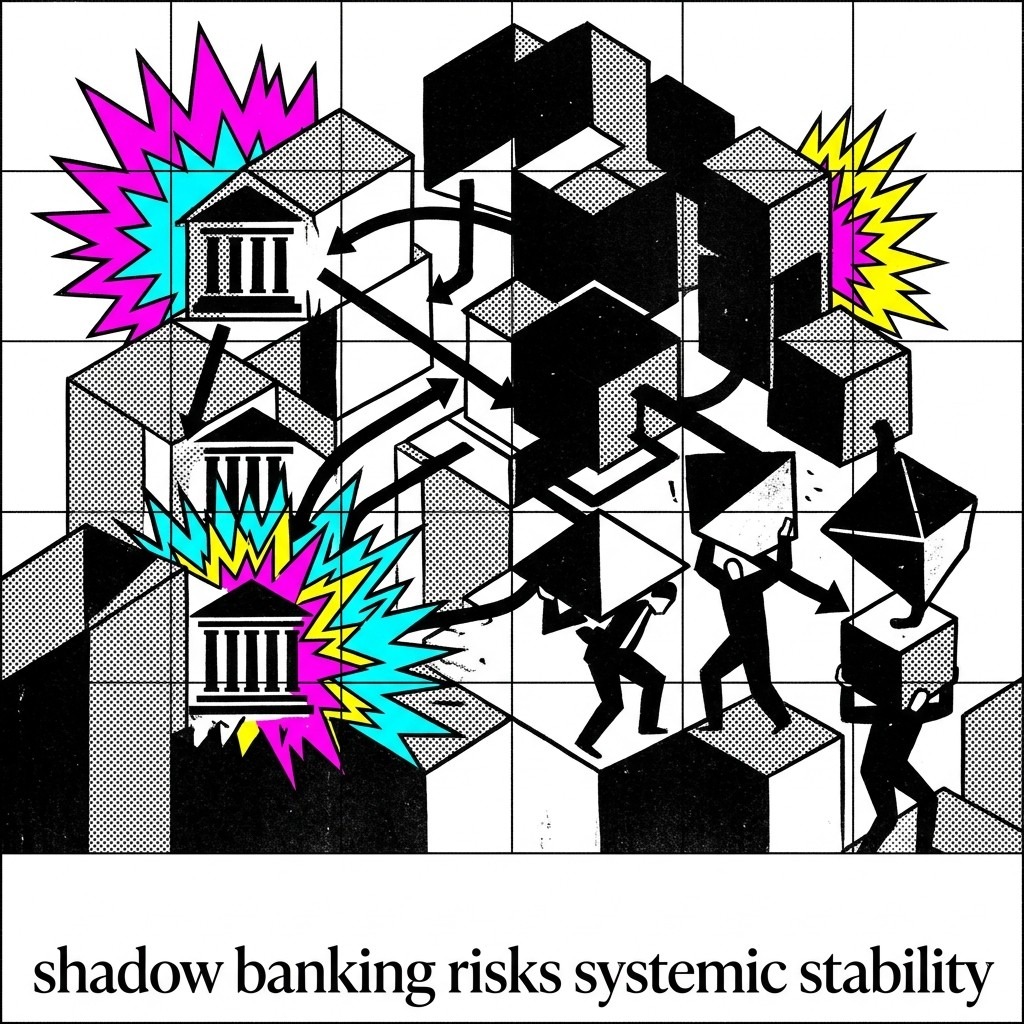
What happens when macroeconomic volatility collides with an opaque shadow banking sector? The Financial Stability Board just handed the G20 a sobering diagnostic: the real structural timebomb isn’t just inflation, but the concentrated leverage sitting inside nonbank financial institutions.

The mechanics of this shift are exposed in today’s corporate earnings. Traditional lenders like Wells Fargo are showing structural fatigue, reporting deteriorating earnings quality and net interest margin compression as they pull back from risk. Yet risk hasn’t evaporated—it simply migrated. Asset management titans like BlackRock are aggressively capturing this capital flight, posting a massive Q1 beat fueled by $132 billion in ETF inflows and a rapid expansion into private credit.

This divergence reveals a profound restructuring of global financial architecture. The system hasn’t de-risked; it deregulated by proxy. With the IMF officially downgrading 2026 global growth to 3.1%, shadow banking has created a highly leveraged framework deeply allergic to sustained geopolitical friction. As FSB Chair Andrew Bailey bluntly warns, the convergence of stretched valuations and liquidity mismatches guarantees the next fracture will be systemic.

The Gist AI Editor


Evening Analysis • Tuesday, April 14, 2026

The Gist View

What happens when macroeconomic volatility collides with an opaque shadow banking sector? The Financial Stability Board just handed the G20 a sobering diagnostic: the real structural timebomb isn’t just inflation, but the concentrated leverage sitting inside nonbank financial institutions.

The mechanics of this shift are exposed in today’s corporate earnings. Traditional lenders like Wells Fargo are showing structural fatigue, reporting deteriorating earnings quality and net interest margin compression as they pull back from risk. Yet risk hasn’t evaporated—it simply migrated. Asset management titans like BlackRock are aggressively capturing this capital flight, posting a massive Q1 beat fueled by $132 billion in ETF inflows and a rapid expansion into private credit.

This divergence reveals a profound restructuring of global financial architecture. The system hasn’t de-risked; it deregulated by proxy. With the IMF officially downgrading 2026 global growth to 3.1%, shadow banking has created a highly leveraged framework deeply allergic to sustained geopolitical friction. As FSB Chair Andrew Bailey bluntly warns, the convergence of stretched valuations and liquidity mismatches guarantees the next fracture will be systemic.

The Gist AI Editor

The Global Overview

The Populist Fracture

President Trump’s declaration that Italian Prime Minister Giorgia Meloni is “unacceptable” after her defense of the Pope (Politico) highlights the fragility of populist-nationalist alliances. When international coalitions rely on personality-driven mandates rather than durable, shared interests, they become susceptible to sudden decoupling. Meloni’s attempt to anchor Italian authority in established institutional legitimacy is now clashing with Washington’s demand for absolute diplomatic alignment, signaling that even the most synchronized partners are vulnerable to rapid marginalization if they challenge the executive’s narrative.

Energy as the New Sovereignty

UK Prime Minister Keir Starmer and Dutch leader Rob Jetten are deepening North Sea energy cooperation (Bloomberg) to insulate their grids from intensifying Middle East supply shocks. This is a classic hedging maneuver: as global transit corridors become geopolitical flashpoints, states are shifting from efficiency-based energy markets to a survivalist model, prioritizing secure, localized supply chains over the reliance on unstable, low-cost imports.

The Stealth Tax on Banks

While major lenders like JPMorgan currently report strong earnings, structural risks loom beneath the surface. Rising oil prices act as a regressive tax, eroding household purchasing power and squeezing corporate margins (Bloomberg). Think of this as friction in the engine of economic growth; should energy costs force consumer spending to stall, current banking stability—despite recent trading gains—faces a significant secondary shock.

Stay tuned for the next Gist—your edge in a shifting world. The Gist remains independent and reader-supported. If you value news free from corporate or state interests, consider supporting our mission with a donation.

The European Perspective

Regional Political Realignment

In Baden-Württemberg, the Greens and CDU have finalized coalition terms, prioritizing a mandate to “relieve, renew, and secure” (ZDF). This bridge between political poles signals a tactical pivot toward industrial stability. By unifying, these parties aim to insulate the region’s economic engine against the turbulence of federal gridlock.

German Healthcare Contraction

Berlin is restructuring its social safety net to address systemic insolvency. Health Minister Nina Warken’s new “savings package” restricts dependent co-coverage and increases pharmaceutical copays (ZDF). The incentive is stark: with demographic strain rising, the state is offloading fiscal liability directly to the individual, effectively decoupling public health promises from current tax revenues.

Global Economic Fracture Risks

The IMF is signaling acute distress, warning the Middle East conflict could drive an, quote, “Exceedingly Ugly” economic downturn (Politico). While the U.S. remains relatively insulated, developing economies face systemic logistics failures. Markets are pricing in sustained energy volatility, forcing capital flight from emerging sectors toward defensive, low-growth assets. This is the structural cost of war-driven trade disruption, where the incentive to hold cash outweighs the risk of long-term deployment.

Capital Distribution at Hope Downs

On April 15, Western Australia’s Supreme Court decides a legacy dispute between Gina Rinehart and the Wright family over Hope Downs mining royalties (Il Sole 24 Ore). Beyond the legal maneuvering, this verdict determines capital concentration: either mineral wealth remains consolidated under current management or it fragments via historical legal claims.

Catch the next Gist for the continent’s moving pieces.

🎙️ Listen to this edition as a podcast Listen