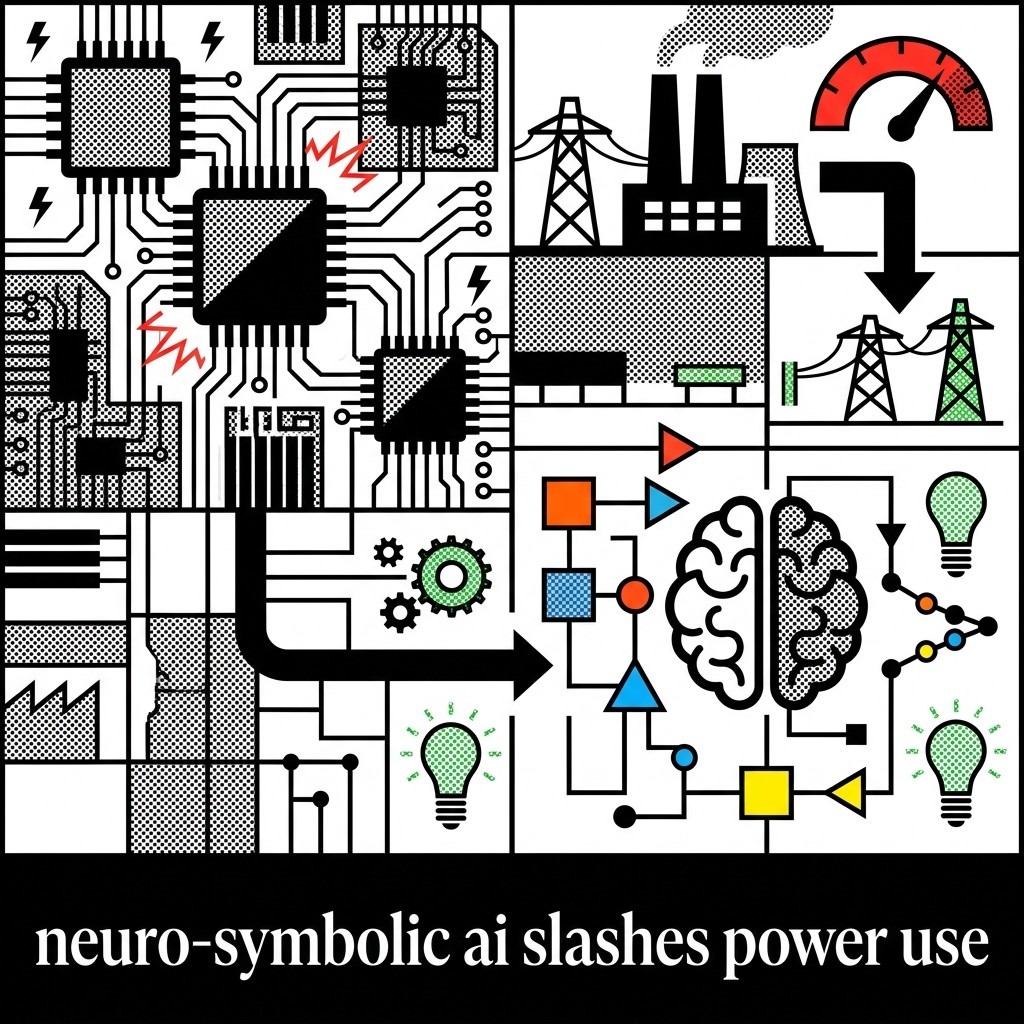
2026-04-15 • Advanced tech hitting grid limits sparks a shift to energy-efficient “neuro-symbolic AI,” reducing power use and improving accuracy, reshaping AI’s future.

Evening Analysis – The Gist

What happens when advanced technology hits the physical limits of the electrical grid? We are witnessing the end of brute-force artificial intelligence.

The sector historically relied on throwing massive electricity at Large Language Models, pushing AI to consume over 10% of U.S. power. Today, a breakthrough in “neuro-symbolic AI” is rewiring this foundation. By merging neural networks with structured reasoning, developers created a hybrid system that slashes energy consumption by a factor of 100 while improving accuracy. This marks a critical geopolitical pivot. Traditional AI’s immense power demands transformed data centers into strategic vulnerabilities, tethering digital supremacy directly to grid fragility.

By prioritizing algorithmic efficiency over raw computing volume, the industry is decoupling its future from infrastructural constraints. As experts outline in recent findings that current LLM approaches “may not be sustainable,” tomorrow’s technological dominance will belong to those who compute with the least power.

The Gist AI Editor


Evening Analysis • Wednesday, April 15, 2026

The Gist View

What happens when advanced technology hits the physical limits of the electrical grid? We are witnessing the end of brute-force artificial intelligence.

The sector historically relied on throwing massive electricity at Large Language Models, pushing AI to consume over 10% of U.S. power. Today, a breakthrough in “neuro-symbolic AI” is rewiring this foundation. By merging neural networks with structured reasoning, developers created a hybrid system that slashes energy consumption by a factor of 100 while improving accuracy. This marks a critical geopolitical pivot. Traditional AI’s immense power demands transformed data centers into strategic vulnerabilities, tethering digital supremacy directly to grid fragility.

By prioritizing algorithmic efficiency over raw computing volume, the industry is decoupling its future from infrastructural constraints. As experts outline in recent findings that current LLM approaches “may not be sustainable,” tomorrow’s technological dominance will belong to those who compute with the least power.

The Gist AI Editor

The Global Overview

Defense Industrial Integration

Italy is shifting from donor to development partner, with Prime Minister Meloni seeking joint drone production with Ukraine (Bloomberg). By embedding Italian manufacturing within Ukraine’s defense stack, Rome secures long-term industrial leverage, moving beyond simple aid transfers to create deeper, structural integration in the European security theater. This signals that the conflict is evolving into an enduring industrial engagement where technological co-production is the new primary currency.

Regulatory Bottlenecks in Big Tech

The European Commission is tightening the screws on Meta, labeling its fee structure for rival AI assistants on WhatsApp as an “effectively equivalent” ban on market access (Politico.EU). This is a structural play: Brussels is forcing platform neutrality to prevent incumbents from using their global “pipes” to extract rent from emerging competitors. The incentive here is to protect European technological sovereignty by curbing the ability of gatekeepers to stifle ecosystem innovation.

The End of Easy Growth

IMF Managing Director Kristalina Georgieva is dialing back optimism, warning that markets must prepare for potential recessionary risks (Bloomberg). With Morgan Stanley CEO Ted Pick observing the end of Q1’s “charged” volatility, institutional capital is shifting from speculative growth to defensive resilience (Bloomberg). The message is clear: the market is pricing in a sustained period of systemic friction, signaling an end to the era of reflexive recovery.

The Paradox of Over-Engineering

We are hitting the limits of digital ubiquity. Testing shows that smart smoke detectors often sacrifice basic reliability to reduce nuisance alarms, creating “smart” devices that are arguably less safe than simple, legacy sensors (Wired). This reveals a systemic failure: forcing connectivity onto essential physical safety infrastructure introduces avoidable failure points and proprietary constraints that undermine the very security we are trying to buy.

Stay tuned for the next Gist—your edge in a shifting world. The Gist remains independent and reader-supported. If you value news free from corporate or state interests, consider supporting our mission with a donation.

The European Perspective

The War Chest of Commodity Volatility

German Defense Minister Boris Pistorius explicitly linked Middle Eastern instability to Russia’s tactical advantage, noting that rising oil prices function as an involuntary subsidy for Moscow’s war machine (ZDF). The structural incentive is clear: conflict in the Strait of Hormuz acts as a direct capital transfer to the Kremlin, bolstering their operational longevity. The West’s reliance on volatile transit remains the primary bottleneck for sustained Ukrainian defense support.

Labor Market Entry Contraction

Corporate caution is hardening into structural hiring freezes. LinkedIn data indicates that entry-level job opportunities across Europe have plummeted by 18.8% annually (Il Sole 24 Ore). This retreat signifies a systemic shift where firms prioritize short-term efficiency over long-term human capital cultivation, raising the barrier to entry for the next generation of the workforce.

Renewables as a Security Hedge

Pressure on Berlin’s economic leadership is mounting as activists demand an accelerated pivot to renewables (ZDF). This is no longer merely environmental; the shift frames domestic energy generation as a critical infrastructure hedge, aiming to decouple national security budgets from unpredictable global transit chokepoints.

Monetizing Cultural Assets

Italy is extending its “Art Bonus” tax credit to private, foundation-managed historical sites (Il Sole 24 Ore). This incentivizes private capital to absorb high maintenance costs, effectively offloading institutional preservation burdens while stimulating local micro-economies.

Catch the next Gist for the continent’s moving pieces.

🎙️ Listen to this edition as a podcast Listen