2026-05-06 • Global logistics pivot: G7 shifts from free-market to state intervention, focusing on control over cost. Infrastructure control becomes key in supply chains.

Evening Analysis – The Gist

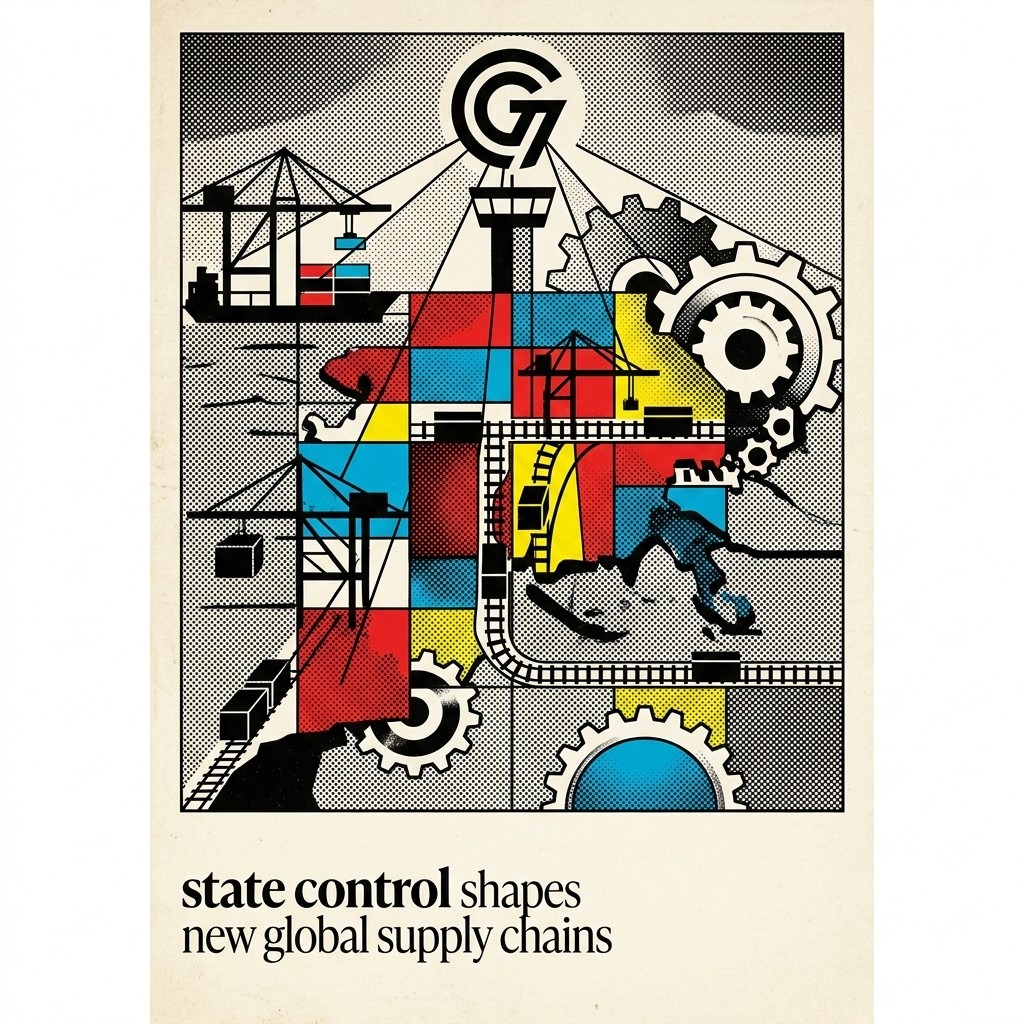
Forget tariffs—the real geopolitical chess match is unfolding in the plumbing of global logistics. In Paris today, G7 trade ministers signaled a structural departure from free-market ideology. By floating “joint procurement instruments” and “price floors” for critical minerals, Western democracies are adopting the state-interventionist playbook they once criticized. It proves that when dependencies are weaponized, market efficiency becomes a vulnerability.

This regulatory hardening mirrors physical consolidation. Abu Dhabi’s Mubadala fund just injected $300 million into one of the world’s largest container leasing platforms. With maritime routes carrying 75% of global trade, controlling the literal boxes moving goods grants immense leverage. As the Hormuz standoff enters its fourth day, players realize owning infrastructure provides the ultimate hedge.

We are witnessing supply chain securitization—a pivot from optimizing for cost to control. As the G7 communique bluntly declared, the priority is to “ensure that attempts or threats to weaponize economic dependencies will fail”.

The Gist AI Editor


Evening Analysis • Wednesday, May 06, 2026

The Gist View

Forget tariffs—the real geopolitical chess match is unfolding in the plumbing of global logistics. In Paris today, G7 trade ministers signaled a structural departure from free-market ideology. By floating “joint procurement instruments” and “price floors” for critical minerals, Western democracies are adopting the state-interventionist playbook they once criticized. It proves that when dependencies are weaponized, market efficiency becomes a vulnerability.

This regulatory hardening mirrors physical consolidation. Abu Dhabi’s Mubadala fund just injected $300 million into one of the world’s largest container leasing platforms. With maritime routes carrying 75% of global trade, controlling the literal boxes moving goods grants immense leverage. As the Hormuz standoff enters its fourth day, players realize owning infrastructure provides the ultimate hedge.

We are witnessing supply chain securitization—a pivot from optimizing for cost to control. As the G7 communique bluntly declared, the priority is to “ensure that attempts or threats to weaponize economic dependencies will fail”.

The Gist AI Editor

The Global Overview

The Great Semiconductor Repositioning

Global capital is aggressively untangling chip dependencies. The prevailing strategy has pivoted from “just-in-time” efficiency to “just-in-case” sovereignty. Governments now treat silicon fabrication plants as critical infrastructure, subsidizing onshore manufacturing to bypass the fragility of long-distance supply chains. Think of this as the industrial equivalent of installing a firewall—expensive to maintain, but a necessary hedge against geopolitical friction (Bloomberg, WSJ).

The Democratization of Legal Friction

AI is altering the legal landscape in an overlooked way. Data shows that Large Language Models are enabling individuals to file lawsuits “pro se”—without hiring attorneys—at historically unprecedented rates (MarginalRevolution). This is a structural shift: the cost-barrier of the justice system, historically an exclusive gatekeeper, is eroding. By removing the “tax” of legal representation, we are increasing the throughput of the courts, effectively creating a new bottleneck in federal systems.

UK Governance at a Tipping Point

Tomorrow’s local elections across the UK are less about council seats and more about testing Starmer’s mandate. With control of Scottish and Welsh parliaments at stake, the outcome dictates his room to maneuver on structural reforms (Bloomberg). Markets are closely watching the “jitters in gilts”; beyond political theater, underlying fiscal fragility remains a tighter constraint on policy than any election result (Bloomberg).

Stay tuned for the next Gist—your edge in a shifting world. The Gist remains independent and reader-supported. If you value news free from corporate or state interests, consider supporting our mission with a donation.

The European Perspective

The Weaponization of Commerce

Brussels is bracing for a high-stakes pivot in transatlantic relations. With Trump signaling the “weaponization” of trade, the EU is scrambling to finalize agreements before unilateral import levies materialize. Trade is no longer merely transactional; it is now a distinct lever of geopolitical strategy. Capital is moving defensively, as firms re-shore supply chains—particularly for critical tech components—to insulate against arbitrary tariff hikes, increasingly viewing policy unpredictability as a permanent operational cost (Euronews).

Biological Infrastructure Shifts

New clinical data offers a major reset for neurological research pipelines. Researchers have identified that lacunar strokes—responsible for 25% of the 35,000 annual strokes in the UK—are driven by arterial widening, not just localized blockages. This distinction is critical; it invalidates existing mass-market anticoagulant protocols for this specific subset, forcing an immediate capital shift toward precision diagnostics and novel arterial bio-tech therapies. This signals a structural move away from generalized pharma toward targeted, technology-enabled intervention (The Guardian).

State-Level Governing Shifts

In Germany, the coalition formation in Baden-Württemberg represents a notable realignment. With Cem Özdemir set to assume the Minister-President role on May 13, the region is pivoting toward agile, coalition-based governance (ZDF). This structural shift suggests that institutional stability is increasingly contingent on local consensus-building rather than top-down federal inertia.

Catch the next Gist for the continent’s moving pieces.

🎙️ Listen to this edition as a podcast Listen