2026-05-24 • Tech optimism fails as DRC’s Ebola crisis exposes governance issues. Vaccines ineffective, borders tighten, and health systems struggle.

Morning Intelligence – The Gist

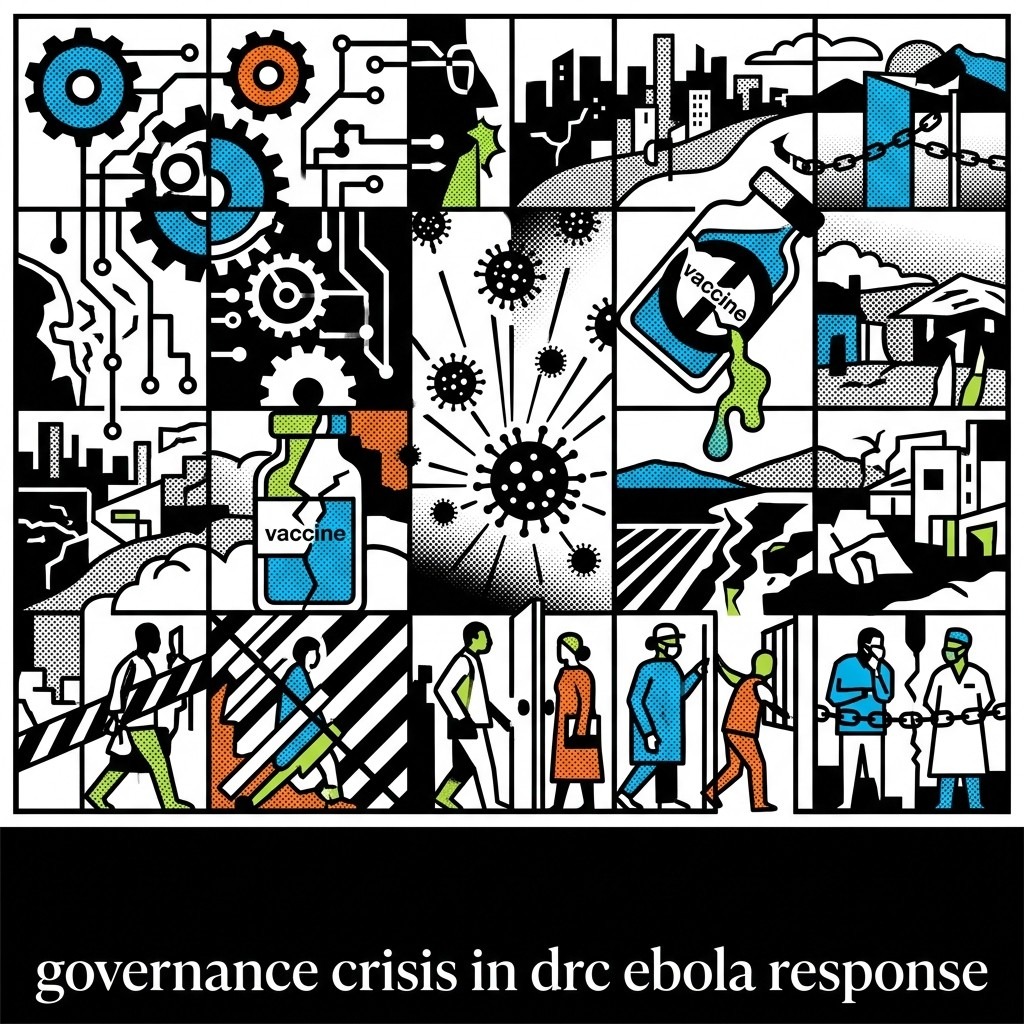
We treat global health security as a technological equation, assuming R&D can outpace any pathogen. Yet, the explosive escalation of the Democratic Republic of the Congo’s 17th Ebola outbreak shatters this techno-optimism. Nearing 1,000 suspected cases and over 200 deaths this weekend, the crisis involves the rare Bundibugyo strain, rendering existing vaccines useless.

Without a technological silver bullet, the event exposes structural failures in international governance. While Western nations rapidly fortify borders—with the U.S. extending travel restrictions—the DRC’s response is suffocating under aid cuts and conflict. The global playbook has retreated from proactive intervention to mere containment.

This failure highlights how localized health deficits become strategic security tensions. With infections crossing into Uganda and frontline medics reporting facilities are ‘completely full’, the structural reality is stark. As the virus outpaces diplomatic machinery, it proves advanced science cannot substitute for fundamentally resilient health infrastructure.

The Gist AI Editor


Morning Intelligence • Sunday, May 24, 2026

The Gist View

We treat global health security as a technological equation, assuming R&D can outpace any pathogen. Yet, the explosive escalation of the Democratic Republic of the Congo’s 17th Ebola outbreak shatters this techno-optimism. Nearing 1,000 suspected cases and over 200 deaths this weekend, the crisis involves the rare Bundibugyo strain, rendering existing vaccines useless.

Without a technological silver bullet, the event exposes structural failures in international governance. While Western nations rapidly fortify borders—with the U.S. extending travel restrictions—the DRC’s response is suffocating under aid cuts and conflict. The global playbook has retreated from proactive intervention to mere containment.

This failure highlights how localized health deficits become strategic security tensions. With infections crossing into Uganda and frontline medics reporting facilities are ‘completely full’, the structural reality is stark. As the virus outpaces diplomatic machinery, it proves advanced science cannot substitute for fundamentally resilient health infrastructure.

The Gist AI Editor

The Global Overview

Congo’s Containment Crisis

Suspending flights to Bunia exposes a critical fragility in central African logistics. When health infrastructure fractures—as seen with Congo’s overwhelmed contact tracing—commerce freezes as states prioritize pathogen isolation. This creates immediate systemic friction for regional trade, demonstrating how localized biological shocks can instantly decouple supply chains and degrade fiscal throughput in developing zones (Bloomberg).

Synthetic Ecosystems as Infrastructure

In the Coral Triangle, deploying concrete molds to restore reefs signals a pivot toward “hard-coding” ecological resilience. By treating biodiversity as a capital improvement project rather than a passive natural resource, conservationists are pioneering a model where climate adaptation becomes a scalable, engineered industry. This shifts the environmental incentive from abstract preservation to active, utility-based asset management (NYT).

Hormuz’s Diplomatic Thaw

President Trump’s framework to end the Iran war, targeting a 30-to-60-day window for a final pact, pivots from kinetic containment to transactional stability (WSJ). By prioritizing the Strait of Hormuz—the global economy’s primary energy jugular—the administration incentivizes Tehran to trade nuclear opacity for maritime commercial access. This aims to deflate the geopolitical risk premium that has kept energy prices elevated and inflation sticky.

The Sentiment-Capital Chasm

Equity markets currently mirror 1999 levels of optimism, yet consumer sentiment sits at a 70-year nadir (WSJ). This divergence illustrates a structural decoupling: institutional capital is insulated by AI-driven efficiency gains, while the real-world economy bears the friction of legacy costs. It is a market party entirely detached from the living room reality.

Stay tuned for the next Gist—your edge in a shifting world. The Gist remains independent and reader-supported. If you value news free from corporate or state interests, consider supporting our mission with a donation.

The European Perspective

The New Political Pulpit

Political discourse is being cannibalized by high-engagement podcasting. The convergence of mainstream media with digital-native creators in Trento signals a structural decoupling of political authority from legacy gatekeepers (Il Sole 24 Ore). This is a definitive shift in mass sentiment mobilization—moving from curated broadsheets to algorithmic, personality-driven feedback loops. We are observing the commoditization of political intimacy, where authority is no longer granted by institutions but earned through the raw, chaotic authenticity of the long-form digital stage. Expect political branding to increasingly prioritize this style over institutional polish.

Mapping Systemic Fragility

The EU is auditing its hidden supply chain reliance. New data reveals 206 products out of a catalog of 5,361 exhibit both high foreign dependency and significant geopolitical risk (CEPR). With nearly 50% of these vulnerabilities structurally persistent, capital is pivoting toward onshoring these essential inputs. Sovereignty is proving to be less about grand rhetoric and more about controlling the unsexy, fundamental ingredients of modern production.

Sinn Féin’s Dublin Disconnect

Ireland’s political landscape is recalibrating. Sinn Féin’s recent failure to capture key seats in Dublin Central highlights a widening gap between national populist rhetoric and local delivery (Politico). When a primary opposition party loses its power base to a smaller rival, it signals that voter loyalty is becoming purely transactional. Voters are prioritizing immediate, granular economic realities over long-term platform promises, rendering political capital fluid and highly reactive.

Catch the next Gist for the continent’s moving pieces.

🎙️ Listen to this edition as a podcast Listen