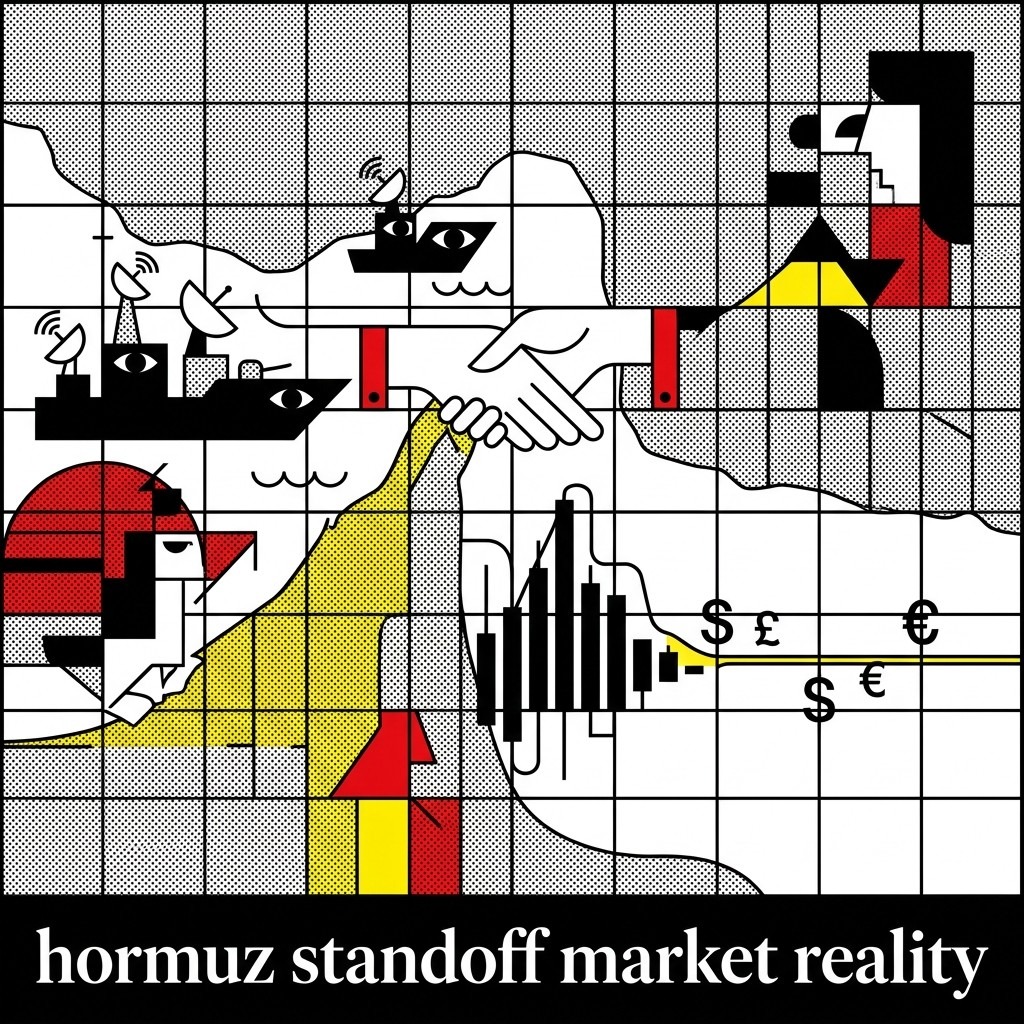
2026-06-06 • Missile diplomacy defines the Hormuz standoff, with markets stabilizing amid conflict as a priced-in reality, not a geopolitical shock.

Morning Intelligence – The Gist

How do you price a conflict that uses missiles as diplomatic bargaining chips? As the Hormuz standoff enters its latest volatile phase, markets are realizing that episodic escalation isn’t a failure of diplomacy—it is the diplomacy.

Following tit-for-tat strikes, including Iran targeting US outposts in Kuwait and Bahrain, Germany issued urgent travel advisories. Yet, paradoxically, Brent crude dropped over $3 a barrel yesterday. Institutional traders recognize these kinetic exchanges are simply violently mapping red lines ahead of a broader ceasefire, rather than signaling total regional collapse.

This reveals a profound shift in structural leverage. Unilateral military power is increasingly constrained by immediate domestic friction—evidenced by the US House moving to block further executive strikes—and rapid market corrections. Conflict is no longer an unpredictable geopolitical shock; it has become a measurable, fully priced-in structural reality.

The Gist AI Editor


Morning Intelligence • Saturday, June 06, 2026

The Gist View

How do you price a conflict that uses missiles as diplomatic bargaining chips? As the Hormuz standoff enters its latest volatile phase, markets are realizing that episodic escalation isn’t a failure of diplomacy—it is the diplomacy.

Following tit-for-tat strikes, including Iran targeting US outposts in Kuwait and Bahrain, Germany issued urgent travel advisories. Yet, paradoxically, Brent crude dropped over $3 a barrel yesterday. Institutional traders recognize these kinetic exchanges are simply violently mapping red lines ahead of a broader ceasefire, rather than signaling total regional collapse.

This reveals a profound shift in structural leverage. Unilateral military power is increasingly constrained by immediate domestic friction—evidenced by the US House moving to block further executive strikes—and rapid market corrections. Conflict is no longer an unpredictable geopolitical shock; it has become a measurable, fully priced-in structural reality.

The Gist AI Editor

The Global Overview

The Cost of Brinkmanship

US forces intercepted fresh Iranian strikes in the Persian Gulf as the conflict nears the 100-day mark (Bloomberg). Tehran is now conditioning de-escalation on the release of frozen funds, effectively turning the security architecture into a zero-sum accounting trap for the Trump administration (WSJ). The choice is binary: pay a steep price to secure critical trade routes or absorb the inflationary volatility of persistent, active regional disruption.

The S&P’s Growth Bottleneck

The gatekeepers of the S&P 500 have rejected proposals to waive profitability requirements for mega-IPOs, effectively sidelining disruptive titans like SpaceX (Bloomberg). By prioritizing legacy “value” metrics over future-facing scale, the index is increasingly acting as a structural brake on the very tech growth it claims to represent. Institutional inertia is now winning against capital innovation.

The 13-Year-Old Vehicle

The average American car is now a record 13 years old, forcing a massive industrial pivot from new unit sales to long-term repair (WSJ). As replacement costs soar, households are stretching asset utility to the limit, fueling a resilient, maintenance-heavy aftermarket that bucks conventional economic growth narratives.

The Argentine Disconnect

As high-profile figures like Peter Thiel anchor their ideological bets in Buenos Aires, a chasm has opened between the international “libertarian revolution” narrative and ground-level reality (Marginalrevolution). Despite specific fiscal wins, systemic bottlenecks persist, highlighting the gap between ideological marketing and operational governance.

Stay tuned for the next Gist—your edge in a shifting world. The Gist remains independent and reader-supported. If you value news free from corporate or state interests, consider supporting our mission with a donation.

The European Perspective

Geopolitical Deterrence Breakdown

Security in the Gulf has fractured as US-Iran hostilities transition from shadow skirmishes to direct targeting. The US military confirmed intercepting 6 Iranian ballistic missiles aimed at Kuwait and Bahrain (ZDF). This escalation forces capital to instantly price higher premiums into maritime logistics, signaling a structural departure from previous containment strategies toward open, systemic friction.

Fiscal Discipline in Paris

France is initiating a pivot from stimulus to structural solvency. The Banque de France has formally advised the presidency to abandon the “dictatorship of urgency” and reclaim control over public and social finances (Le Monde). This shift underscores a broader European intent to stabilize sovereign credit, prioritizing long-term budgetary sustainability over short-term political populism.

AI-Induced Social Structuring

As AI adoption matures, policymakers are revisiting the fundamental labor-income link. Economist Philippe Van Parijs posits that Universal Basic Income is becoming a systemic requirement to prevent mass exclusion as automation renders traditional employment models increasingly obsolete (Le Monde).

Governance Friction

Italy’s inquiry into “Pantouflage”—the revolving door between public office and private sports management—reveals rising scrutiny of institutional integrity (Il Sole 24 Ore). This highlights a systemic push to decouple regulatory oversight from private capital interests.

Catch the next Gist for the continent’s moving pieces.

🎙️ Listen to this edition as a podcast Listen