2026-06-07 • Central banks increase rates amid geopolitical tensions, causing inflation from supply shocks, not growth, reshaping economic expectations.

Morning Intelligence – The Gist

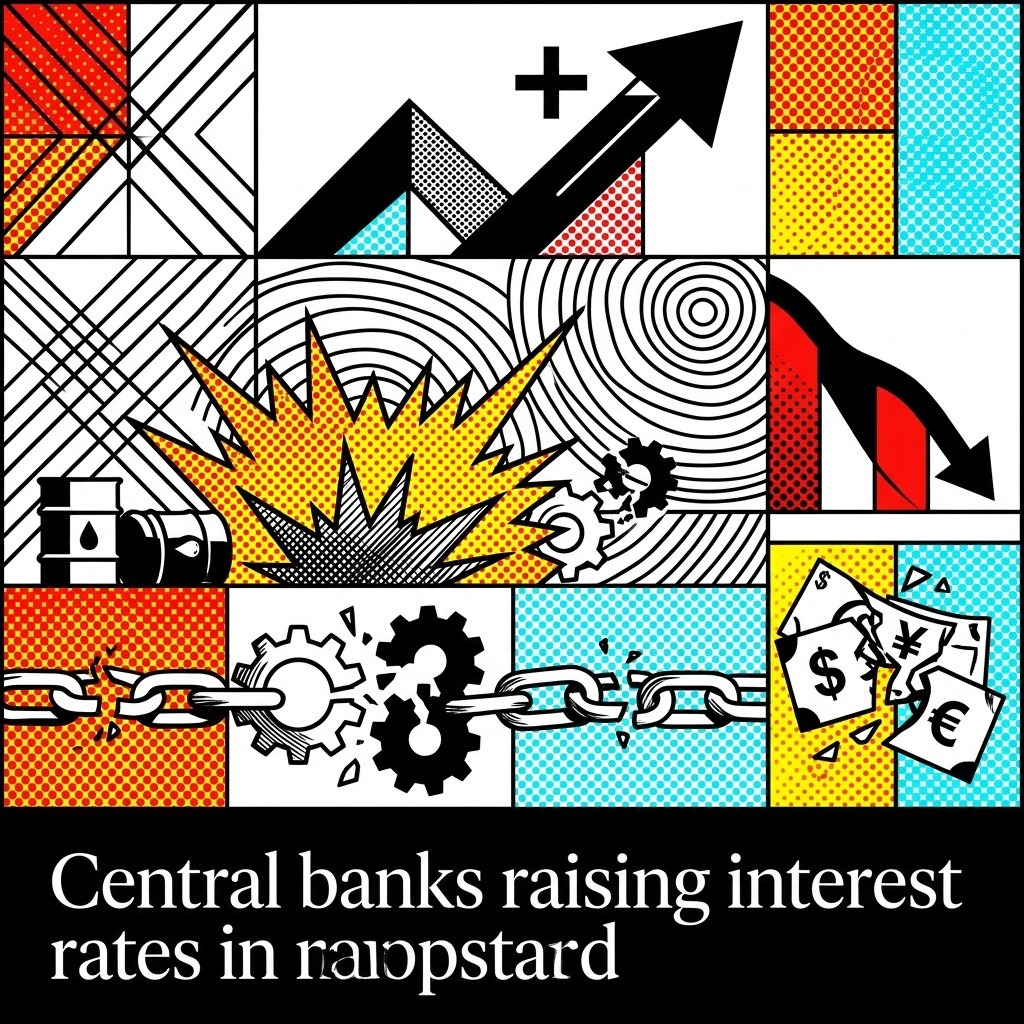
Central banks are now effectively trading on geopolitics. In a stark reversal blindsiding markets this weekend, expectations for a 2026 easing cycle collapsed. The financial system is pricing in a synchronized return to interest rate hikes across the Federal Reserve, ECB, and Bank of England.

This isn’t a reaction to growth, but a structural surrender to conflict-driven inflation. As prolonged crises cascade through energy markets, the resulting supply shock hijacks macroeconomic stability. Policymakers know higher rates won’t unblock trade routes, yet they must tighten to defend currencies, accelerating the ongoing economic reorientation we’ve been tracking.

This exposes a critical flaw in our macroeconomic toolkit: when inflation stems from supply shocks rather than wage growth, monetary policy becomes a blunt domestic tax. As Gramercy analysts note, “war-driven inflation continues to reprice expectations”. Capital costs are no longer tethered to productivity, but to the persistent premium of an unstable world.

The Gist AI Editor


Morning Intelligence • Sunday, June 07, 2026

The Gist View

Central banks are now effectively trading on geopolitics. In a stark reversal blindsiding markets this weekend, expectations for a 2026 easing cycle collapsed. The financial system is pricing in a synchronized return to interest rate hikes across the Federal Reserve, ECB, and Bank of England.

This isn’t a reaction to growth, but a structural surrender to conflict-driven inflation. As prolonged crises cascade through energy markets, the resulting supply shock hijacks macroeconomic stability. Policymakers know higher rates won’t unblock trade routes, yet they must tighten to defend currencies, accelerating the ongoing economic reorientation we’ve been tracking.

This exposes a critical flaw in our macroeconomic toolkit: when inflation stems from supply shocks rather than wage growth, monetary policy becomes a blunt domestic tax. As Gramercy analysts note, “war-driven inflation continues to reprice expectations”. Capital costs are no longer tethered to productivity, but to the persistent premium of an unstable world.

The Gist AI Editor

The Global Overview

India’s Youth-Led Disruption

India’s demographic dividend is rapidly becoming a political pressure cooker. When a judge branded youth protestors “cockroaches,” it didn’t suppress dissent; it galvanized a cohort squeezed by stagnant wages. This is a classic systemic friction: institutional inertia meeting a digitally organized base. For multinationals betting on India as the next manufacturing hub, this signals that the “India growth story” faces severe internal resistance if job creation continues to trail behind GDP expansion (WSJ).

The Hidden Tax of Remote Work

Remote labor is exacting a distinct psychological toll. Data reveals remote workers spent one additional hour alone per workday post-pandemic, with isolation for those living alone surging by 7 percentage points (83%) (Marginalrevolution). As firms weigh office overhead against the depreciation of tacit knowledge—manifested by a 0.1 standard deviation rise in psychological distress—the pendulum is swinging toward hybrid mandates to preserve long-term human capital stability.

Capital Allocation Failures

The collapse of a cattle empire that burned $170 million illustrates how opaque supply chains mask financial rot (WSJ). When liquidity flows into models lacking real margins, the system inevitably hits a fraud ceiling.

PBOC’s Tangible Hedge

China’s central bank extended its gold-buying streak in May, signaling a structural pivot from dollar dependency (Bloomberg). By prioritizing hard assets over fiat reserves, the PBOC is insulating against currency volatility in a fragmenting order.

Stay tuned for the next Gist—your edge in a shifting world. The Gist remains independent and reader-supported. If you value news free from corporate or state interests, consider supporting our mission with a donation.

The European Perspective

The High Cost of Intellectual Consistency

In Vienna, the “theatre of morality” has collided with power networks. Artistic director Milo Rau’s rescinded invitation to Palantir’s Peter Thiel exposes a brittle fault line: the struggle for ideological purity in European culture versus the necessity of engaging with global tech-capital influence (The Guardian). When cultural gatekeepers treat engagement as endorsement, they shrink their forum; this indicates a shift where “moral judgement” acts as a contested asset, potentially isolating artistic institutions from the very power structures they aim to critique.

World Cup’s Asymmetric Economic Toll

The 2026 World Cup is rewriting European retail economics. Because over 50% of matches start after midnight, German gastronomy faces a forced revenue contraction, with the IW-Köln projecting distinct losses as local bars struggle to capture the fan economy (ZDF). This creates a temporal shock: while the event drives global engagement, the immediate fiscal cost hits regional hospitality, illustrating the growing disconnect between global scheduling and local commercial viability.

Aviation’s Fragile Margin

Fuel volatility is forcing a consolidation tipping point. IATA warns that elevated kerosene prices—tightened by recent geopolitical friction—threaten to push marginal carriers into insolvency (ZDF). Capital will inevitably migrate toward operators with state-backing or hedging resilience, leaving leaner regional competitors vulnerable to structural exit.

Catch the next Gist for the continent’s moving pieces.

🎙️ Listen to this edition as a podcast Listen