Strait of Hormuz Reopens; Shipping Risks Persist

Evening Analysis – The Gist


Evening Analysis • Monday, June 15, 2026

The Gist View

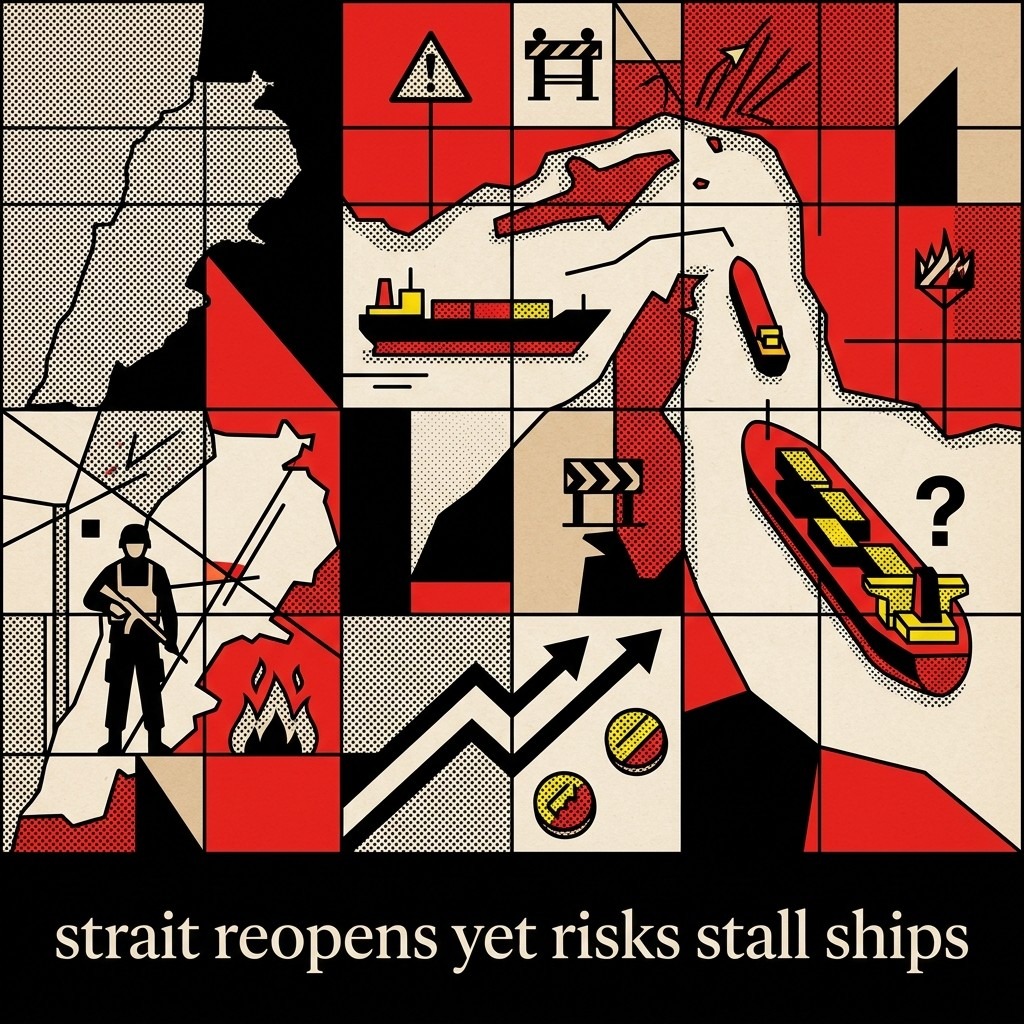
Washington and Tehran agreed Monday to reopen the Strait of Hormuz, yet commercial vessels remain anchored off Oman. Shippers stall because they gain nothing by moving uninsured cargo before the channel is swept. As flagged during the protracted standoff, formal truces no longer erase embedded risk premiums.

Resumption requires verifiable security: negotiators must guarantee safe routes before maritime insurers authorize transit. Concurrently, Israel refuses to withdraw from Lebanon, extending operations begun February 28. Investors mirrored this skepticism, pushing the US 10-Year Treasury yield down just 10 basis points to 4.47 percent.

Markets face a fragmented reality where a 60-day ceasefire requires unsentimental adaptation. “A neutral body such as the UN through the International Maritime Organization must direct the resumption of marine traffic” (Seatrade Maritime News).

The Gist AI Editor

The Global Overview

Geopolitical Truces Don’t Erase Risk

The US-Iran deal to reopen the Strait of Hormuz is a tactical pause, not a return to normalcy. The IMF remains on “high alert” for energy supply shocks (Bloomberg). Diplomatic gestures cannot erase structural chokepoints; the global energy market is now pricing in a permanent “geopolitical risk premium.” Energy security is now a calculated expense, not an assumption.

Scale as a Defensive Moat

Legacy incumbents are hoarding distribution to survive. Fox’s $22 billion purchase of Roku secures a vital streaming gateway (Bloomberg), while RSM’s alliance expansion aims to outflank private-equity-backed rivals (FT). Against tech-native insurgents, owning the customer interface—rather than just the product—is the only path to protecting long-term margins.

Populism’s Pivot to Institutionalism

Marine Le Pen’s endorsement of Jordan Bardella as her successor (Politico.Eu) signals the National Rally’s strategic move toward professional endurance. By shedding radical rhetoric, the party is trading disruption for electability, effectively converting “populism” from a source of systemic volatility into a predictable variable in the French governance model.

Space as Strategic Infrastructure

SpaceX’s stock climbed 10% (FT), marking a definitive shift: markets now classify space as utility infrastructure, not speculative tech. Capital is flowing toward essential “plumbing”—the pipes of the modern economy—prioritizing strategic necessity over flashy, unproven innovation.

Stay tuned for the next Gist—your edge in a shifting world. The Gist remains independent and reader-supported. If you value news free from corporate or state interests, consider supporting our mission with a donation.

The European Perspective

The National Rally’s Pragmatic Succession

The National Rally’s elevation of Jordan Bardella and abandonment of ‘Frexit’ reveals a vote-maximizing machine prioritizing electability over ideological purity (Politico). Le Pen’s potential legal ban from the 2027 race functions as a strategic reset, clearing the path for a younger, less historically encumbered candidate who appeals to the median voter. This shift confirms our analysis: European populism is moving from radical systemic disruption toward aggressive institutional mainstreaming.

The Illusion of Geopolitical Truce

US-Iran diplomatic developments have failed to lower market risk premiums, as the IMF warns that energy supply vulnerabilities persist (Reuters). The market now prices the Strait of Hormuz as structurally fragile; capital is treating this truce as a tactical pause, not systemic normalization. We warned that brinkmanship would embed long-term market volatility—the market is now pricing that reality, refusing to rotate back into complacent energy exposure.

Gateways Over Content

Legacy players are aggressively buying distribution gateways to survive against tech-native rivals. Fox’s $22 billion acquisition of Roku demonstrates that owning the content is secondary to controlling the interface. In today’s attention economy, capital is prioritizing defensive infrastructure over creative output to lock in user bases.

Credentialing as Currency

France’s ESCP Business School maintaining the top spot in Financial Times rankings for the fourth consecutive year highlights Europe’s enduring reliance on prestige-driven credentialing to attract global talent (Il Sole 24 Ore). While technological innovation commands headlines, the structural movement of high-net-worth capital remains tethered to these legacy institutions, which continue to act as the primary filter for the financial sector’s leadership pipeline.

Catch the next Gist for the continent’s moving pieces.

🎙️ Listen to this edition as a podcast Listen


The Gist is an independent daily digest: AI-curated, human-directed, unapologetically liberal (how it’s made). Hundreds of sources, only what matters. Subscribe free or listen to the podcast.


Comments

Leave a Reply

Your email address will not be published. Required fields are marked *

This site uses Akismet to reduce spam. Learn how your comment data is processed.