Washington-Tehran Pact Alters Global Security Dynamics

Evening Analysis – The Gist


Evening Analysis • Thursday, June 18, 2026

The Gist View

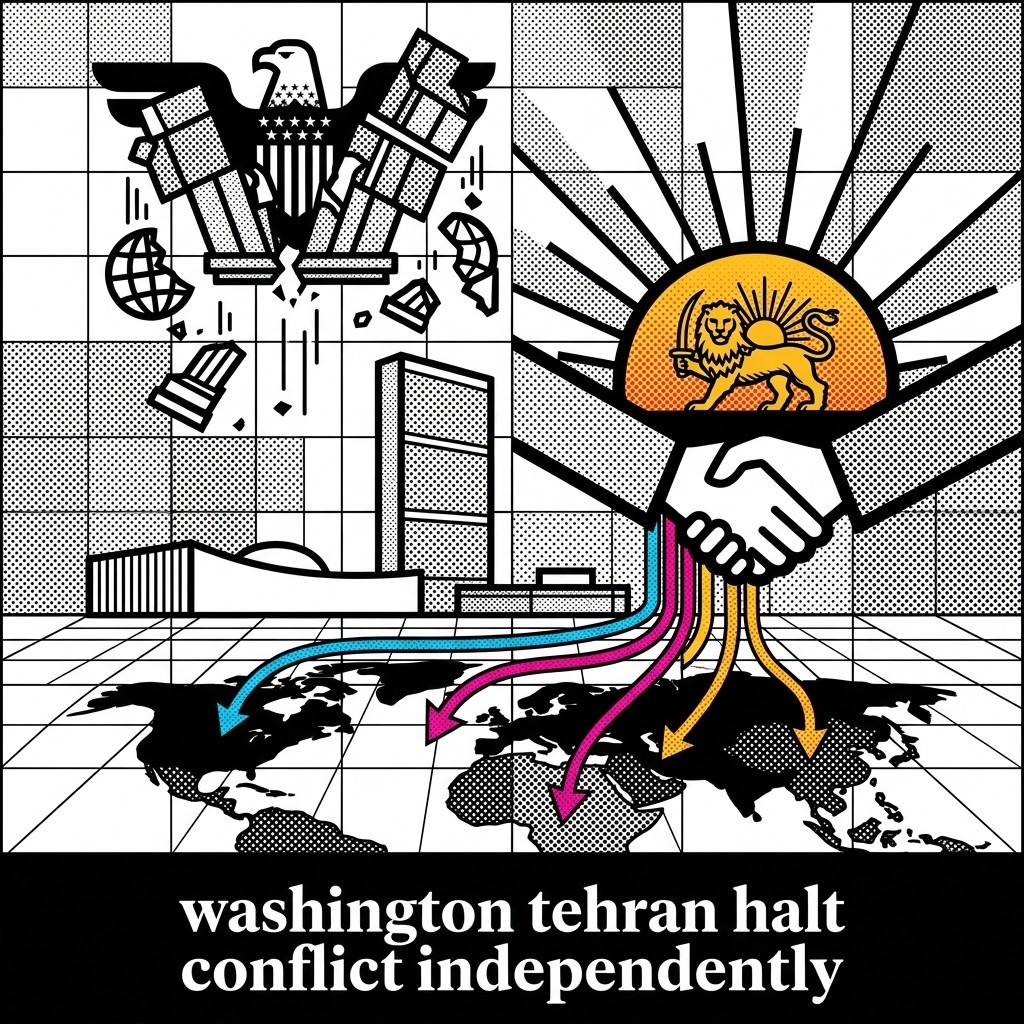
Tomorrow, Washington and Tehran sign a Memorandum of Understanding halting their 100-day conflict, bypassing the UN. The U.S. executive dictates terms; Tehran pays with 90-percent enrichment caps to secure the Hormuz insurance discounts flagged yesterday. Washington stalls a formal treaty because it gains agility sidestepping a gridlocked Senate.

What happens next is a structural defense reordering as Saudi Arabia, Pakistan, Turkey, and Egypt advance a four-nation security framework. Riyadh stalls reliance on American architecture because it gains strategic autonomy by diversifying guarantors. Ankara pays diplomatic costs to counter Israeli and Iranian dominance.

The post-1990s Pax Americana has dissolved into fragmented military insurance. “The international community is in the midst of a rupture, not a transition.” (Mark Carney, 2026 World Economic Forum).

The Gist AI Editor

The Global Overview

The AI Bureaucracy Bypass

Autonomous agents are rapidly transitioning from productivity gimmicks to essential institutional bypass mechanisms. Infinitus CEO Ankit Jain confirms the pivot toward “end-to-end” agents that tackle high-friction insurance approvals in healthcare, effectively automating away human-led bureaucratic bottlenecks (Bloomberg). Simultaneously, the European Commission is utilizing its proprietary GPT@EC tool to digest the mountainous, gridlocked paperwork inherent to EU enlargement processes (Politico). The systemic incentive is clear: capital is flowing into AI not to trigger radical scientific breakthroughs, but to brute-force through self-inflicted regulatory bloat. When the primary economic ROI is found in bypassing human friction rather than innovation, the system has effectively admitted that its own administration is the bottleneck to growth.

The Warsh Effect

Kevin Warsh’s debut as Federal Reserve Chair has abruptly ended the market’s “soft landing” complacency. Traders immediately piled into bets on imminent interest-rate hikes after Warsh signaled an aggressive intolerance for persistent inflation (Bloomberg). This move reflects a structural return to credibility-first monetary policy, punishing institutional investors who were over-leveraged on the assumption of continued accommodation. The volatility is a feature, not a bug, of this regime change.

Diplomatic Irrelevance

The EU’s institutional fragility was further exposed as Israel’s Foreign Minister Gideon Sa’ar severed contact with top EU diplomat Kaja Kallas (Politico). This standoff confirms our ongoing observation that the EU’s collective foreign policy apparatus is structurally fracturing. As regional actors increasingly bypass Brussels to engage in unilateral power brokering, the bloc’s influence wanes, relegated to an observer status that lacks the leverage to dictate regional outcomes.

Stay tuned for the next Gist—your edge in a shifting world. The Gist remains independent and reader-supported. If you value news free from corporate or state interests, consider supporting our mission with a donation.

The European Perspective

The Versailles Sidelining

The US-Iran framework signed in Versailles establishes a critical 60-day window for negotiations (Le Monde). Israel’s immediate refusal to acknowledge the deal, opting instead to maintain its Lebanon deployment, signals the framework’s limited power in theater. For the EU, the optics are stark: President Macron’s enthusiastic applause serves as a veneer for the bloc’s functional exclusion. By brokering this deal unilaterally, the US bypassed consensus-based European diplomacy entirely—a reality solidified by Israel’s decision to sever ties with the EU’s foreign policy apparatus.

The Bureaucratic AI Fix

Technological deployment is shifting from frontier innovation to administrative survival. Whether it involves Infinitus’s healthcare approvals or the European Commission’s adoption of GPT@EC for enlargement paperwork, AI is being weaponized as a brute-force tool to bypass self-inflicted regulatory bloat. The systemic incentive is clear: when internal governance creates gridlock, the rational response is to automate the digestion of bureaucracy rather than solve the underlying policy friction.

German Growth Gridlock

Germany projects 0.8% GDP growth for 2026 and 2027 (IFO). This stagnant equilibrium reveals a structural tug-of-war: persistent energy price shocks act as a drag, while expansive fiscal policy holds the floor.

The Pitch as Sanctuary

The DFB team’s focus on grass management in Winston-Salem offers a low-consequence diversion from the week’s high-stakes gridlock (ZDF).

Catch the next Gist for the continent’s moving pieces.

🎙️ Listen to this edition as a podcast Listen


The Gist is an independent daily digest: AI-curated, human-directed, unapologetically liberal (how it’s made). Hundreds of sources, only what matters. Subscribe free or listen to the podcast.


Comments

Leave a Reply

Your email address will not be published. Required fields are marked *

This site uses Akismet to reduce spam. Learn how your comment data is processed.