Global Capital Boosts Emerging Markets’ Digital Growth

Evening Analysis – The Gist


Evening Analysis • Friday, June 19, 2026

The Gist View

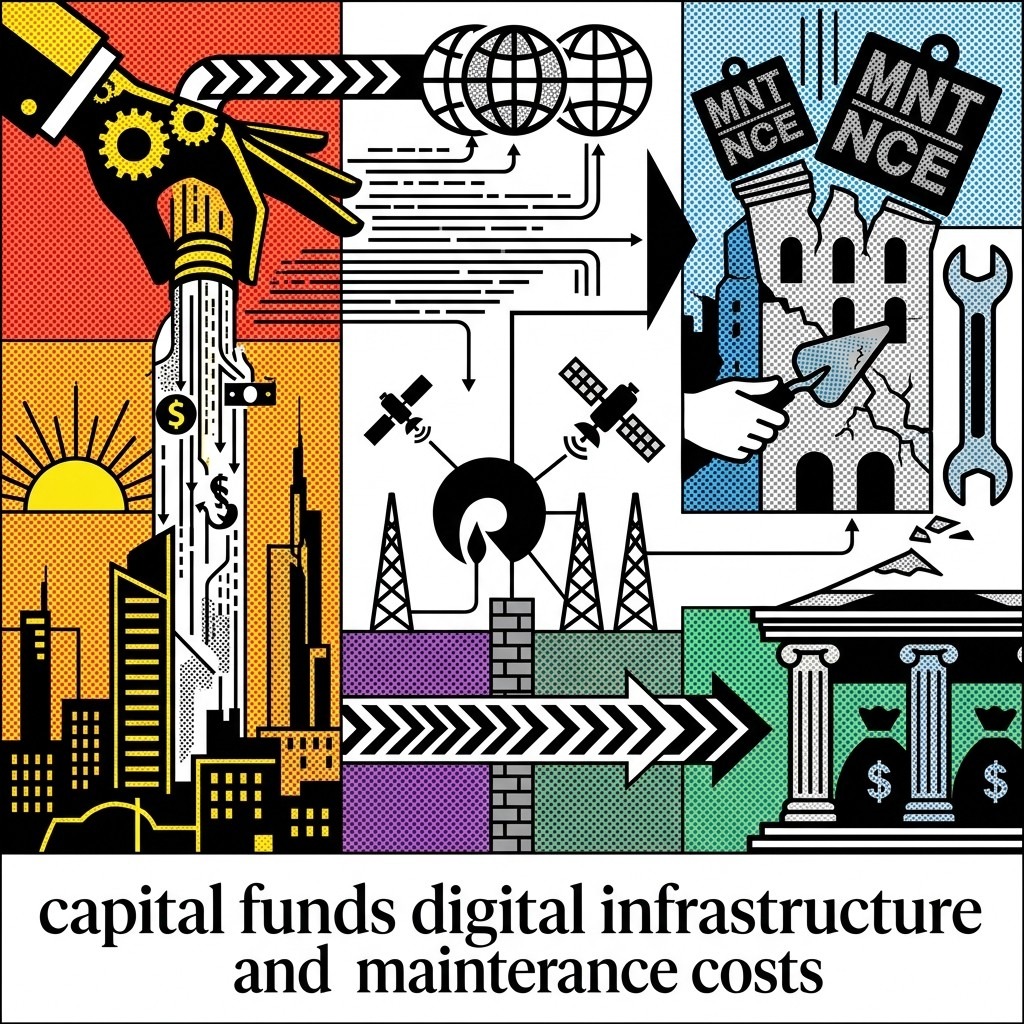
Global capital is mobilizing to fund sovereign digital infrastructure in emerging markets, while European economies manage compounding legacy maintenance costs—a divergence crystallized by Reliance Industries filing a SEBI prospectus to sell 270 million new shares of Jio Platforms.

The $3.8 billion offering will eclipse Hyundai India’s 2024 listing as the country’s largest maiden share sale. Reliance bypasses Western venture capital because it gains strategic independence by tapping domestic public demand instead. Backed by 520 million subscribers and $17.5 billion in fiscal 2026 revenues, the conglomerate is building a sovereign AI ecosystem to structurally insulate India from American and Chinese dependencies.

China’s Alibaba executed an identical maneuver in 2014, utilizing record-breaking public market capital to seal its domestic infrastructure against foreign intervention, according to Reuters.

The Gist AI Editor

The Global Overview

Jio’s Sovereign Infrastructure

Reliance Industries is filing to sell up to 270 million shares of Jio Platforms, targeting roughly $3.8 billion—poised to become India’s largest-ever IPO (FT). Reporting 1.46 trillion rupees ($17.5 billion) in fiscal 2026 revenue, Jio is leveraging public markets to build a sovereign AI and digital backbone, insulating India from external tech dependencies. This move signals a seismic shift: emerging market conglomerates are increasingly bypassing Western venture capital, utilizing deep domestic liquidity to self-fund critical infrastructure.

The Maintenance Trap

Contrast this with advanced economies currently paralyzed by legacy costs. The projected €19 billion hole in Germany’s health budget underscores how European state capacity is consumed by patching 20th-century social obligations, leaving minimal headroom for growth initiatives. While Europe attempts to regulate its way to resilience, India is simply outbuilding its dependencies.

Capital Allocation and Systemic Fragility

Elsewhere, Abu Dhabi’s 2PointZero, a $21 billion holding firm, received its first ‘buy’ rating, signaling institutional confidence in state-backed sovereign vehicles (Bloomberg). Simultaneously, supply chain vulnerabilities persist: a manufacturing disruption at Aspen Pharmacare has triggered oral contraceptive shortages across South Africa, proving that localized factory issues can rapidly escalate into systemic healthcare volatility (Bloomberg).

Stay tuned for the next Gist—your edge in a shifting world. The Gist remains independent and reader-supported. If you value news free from corporate or state interests, consider supporting our mission with a donation.

The European Perspective

The Fragility of Legacy Infrastructure

European state capacity is being eroded by the compounding maintenance costs of legacy social and physical systems. Germany’s statutory health insurers face a €19 billion financing gap next year, with quarterly expenses rising 7.6% against a tepid 4.1% revenue increase (ZDF). Simultaneously, France’s infrastructure is buckling under climate volatility: temperatures hit 40.2°C in Montmorillon, forcing SNCF to cancel 71 long-distance trains due to cooling failures (AFP; Météo-France).

This reveals a stark divergence in global capital formation. While emerging markets are leveraging public capital to build future-proof infrastructure, European capacity is currently consumed by patching the deficits of 20th-century welfare models and aging transit networks. These demographic and climate pressures are no longer abstract risks; they are present-day fiscal shocks, turning infrastructure maintenance into a survival exercise rather than a growth strategy.

Ocean Science as Strategic Asset

In a move preserving long-term structural investment, the U.S. Congress reversed planned cuts to a critical ocean monitoring program, protecting its $368 million budget (Politico). This preserves data streams vital for climate modeling—capabilities that European nations, distracted by internal fiscal tightening, would struggle to independently replicate. The Trump administration’s shift underscores how specific scientific capabilities are being ring-fenced as national security essentials.

Marketing’s Metrics Pivot

European corporate sectors are prioritizing brand resilience. The inaugural European CMO of the Year award features 29 senior leaders—from Ferrari to LEGO—marking a strategic pivot where marketing is now quantified as a core defensive pillar during periods of low consumer confidence (Euronews).

Catch the next Gist for the continent’s moving pieces.

🎙️ Listen to this edition as a podcast Listen


The Gist is an independent daily digest: AI-curated, human-directed, unapologetically liberal (how it’s made). Hundreds of sources, only what matters. Subscribe free or listen to the podcast.


Comments

Leave a Reply

Your email address will not be published. Required fields are marked *

This site uses Akismet to reduce spam. Learn how your comment data is processed.