Trump Mocks Meloni, Sparks Populist Alliance Tensions

Evening Analysis – The Gist


Evening Analysis • Saturday, June 20, 2026

The Gist View

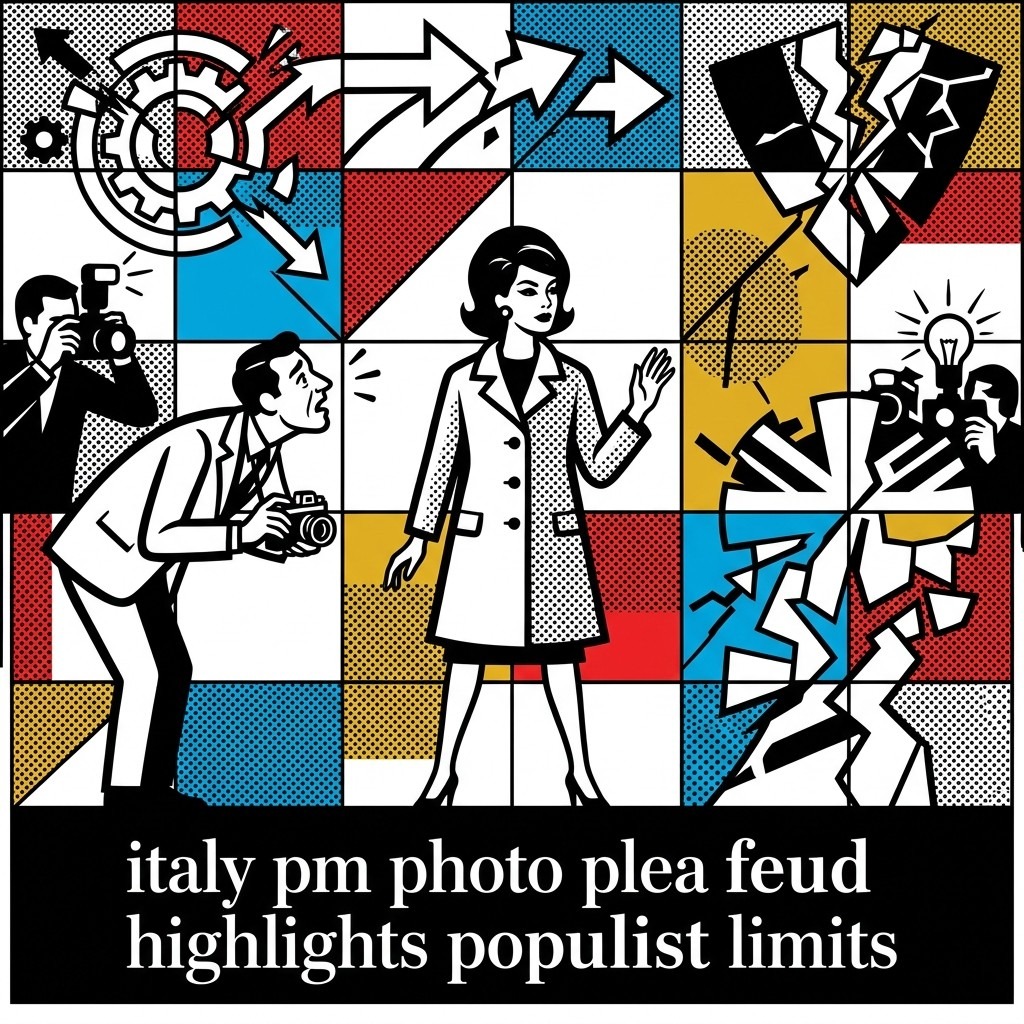
Donald Trump used his Truth Social platform following the two-day G7 summit in Évian, France, to claim Italian Prime Minister Giorgia Meloni “begged” for a photo, mocking her domestic popularity and deliberately dubbing her “Gigiorgia.” Meloni dismissed the broadside as “senseless” and “unprovoked,” shattering the illusion of a unified global right. The feud exposes the structural limit of populist statecraft: “America First” and “Italy First” are ultimately incompatible doctrines.

Traditional alliances rely on institutional ballast to absorb interpersonal friction. Personality-driven diplomacy lacks this mechanism. Nationalist leaders publicly attack foreign counterparts because they gain domestic political capital by projecting dominance to their local base. Shared ideological aesthetics cannot overcome these zero-sum incentives. When foreign policy functions as a domestic branding exercise, sovereign partners inevitably become targets.

Right-wing populist coalitions routinely fracture because, as British historian A.J.P. Taylor documented in 1961, purely nationalist movements remain inherently “incapable of sincere alliance.”

The Gist AI Editor

The Global Overview

The Nationalist Alliance Fracture

The G7 rift between President Trump and Italian Premier Giorgia Meloni reveals the brittleness of nationalist statecraft. Trump’s mocking of Meloni’s popularity on Truth Social marks a sharp break between formerly aligned leaders (Bloomberg, Politico). This exposes a systemic mismatch: right-wing movements built on personalism lack the institutional ballast of traditional alliances. Because nationalist doctrines prioritize local, domestic wins, the aesthetic alignment of “America First” and “Italy First” is functionally incompatible, proving that shared populist slogans cannot overcome the zero-sum incentives inherent in nationalist foreign policy.

Cuba’s Capital Pivot

Cuba is authorizing private and foreign capital across fuel, telecom, and tourism sectors to forestall economic collapse (Marginal Revolution). By extending investment leases up to 99 years and allowing private firms to hire over 100 workers, the regime is trading ideological control for liquidity. It is a classic survival maneuver—the state is effectively outsourcing recovery to the private sector, hoping that market incentives can solve the systemic scarcity that decades of bureaucratic mismanagement created.

Predictive Infrastructure Safety

The FAA’s partnership with Palantir to deploy AI for predictive runway safety signals a shift toward ‘algorithmic risk management’ (Politico). The incentive is clear: reduce the massive liability costs associated with near-misses. This is the current playbook for legacy infrastructure—layering software over crumbling assets to extract efficiency without expensive capital overhauls, effectively automating risk-mitigation where human oversight fails.

Stay tuned for the next Gist—your edge in a shifting world. The Gist remains independent and reader-supported. If you value news free from corporate or state interests, consider supporting our mission with a donation.

The European Perspective

Institutional Exposure in Saxony-Anhalt

Germany’s “militant democracy” faces a structural paradox in Saxony-Anhalt. Should the AfD secure an electoral win, they could assume control of the Interior Ministry, effectively commanding the Verfassungsschutz—the domestic intelligence agency currently classifying the party as “proven right-wing extremist” (ZDF). The systemic risk is an intelligence blackout: federal and allied agencies will likely sever classified data-sharing immediately if trust in the ministry evaporates, as federal Police Union chairman Jochen Kopelke warned. Electoral success may legally blind the state’s primary security firewall. This reveals the institutional fragility inherent when democratic processes are utilized to capture the security apparatus, mirroring the broader unpredictability seen in the escalating Trump-Meloni diplomatic rift—where personalist politics undermine the reliable, long-term institutional coordination necessary for Western stability.

Munich’s Infrastructure Brittleness

The fatal derailment in Munich, where two freight trains collided and plunged 5 meters from a bridge, exposes the vulnerability of Europe’s aging physical infrastructure (ZDF). While investigations continue, the collapse of a key transit node creates immediate, high-cost ripples in supply chain throughput. This incident illustrates the “hard” risk inherent in Europe’s reliance on legacy rail—structural maintenance backlogs translate directly into kinetic economic disruptions and insurance volatility.

Ukraine Energy Resilience

The ongoing war maintains structural pressure on European energy markets, with Ukraine’s Zaporizhzhia nuclear plant losing external power for the 20th time since the conflict began (ZDF). Reliance on emergency diesel generators to maintain reactor cooling highlights the precarious nature of energy infrastructure in conflict zones. As power grids remain a strategic target, the continued volatility forces markets to price in heightened risk premiums, ensuring energy security remains a persistent bottleneck for regional economic stability.

Catch the next Gist for the continent’s moving pieces.

🎙️ Listen to this edition as a podcast Listen


The Gist is an independent daily digest: AI-curated, human-directed, unapologetically liberal (how it’s made). Hundreds of sources, only what matters. Subscribe free or listen to the podcast.


Comments

Leave a Reply

Your email address will not be published. Required fields are marked *

This site uses Akismet to reduce spam. Learn how your comment data is processed.