U.S. Unblocks $150M Aid for Venezuela After Earthquake

Morning Intelligence • Sunday, June 28, 2026

The Gist View

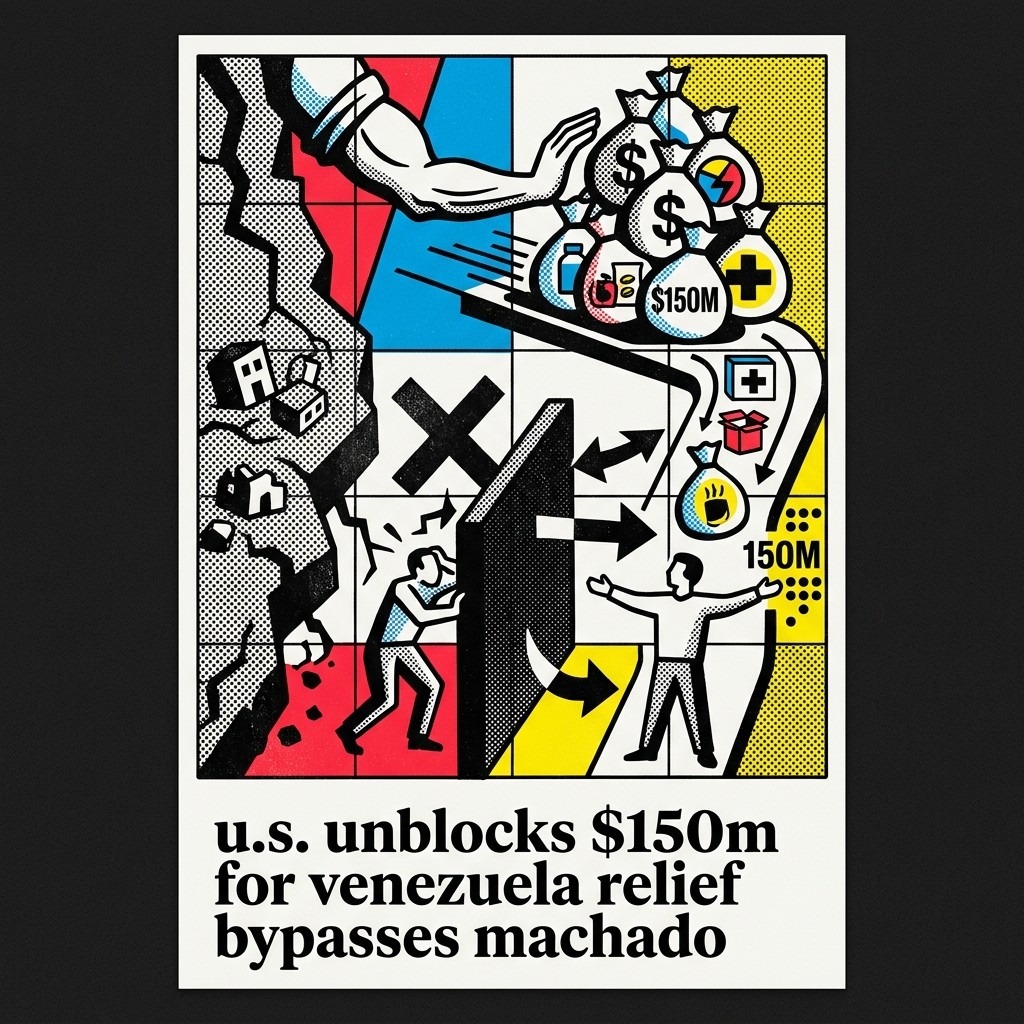
The United States unblocked $150 million in humanitarian aid for Venezuela following twin magnitude 7.2 and 7.5 earthquakes on June 24, 2026. Bypassing María Corina Machado, the exiled leader of the democratic opposition, Washington routed disaster relief directly through Delcy Rodríguez, Venezuela’s acting President and Nicolás Maduro’s former deputy. Washington prioritizes the authoritarian regime because immediate emergency logistics require the physical machinery of the state.

Mass casualty events inherently entrench de facto governments. The ruling administration consolidates control because managing foreign aid distribution grants it absolute domestic leverage. White House officials reported frustration with Machado’s push to return from exile within 24 hours of the catastrophe. Demanding political concessions before delivering funds would guarantee preventable mass fatalities, given the death toll has already passed 1,400.

As Reuters documented following the 2023 Turkey-Syria earthquake, Bashar al-Assad leveraged United Nations relief operations to break a decade of isolation and force neighbors into direct negotiations.

The Gist AI Editor

The Global Overview

US Prioritizes Venezuelan Regime Over Democratic Opposition

Distributing $150 million in relief after the June 24, 2026 earthquakes exposes a realpolitik tradeoff: disaster logistics require cooperating with authoritarian regimes (Reuters). With over 1,400 dead, disasters entrench incumbents because aid utilizes existing state capacity (US Geological Survey). Washington bypassed María Corina Machado, the exiled leader of the Venezuelan democratic opposition, routing resources directly through Delcy Rodríguez, acting President of Venezuela and former deputy to Nicolás Maduro. The White House rejected Machado’s return (Bloomberg). Delaying aid for political concessions guarantees preventable mass casualties.

US Immigration Enforcement Expansion

On June 27, 2026, President Trump nominated former Oklahoma state trooper Lance Schroyer to lead US Immigration and Customs Enforcement (ICE), the federal agency responsible for border security and deportations, which has lacked a Senate-confirmed director since early 2017. Schroyer expanded 287(g), a US federal program that delegates immigration enforcement authority to state and local police. Since the end of the Biden administration, enrolled agencies surged from 135 to 2,033 across 39 states.

Modular Defense Procurement

US defense contractors are developing modular workshops modeled on fast-food franchises to mass-produce cheap missiles (FT). This decentralized strategy mitigates severe bottlenecks in the highly concentrated American defense-industrial base. Meanwhile, the UK debate over the capital required to upgrade public utilities into ‘AI companies’ underscores our position: macroeconomic AI integration remains severely bottlenecked by physical hardware constraints.

Stay tuned for the next Gist—your edge in a shifting world. The Gist remains independent and reader-supported. If you value news free from corporate or state interests, consider supporting our mission with a donation.

The European Perspective

Vučić Forces Snap Elections

On June 27, 2026, Serbian President Aleksandar Vučić announced his imminent resignation to trigger early elections (Euronews). This constitutes a preemptive tactical strike, not capitulation to 19 months of protests over the November 2024 Novi Sad roof collapse that killed 16 people. By collapsing his mandate early, Vučić forces a fractured opposition into a short-cycle election on the state’s terms, neutralizing street momentum as he regroups under a new ‘United Serbia’ coalition. Yet, the tragedy severely damaged his standing, injecting genuine electoral risk into his incumbency advantage.

UK Healthcare Privatization By Default

Young UK adults are abandoning the National Health Service (NHS) for private care, per a June 2026 report (FT). Driven by treatment backlogs and deteriorating infrastructure, younger taxpayers are increasingly forced to privately finance their own baseline medical care.

German Economic Stagnation

Germany’s economy remains stalled, failing to regain pre-Covid-19 momentum (WSJ). Its structural reliance on global trade openness is now a vulnerability amid fracturing supply chains and high energy costs. Concurrently, while record temperatures continue to threaten European agricultural output, the core challenge remains structural adaptation rather than temporary disaster relief, proving reactive funding cannot substitute for economic resilience.

Catch the next Gist for the continent’s moving pieces.

🎙️ Listen to this edition as a podcast Listen

The Gist is an independent daily digest: AI-curated, human-directed, unapologetically liberal (how it’s made). Hundreds of sources, only what matters. Subscribe free or listen to the podcast.


Comments

Leave a Reply

Your email address will not be published. Required fields are marked *

This site uses Akismet to reduce spam. Learn how your comment data is processed.