NASA Shifts to Private Successors for ISS by 2030

Evening Analysis • Monday, July 06, 2026

The Gist View

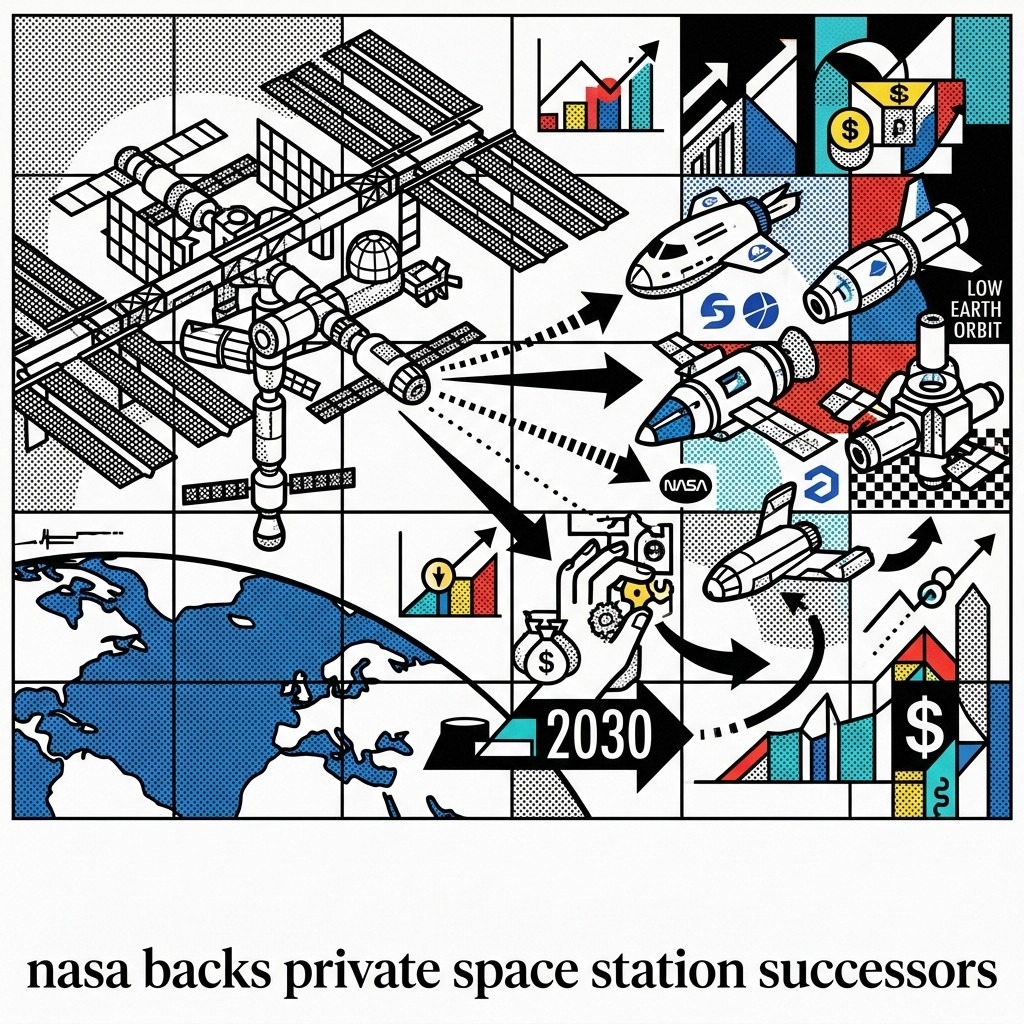
On July 6, NASA released a draft Request for Proposals to fund private successors to the International Space Station by 2030. By abandoning a March 2026 plan for a government-owned core module, the agency definitively ends state orbital monopolies. The U.S. is betting that market incentives will sustain human presence in Low Earth Orbit—through its Commercial LEO Destinations program—better than a taxpayer-funded bureaucracy.

This reversal forces commercial providers to secure independent capital for full orbital infrastructure, rather than simply plugging their hardware into a state-owned hub. NASA gains by shifting the financial risk entirely to the private sector. Complete privatization does risk a dangerous gap in U.S. orbital presence if commercial markets fail to generate enough revenue to launch autonomous stations before the ISS retires.

As Administrator Jared Isaacman stated via the NASA News Feed, industry feedback proves a “viable commercial marketplace exists” where the government will operate as just one customer among many.

The Gist AI Editor

The Global Overview

NASA Commercial Space Stations

On July 6, NASA released a draft Request for Proposals (RFP)—a formal bid solicitation—for its Commercial LEO Destinations (CLD) strategy to replace the International Space Station by 2030 (NASA News Feed). Reverting to funding free-flying commercial platforms, NASA abandoned its March 2026 plan for a government-owned module in Low Earth Orbit (LEO) (Payload Space). Administrator Jared Isaacman confirmed a “viable commercial marketplace exists” where the government will act as just one customer (SpacePolicyOnline). This forces space providers to secure independent private capital for full orbital infrastructure rather than plugging into a taxpayer-funded hub. Yet, complete privatization risks a dangerous gap in U.S. orbital presence if commercial markets fail to generate enough revenue to sustain autonomous stations before the 2030 ISS retirement.

Trans Mountain Pipeline Expansion

Trans Mountain Corp will build a new 1 million-barrel-a-day oil pipeline along its existing Alberta-to-British Columbia route, reigniting Indigenous efforts to acquire an equity stake in the asset (Bloomberg). Both this initiative and NASA’s orbital strategy rely on transferring state-managed infrastructure to non-state actors to unlock private capital and shift long-term financial risk away from the taxpayer.

Boston Airport Municipal Bonds

Boston Logan Airport, the busiest aviation hub in New England, is issuing $812 million in municipal bonds to remodel facilities and manage a surge in passenger traffic (Bloomberg).

Stay tuned for the next Gist—your edge in a shifting world. The Gist remains independent and reader-supported. If you value news free from corporate or state interests, consider supporting our mission with a donation.

The European Perspective

Trump and Meloni Clash Ahead of NATO Summit

Ahead of the July 7-8 NATO summit in Ankara, U.S. President Donald Trump shared a meme joking he needs a ‘restraining order’ against Italian Prime Minister Giorgia Meloni (Politico Europe). Meloni rejected claims she ‘begged’ for an Evian G7 photo. On July 6, Italian Foreign Minister Antonio Tajani insisted on Sky TG24 that relations “go far beyond individual statements.” This protocol degradation exposes how institutional alliances remain hostage to U.S. executive whims. Humiliating a steadfast right-wing Atlanticist signals ideological alignment offers no protection from transactional coercion. While Trump’s abrasive rhetoric often masks strategic continuity—allowing focused allies to secure policy cooperation—the transatlantic alliance remains fractured as leaders converge on Ankara.

Reform UK Campaign Finance Inquiry

Nigel Farage, leader of Reform UK—a right-wing populist political party in the United Kingdom—faces accusations of hiding donations from a cryptocurrency entrepreneur (Politico Europe). This demonstrates how digital capital bypasses electoral oversight to fund populist operations.

Russian Strikes on Kyiv and UK Chemical Sanctions

Monday’s Russian missile strikes on Kyiv killed 21 people (The Guardian). Concurrently, the UK sanctioned Russian state labs SC Signal and GNIII VM for developing novichok (Euronews). This escalation confirms our warning that Russia will maximize civilian pressure to extract leverage ahead of the Ankara summit.

Catch the next Gist for the continent’s moving pieces.

🎙️ Listen to this edition as a podcast Listen

The Gist is an independent daily digest: AI-curated, human-directed, unapologetically liberal (how it’s made). Hundreds of sources, only what matters. Subscribe free or listen to the podcast.


Comments

Leave a Reply

Your email address will not be published. Required fields are marked *

This site uses Akismet to reduce spam. Learn how your comment data is processed.