SpaceX Eyes AI Computing Deal with U.S. Defense Dept

Morning Intelligence • Saturday, July 18, 2026

The Gist View

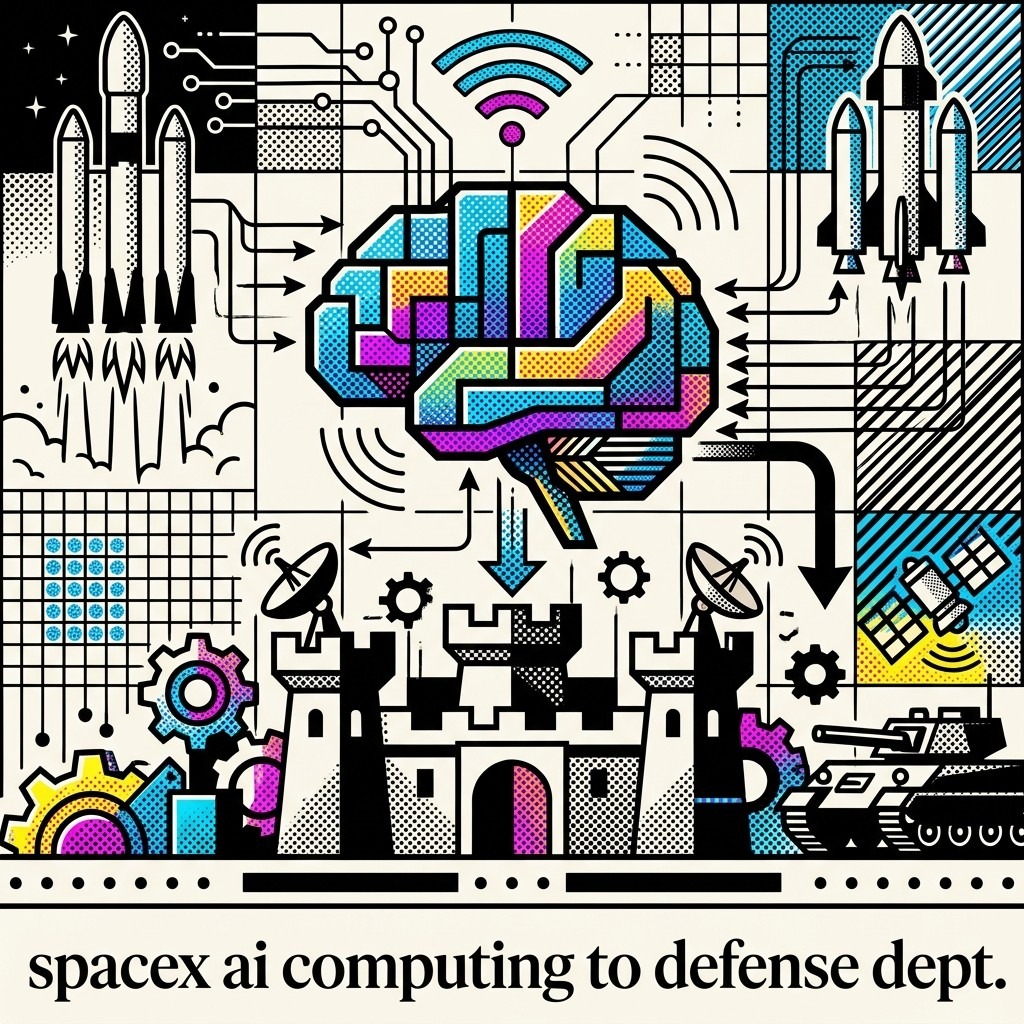
Aerospace conglomerate SpaceX is in advanced negotiations to sell billions of dollars in AI computing capacity to the U.S. Department of Defense. The Pentagon’s move to rent this hardware proves legacy procurement has failed. Unable to match the pace of private capital allocation in artificial intelligence, governments now rely on vertically integrated conglomerates for core strategic infrastructure.

Per Reuters, this defense pact follows a commercial agreement in May 2026, where SpaceX supplied 300 megawatts of compute capacity to Anthropic, an AI startup, from its Memphis facility. Musk funds this physical expansion because he gains absolute leverage by building a private, full-stack sovereign capability—launch, satellite communications, and base compute—that Washington merely rents. While entrusting critical national defense computing to a single private conglomerate with highly concentrated executive control creates extreme single-point-of-failure vulnerabilities, the Pentagon calculates that waiting costs more.

The military’s traditional cloud framework required five years of corporate litigation just to launch, according to the Wall Street Journal.

The Gist AI Editor

The Global Overview

SpaceX Computing Integration

SpaceX is negotiating to sell billions in AI computing to the U.S. Department of Defense (WSJ). Following a May 2026 deal supplying 300 megawatts to Anthropic, the Pentagon implicitly admits traditional procurement cannot match the pace of private capital allocation in AI. Elon Musk is building a private, full-stack sovereign capability—launch, satellite communications, and base compute—that the US merely rents. Entrusting critical national defense computing to a single private conglomerate with highly concentrated executive control creates extreme single-point-of-failure vulnerabilities for US national security.

US Tariffs on Brazil

Trump finalized 25% tariffs on Brazilian goods starting July 22, targeting PIX—Brazil’s free, central-bank-operated instant payment system—under Section 301, a US trade law allowing tariffs against unfair foreign practices (WSJ). PIX integrated 70 million Brazilians since 2020. US officials allege it disadvantages networks like Visa. This and the SpaceX deal expose a paradox: renting private compute because state procurement failed, while deploying tariffs to shield domestic payment incumbents from successful foreign state-run digital innovation.

US-China AI Tensions

US labs, including Anthropic, accused Chinese rivals of illicitly extracting AI outputs to accelerate capabilities (Bloomberg). Beijing dismissed the claims on July 17, deepening a Wall Street semiconductor selloff fueled by concerns over China’s advancing domestic AI ecosystem (WSJ).

The Odyssey Fanaticism

Christopher Nolan’s film ‘The Odyssey’ sparked extreme fanaticism among global filmgoers. On July 17, cultural critic Tyler Cowen praised its set pieces but argued Matt Damon’s persona clashed with the classical role.

Stay tuned for the next Gist—your edge in a shifting world. The Gist remains independent and reader-supported. If you value news free from corporate or state interests, consider supporting our mission with a donation.

The European Perspective

Macron and Merz Accelerate EU Capital Integration

French President Emmanuel Macron and German Chancellor Friedrich Merz pledged on July 17 to finalize the EU’s next seven-year budget and a U.S.-style Capital Markets Union—an EU initiative integrating member states’ financial markets for cross-border investment—before year’s end (Politico). Framing this as an economic necessity to counter subsidized Chinese exports allows them to sidestep admitting it is a defensive institutional maneuver against Marine Le Pen’s populism. This exposes that deep integration only clears domestic interest groups when the specter of a far-right takeover makes inaction untenable, even though centralized financial regulations risk severely disadvantaging smaller European exchanges and regional banking models.

Andy Burnham Becomes UK Prime Minister

Andy Burnham assumed office as the UK’s seventh Prime Minister since 2016 following Keir Starmer’s resignation. Taking power without a general election confirms our prior view that internal parliamentary consolidation has superseded public mandates in leadership transitions. Burnham faces immediate legitimacy challenges from the 80-plus Labour MPs who forced the transition, increasing pressure on him to earn democratic consent.

Italy Halts August Tax Collection

Italian tax authorities suspended the dispatch of two million tax collection notices for August (Il Sole 24 Ore). Halting non-urgent debt recovery preserves Italy’s tradition of minimizing administrative friction during the summer holiday period.

Catch the next Gist for the continent’s moving pieces.

🎙️ Listen to this edition as a podcast Listen

The Gist is an independent daily digest: AI-curated, human-directed, unapologetically liberal (how it’s made). Hundreds of sources, only what matters. Subscribe free or listen to the podcast.


Comments

Leave a Reply

Your email address will not be published. Required fields are marked *

This site uses Akismet to reduce spam. Learn how your comment data is processed.